
从蛭弧菌中发现的一种非常规 HD-GYP 蛋白的结构揭示了该类环二鸟苷酸磷酸二酯酶中保守残基的作用。
The structure of an unconventional HD-GYP protein from Bdellovibrio reveals the roles of conserved residues in this class of cyclic-di-GMP phosphodiesterases.
机构信息
School of Biosciences, University of Birmingham, Birmingham, United Kingdom.
出版信息
mBio. 2011 Oct 11;2(5). doi: 10.1128/mBio.00163-11. Print 2011.
UNLABELLED
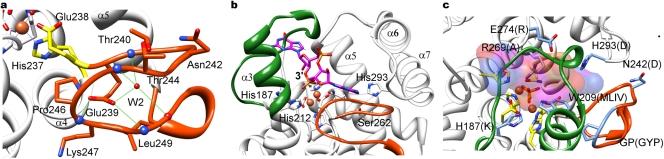
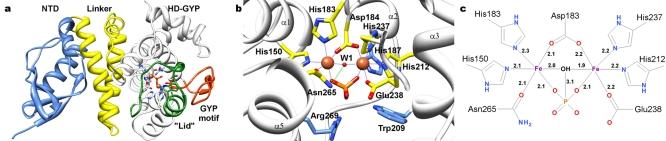
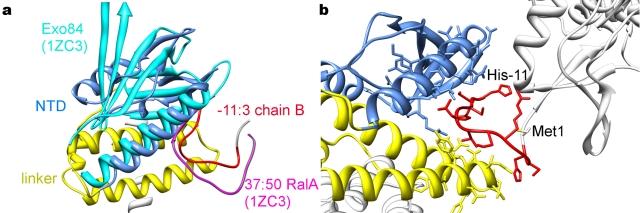
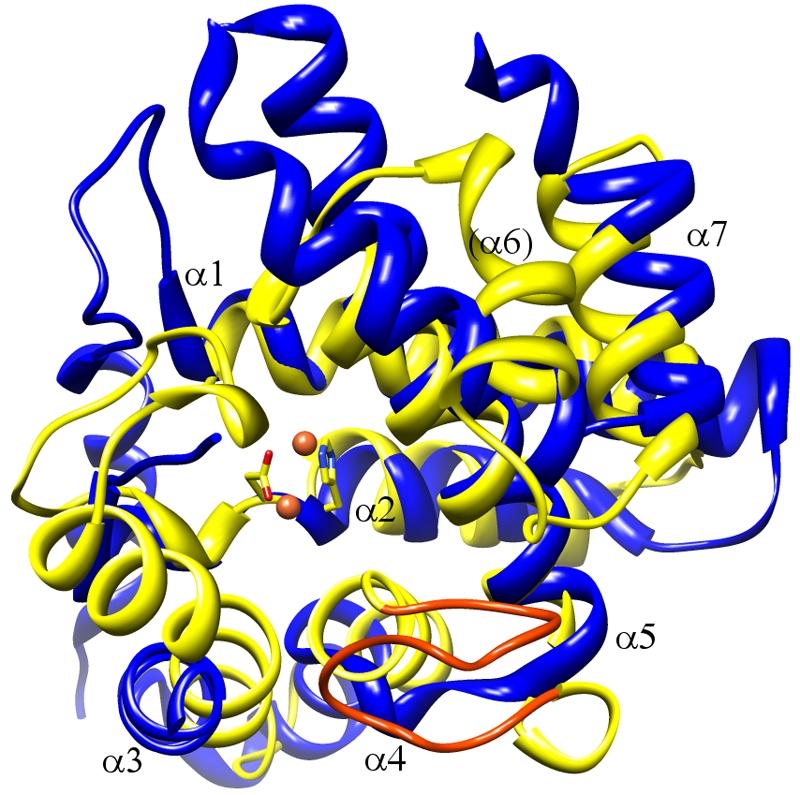
Cyclic-di-GMP is a near-ubiquitous bacterial second messenger that is important in localized signal transmission during the control of various processes, including virulence and switching between planktonic and biofilm-based lifestyles. Cyclic-di-GMP is synthesized by GGDEF diguanylate cyclases and hydrolyzed by EAL or HD-GYP phosphodiesterases, with each functional domain often appended to distinct sensory modules. HD-GYP domain proteins have resisted structural analysis, but here we present the first structural representative of this family (1.28 Å), obtained using the unusual Bd1817 HD-GYP protein from the predatory bacterium Bdellovibrio bacteriovorus. Bd1817 lacks the active-site tyrosine present in most HD-GYP family members yet remains an excellent model of their features, sharing 48% sequence similarity with the archetype RpfG. The protein structure is highly modular and thus provides a basis for delineating domain boundaries in other stimulus-dependent homologues. Conserved residues in the HD-GYP family cluster around a binuclear metal center, which is observed complexed to a molecule of phosphate, providing information on the mode of hydroxide ion attack on substrate. The fold and active site of the HD-GYP domain are different from those of EAL proteins, and restricted access to the active-site cleft is indicative of a different mode of activity regulation. The region encompassing the GYP motif has a novel conformation and is surface exposed and available for complexation with binding partners, including GGDEF proteins.
IMPORTANCE
It is becoming apparent that many bacteria use the signaling molecule cyclic-di-GMP to regulate a variety of processes, most notably, transitions between motility and sessility. Importantly, this regulation is central to several traits implicated in chronic disease (adhesion, biofilm formation, and virulence gene expression). The mechanisms of cyclic-di-GMP synthesis via GGDEF enzymes and hydrolysis via EAL enzymes have been suggested by the analysis of several crystal structures, but no information has been available to date for the unrelated HD-GYP class of hydrolases. Here we present the multidomain structure of an unusual member of the HD-GYP family from the predatory bacterium Bdellovibrio bacteriovorus and detail the features that distinguish it from the wider structural family of general HD fold hydrolases. The structure reveals how a binuclear iron center is formed from several conserved residues and provides a basis for understanding HD-GYP family sequence requirements for c-di-GMP hydrolysis.
未加标签
环二鸟苷酸(cyclic-di-GMP)是一种普遍存在于细菌中的第二信使,在控制各种过程(包括毒力和浮游生物与生物膜生活方式之间的转换)的局部信号转导中非常重要。环二鸟苷酸由 GGDEF 二鸟苷酸环化酶合成,并由 EAL 或 HD-GYP 磷酸二酯酶水解,每个功能域通常附加到不同的感应模块上。HD-GYP 结构域蛋白的结构分析一直存在阻力,但在这里,我们展示了来自捕食性细菌 Bacteriovorus bacteriovorus 的不寻常 Bd1817 HD-GYP 蛋白的该家族的第一个结构代表(1.28Å)。Bd1817 缺乏大多数 HD-GYP 家族成员中存在的活性位点酪氨酸,但仍然是其特征的极好模型,与原型 RpfG 具有 48%的序列相似性。该蛋白结构高度模块化,因此为描绘其他刺激依赖性同源物的结构域边界提供了基础。HD-GYP 家族中的保守残基聚集在双核金属中心周围,该中心观察到与磷酸盐分子复合,为氢氧根离子攻击底物的方式提供了信息。HD-GYP 结构域的折叠和活性位点与 EAL 蛋白不同,对活性位点裂缝的限制访问表明其活性调节方式不同。包含 GYP 基序的区域具有新颖的构象,表面暴露并可与结合伴侣(包括 GGDEF 蛋白)复合。
重要性
越来越明显的是,许多细菌使用信号分子环二鸟苷酸(cyclic-di-GMP)来调节多种过程,最显著的是,运动性和静止性之间的转换。重要的是,这种调节是几种与慢性疾病相关的特征(粘附、生物膜形成和毒力基因表达)的核心。通过 GGDEF 酶合成环二鸟苷酸和通过 EAL 酶水解环二鸟苷酸的机制已经通过对几个晶体结构的分析提出,但迄今为止尚无有关无关的 HD-GYP 类水解酶的信息。在这里,我们展示了来自捕食性细菌 Bacteriovorus bacteriovorus 的不寻常的 HD-GYP 家族成员的多结构域结构,并详细介绍了将其与更广泛的一般 HD 折叠水解酶结构家族区分开来的特征。该结构揭示了双核铁中心如何由几个保守残基形成,并为理解 HD-GYP 家族对 c-di-GMP 水解的序列要求提供了基础。



 Zotero 插件