
免疫相关指标和替代标志物在鼠疫疫苗及免疫疗法研发中的作用
The role of immune correlates and surrogate markers in the development of vaccines and immunotherapies for plague.
作者信息
Williamson E D
机构信息
Biomedical Sciences Department, Defence Science & Technology Laboratory, Porton Down, Salisbury Wilts SP4 0JQ, UK.
出版信息
Adv Prev Med. 2012;2012:365980. doi: 10.1155/2012/365980. Epub 2011 Sep 29.
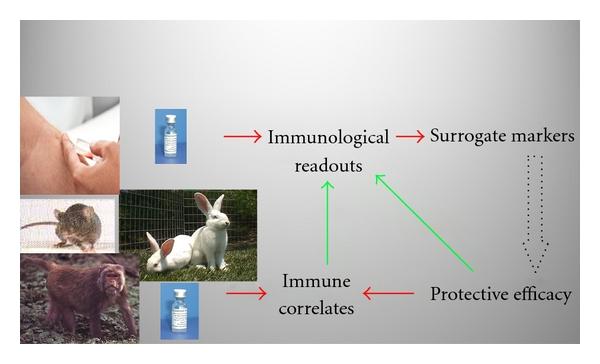
One of the difficulties in developing countermeasures to biothreat agents is the challenge inherent in demonstrating their efficacy in man. Since the first publication of the Animal Rule by the FDA, there has been increased discussion of potential correlates of protection in animal models and their use to establish surrogate markers of efficacy in man. The latter need to be relatively easy to measure in assays that are at least qualified, if not validated, in order to derive a quantitative assessment of the clinical benefit conferred. The demonstration of safety and clinical benefit is essential to achieve regulatory approval for countermeasures for which clinical efficacy cannot be tested directly, as is the case for example, for biodefence vaccines. Plague is an ancient, serious infectious disease which is still endemic in regions of the modern world and is a potential biothreat agent. This paper discusses potential immune correlates of protection for plague, from which it may be possible to derive surrogate markers of efficacy, in order to predict the clinical efficacy of candidate prophylaxes and therapies.
开发针对生物威胁制剂的对策面临的困难之一是,要证明其对人类的有效性存在内在挑战。自美国食品药品监督管理局首次发布《动物规则》以来,人们对动物模型中潜在的保护相关性及其用于建立人类疗效替代标志物的讨论日益增多。后者需要在至少经过鉴定(若未经验证)的检测中相对易于测量,以便对所赋予的临床益处进行定量评估。对于无法直接测试临床疗效的对策,如生物防御疫苗,证明其安全性和临床益处对于获得监管批准至关重要。鼠疫是一种古老且严重的传染病,在现代世界的某些地区仍然流行,是一种潜在的生物威胁制剂。本文讨论了鼠疫潜在的免疫保护相关性,从中有可能得出疗效替代标志物,以预测候选预防措施和治疗方法的临床疗效。
 Zotero 插件