
吲哚胺2,3-双加氧酶在损害食管鳞状细胞癌肿瘤浸润性CD8 T细胞功能中的作用。
Involvement of indoleamine 2,3-dioxygenase in impairing tumor-infiltrating CD8 T-cell functions in esophageal squamous cell carcinoma.
作者信息
Zhang Ge, Liu Wan-Li, Zhang Lin, Wang Jun-Ye, Kuang Miao-Huan, Liu Peng, Lin Yue-Hao, Dai Shu-Qin, Du Jun
机构信息
Department of Microbial and Biochemical Pharmacy, School of Pharmaceutical Sciences, Sun Yat-Sen University, Guangzhou 510006, China.
出版信息
Clin Dev Immunol. 2011;2011:384726. doi: 10.1155/2011/384726. Epub 2011 Oct 13.
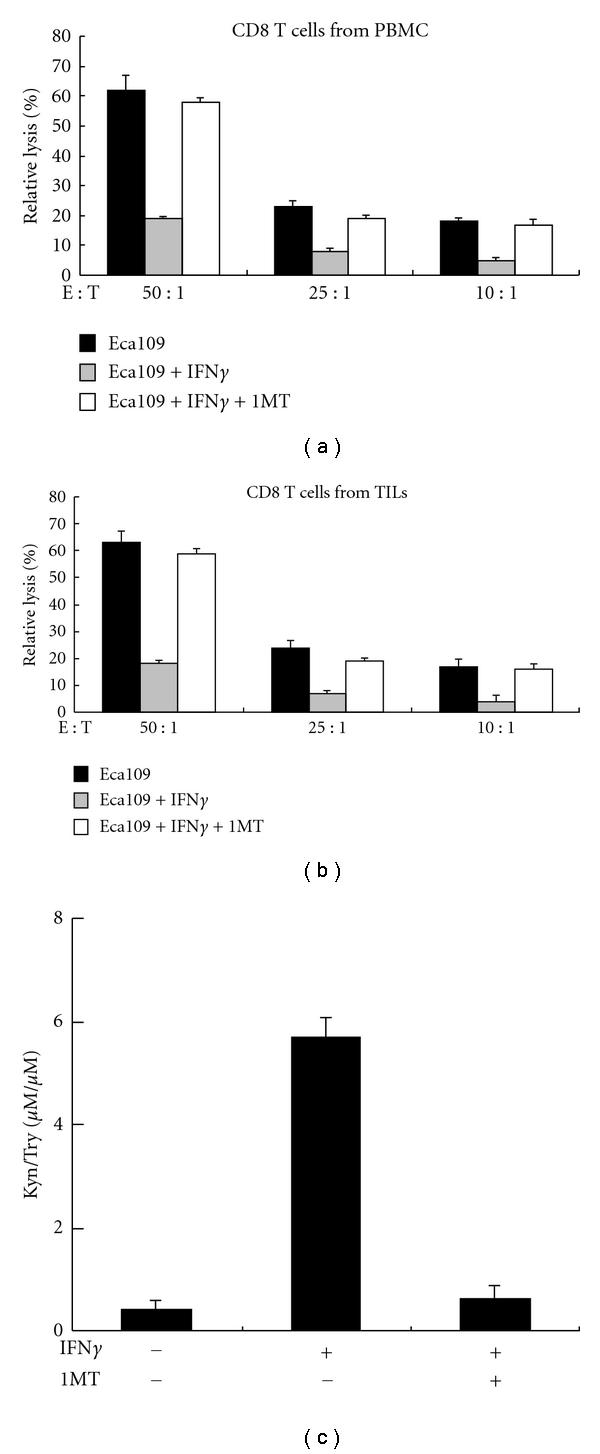
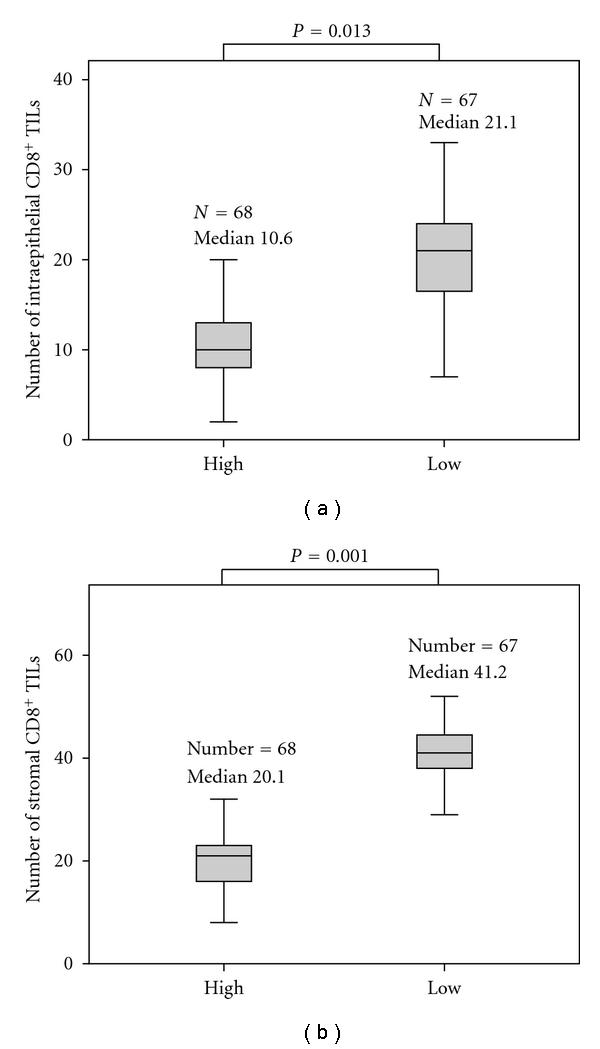
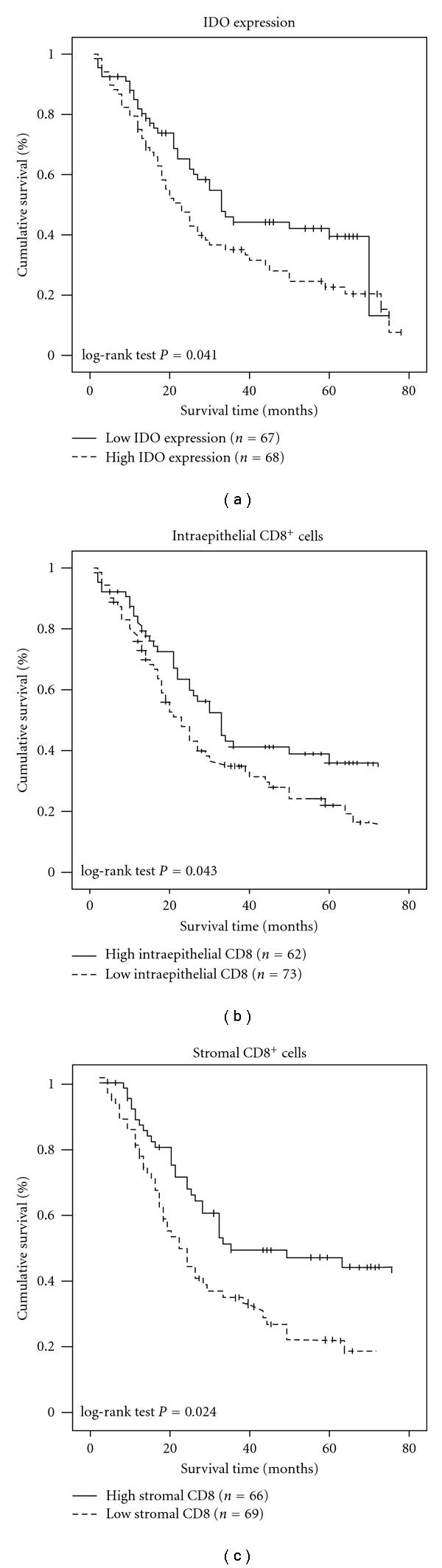
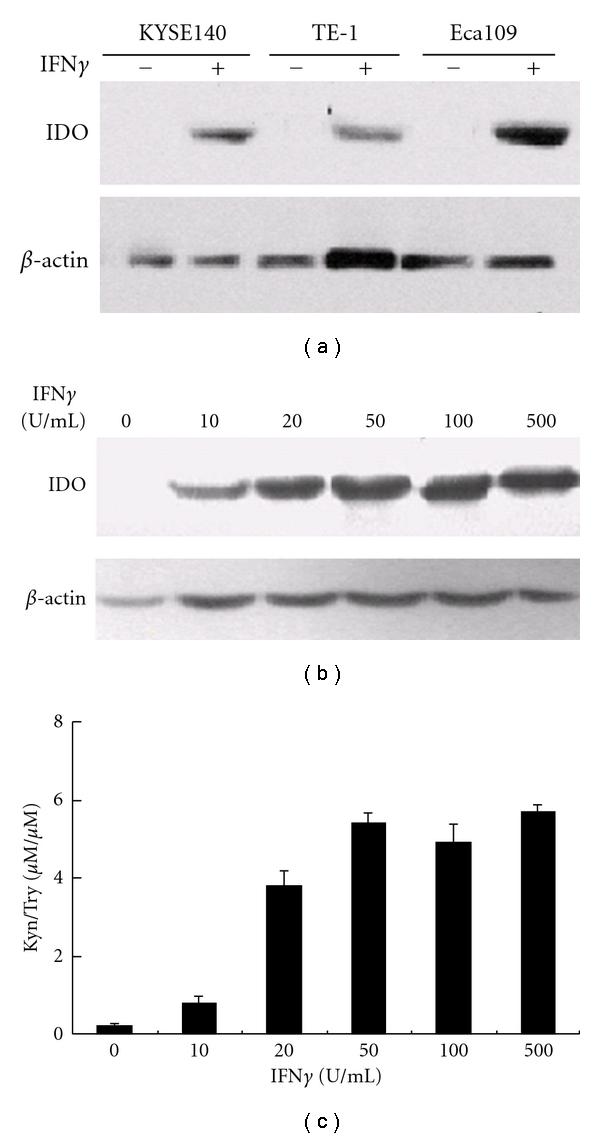
The indoleamine 2,3-dioxygenase-(IDO-) mediated microenvironment plays an important role in tumor immune escape. However, the inhibitory effects of IDO on the CD8(+) tumour-infiltrating lymphocytes (CD8(+) TILs) in esophageal squamous cell carcinoma (ESCC) have not been clarified yet. Here, we found that the level of IDO expression in ESCC tumor specimens correlated with a reduction in the number of CD8(+) TILs. Patients with high IDO expression and a low number of CD8(+) TILs had significantly impaired overall survival time. IDO expression and functional enzyme activity in ESCC cell lines could be induced by IFNγ. When exposed to the milieu generated by IDO-expressing Eca109 cells, the CD8(+) TILs were suppressed in proliferation, and their cytolytic functions against target tumor cells were lost. These results suggested that impairing CD8(+) TIL functions by IDO expressed in ESCC possibly contributed to the finding that patients with higher IDO expression have more aggressive disease progression and shorter overall survival time.
吲哚胺2,3-双加氧酶(IDO)介导的微环境在肿瘤免疫逃逸中起重要作用。然而,IDO对食管鳞状细胞癌(ESCC)中CD8(+)肿瘤浸润淋巴细胞(CD8(+) TILs)的抑制作用尚未阐明。在此,我们发现ESCC肿瘤标本中IDO的表达水平与CD8(+) TILs数量的减少相关。IDO高表达且CD8(+) TILs数量少的患者总生存时间显著受损。ESCC细胞系中的IDO表达和功能酶活性可被IFNγ诱导。当暴露于表达IDO的Eca109细胞产生的环境中时,CD8(+) TILs的增殖受到抑制,并且它们对靶肿瘤细胞的细胞溶解功能丧失。这些结果表明,ESCC中表达的IDO损害CD8(+) TIL功能可能导致了IDO表达较高的患者疾病进展更具侵袭性且总生存时间较短这一发现。


 Zotero 插件