
分子印迹聚合物:现状与未来展望。
Molecularly imprinted polymers: present and future prospective.
作者信息
Vasapollo Giuseppe, Sole Roberta Del, Mergola Lucia, Lazzoi Maria Rosaria, Scardino Anna, Scorrano Sonia, Mele Giuseppe
机构信息
Department of Engineering of Innovation, University of Salento, via per Arnesano km 1, Lecce 73100, Italy; E-Mails:
出版信息
Int J Mol Sci. 2011;12(9):5908-45. doi: 10.3390/ijms12095908. Epub 2011 Sep 14.
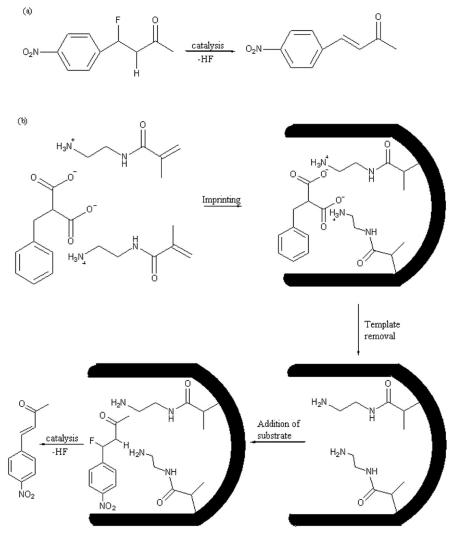
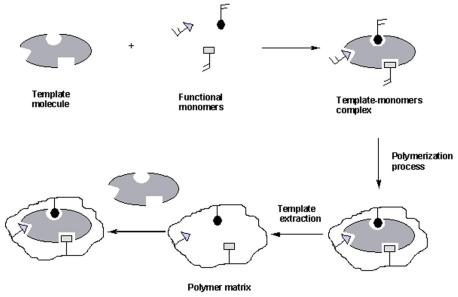
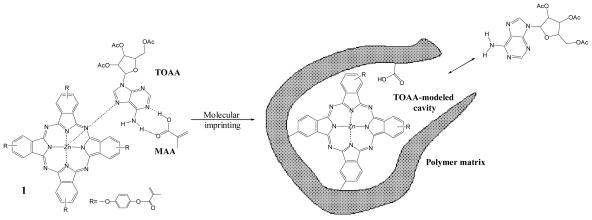
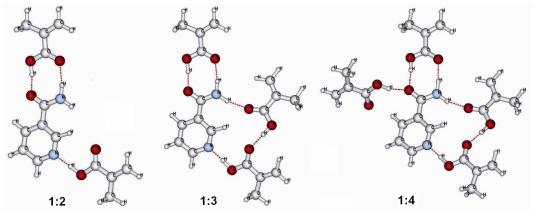
Molecular Imprinting Technology (MIT) is a technique to design artificial receptors with a predetermined selectivity and specificity for a given analyte, which can be used as ideal materials in various application fields. Molecularly Imprinted Polymers (MIPs), the polymeric matrices obtained using the imprinting technology, are robust molecular recognition elements able to mimic natural recognition entities, such as antibodies and biological receptors, useful to separate and analyze complicated samples such as biological fluids and environmental samples. The scope of this review is to provide a general overview on MIPs field discussing first general aspects in MIP preparation and then dealing with various application aspects. This review aims to outline the molecularly imprinted process and present a summary of principal application fields of molecularly imprinted polymers, focusing on chemical sensing, separation science, drug delivery and catalysis. Some significant aspects about preparation and application of the molecular imprinting polymers with examples taken from the recent literature will be discussed. Theoretical and experimental parameters for MIPs design in terms of the interaction between template and polymer functionalities will be considered and synthesis methods for the improvement of MIP recognition properties will also be presented.
分子印迹技术(MIT)是一种设计对特定分析物具有预定选择性和特异性的人工受体的技术,可作为各种应用领域的理想材料。分子印迹聚合物(MIPs)是使用印迹技术获得的聚合物基质,是能够模拟天然识别实体(如抗体和生物受体)的强大分子识别元件,可用于分离和分析生物流体和环境样品等复杂样品。本综述的范围是对MIPs领域进行概述,首先讨论MIP制备的一般方面,然后处理各种应用方面。本综述旨在概述分子印迹过程,并总结分子印迹聚合物的主要应用领域,重点是化学传感、分离科学、药物递送和催化。将讨论分子印迹聚合物制备和应用的一些重要方面,并列举近期文献中的实例。还将考虑MIPs设计中关于模板与聚合物功能之间相互作用的理论和实验参数,并介绍改善MIP识别性能的合成方法。


 Zotero 插件