
国际胎盘协会奖讲座:人类滋养层细胞侵袭的分子调控。
IFPA Award in Placentology lecture: molecular regulation of human trophoblast invasion.
机构信息
Department of Obstetrics and Fetal-Maternal Medicine, Reproductive Biology Unit, Medical University of Vienna, Waehringer Guertel 18-20, Vienna, Austria.
出版信息
Placenta. 2012 Feb;33 Suppl(2):S55-62. doi: 10.1016/j.placenta.2011.09.019. Epub 2011 Oct 21.
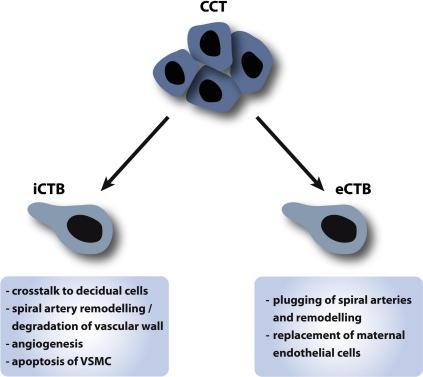
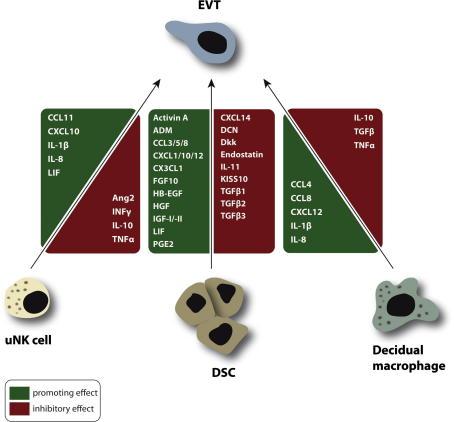
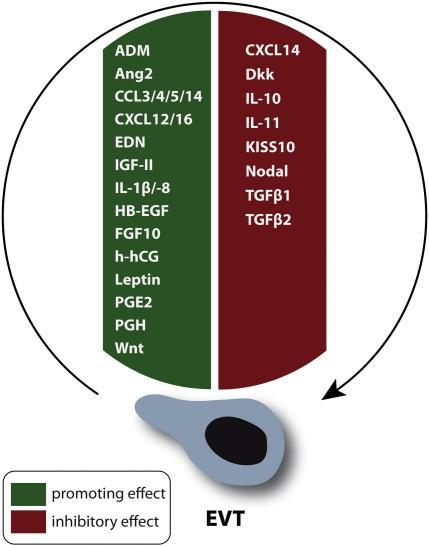
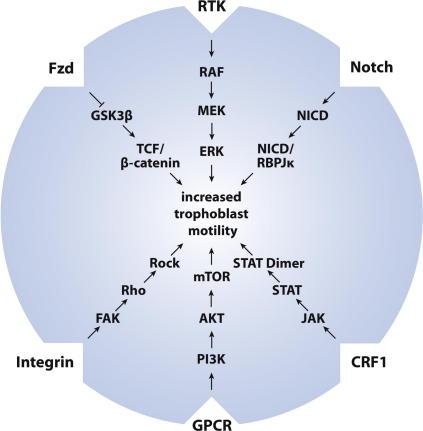
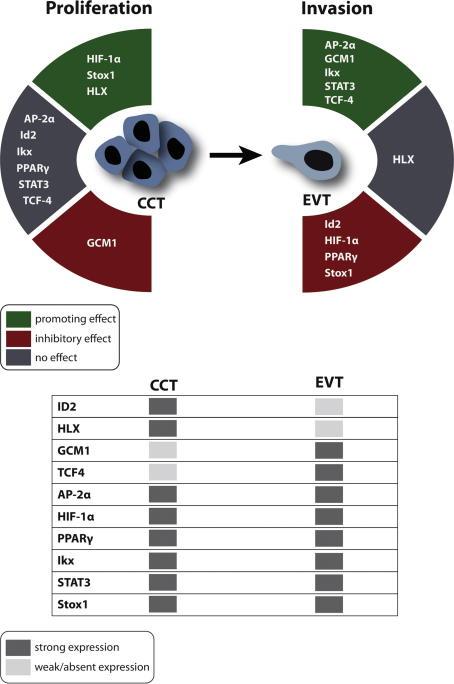
Invasion of extravillous trophoblast cell types into maternal uterine tissues is essential for successful human placental development and progression of pregnancy. Whereas endovascular trophoblasts migrate into the maternal spiral arteries, interstitial trophoblasts invade the decidual stroma, colonize the vessels from outside and communicate with diverse uterine cell types such as decidual stromal cells, macrophages and uterine NK cells. For example, interstitial trophoblasts expressing polymorphic human leukocyte antigen-C interact with uterine NK cells through binding to their killer immunoglobulin-like receptors which likely plays a role in trophoblast invasion and reproductive success of pregnancy. Both extravillous trophoblast subtypes are critically involved in the vascular transformation of the spiral arteries into dilated conduits ensuring appropriate blood flow into the intervillous space. Failures in this remodeling process are thought to be associated with severe forms of fetal growth restriction, preeclampsia and other pregnancy complications warranting studies on the molecular regulation of extravillous trophoblast differentiation. Moreover, interstitial trophoblast-derived hormones may regulate diverse biological functions in the decidua. In particular, human chorionic gonadotrophin has been shown to promote angiogenesis and to suppress apoptosis of endometrial stromal cells. In return, decidual cells produce a plethora of soluble factors controlling trophoblast invasion in a time- and distance-dependent manner. However, the underlying mechanisms have not been fully elucidated. Here, we will summarize autocrine as well as paracrine factors regulating invasion of extravillous trophoblasts and discuss critical signaling cascades involved. In addition, we will focus on key regulatory transcription factors controlling cell column proliferation and differentiation of the human extravillous trophoblast.
滋养细胞侵入母体子宫组织对于成功的胎盘发育和妊娠进展至关重要。血管内滋养细胞迁移到母体螺旋动脉,间质滋养细胞侵入蜕膜基质,从外部侵入血管,并与各种子宫细胞类型如蜕膜基质细胞、巨噬细胞和子宫自然杀伤细胞进行交流。例如,表达多态性人类白细胞抗原-C 的间质滋养细胞通过与其杀伤免疫球蛋白样受体结合与子宫自然杀伤细胞相互作用,这可能在滋养细胞浸润和妊娠生殖成功中发挥作用。两种绒毛外滋养细胞亚型都严重参与螺旋动脉的血管转化为扩张的导管,以确保适当的血流进入绒毛间隙。这种重塑过程的失败被认为与严重的胎儿生长受限、子痫前期和其他妊娠并发症有关,这需要对绒毛外滋养细胞分化的分子调控进行研究。此外,间质滋养细胞衍生的激素可能调节蜕膜中的多种生物学功能。特别是,人绒毛膜促性腺激素已被证明可促进血管生成,并抑制子宫内膜基质细胞的凋亡。反过来,蜕膜细胞产生大量的可溶性因子,以时间和距离依赖的方式控制滋养细胞的浸润。然而,其潜在机制尚未完全阐明。在这里,我们将总结调节绒毛外滋养细胞浸润的自分泌和旁分泌因子,并讨论涉及的关键信号级联。此外,我们将重点关注控制人类绒毛外滋养细胞细胞柱增殖和分化的关键调节转录因子。
 Zotero 插件