
一种简单且客观的方法,用于在 fMRI 中重现静息态网络(RSN)检测。
A simple and objective method for reproducible resting state network (RSN) detection in fMRI.
机构信息
PAIN Group, Imaging and Analysis Group, McLean Hospital, Harvard Medical School, Belmont, Massachusetts, United States of America.
出版信息
PLoS One. 2011;6(12):e27594. doi: 10.1371/journal.pone.0027594. Epub 2011 Dec 12.
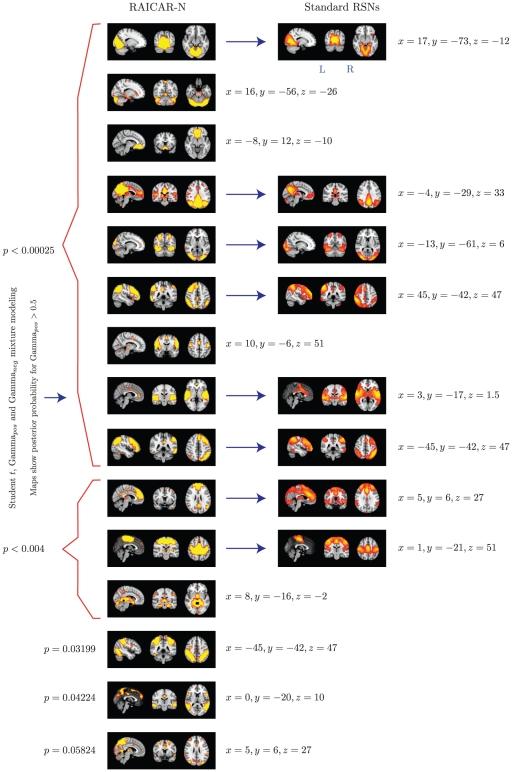
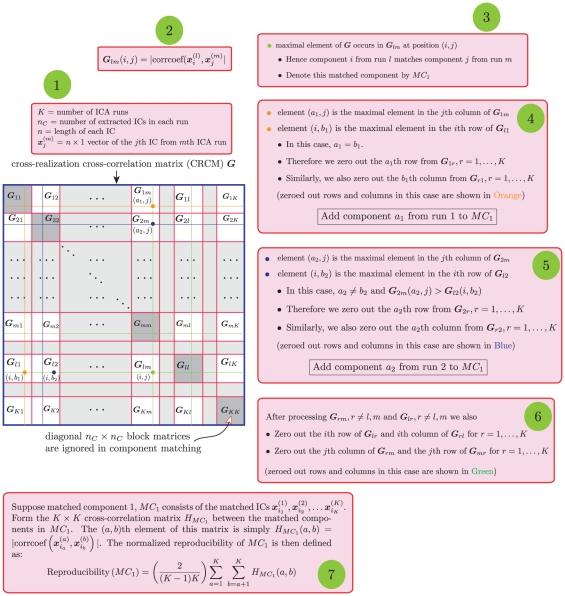
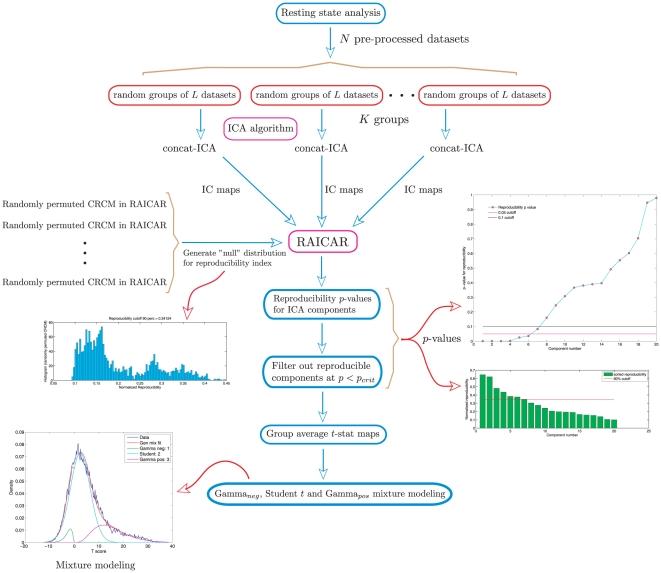
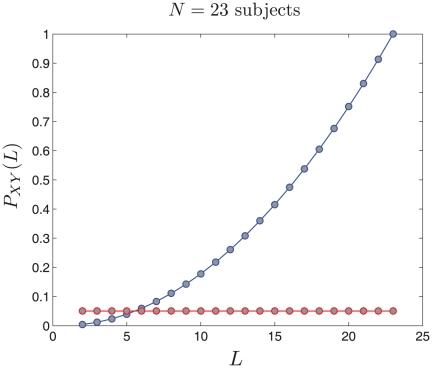
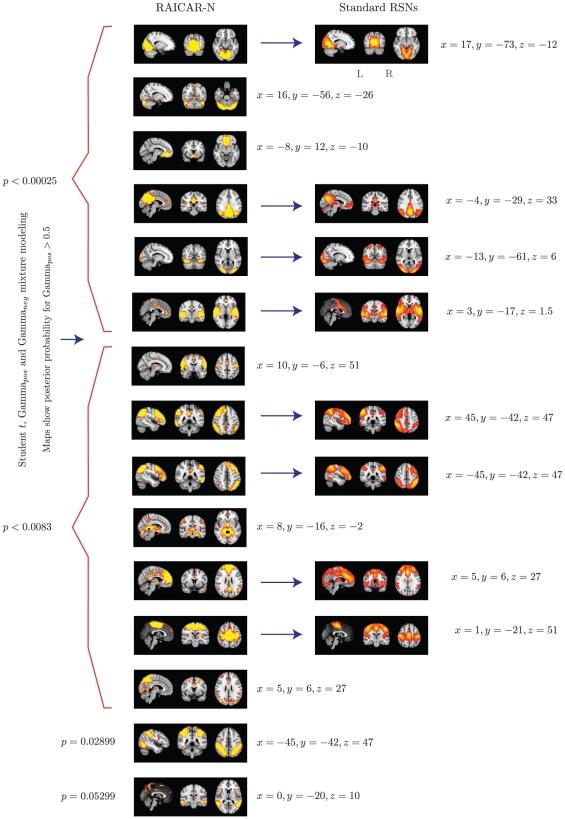
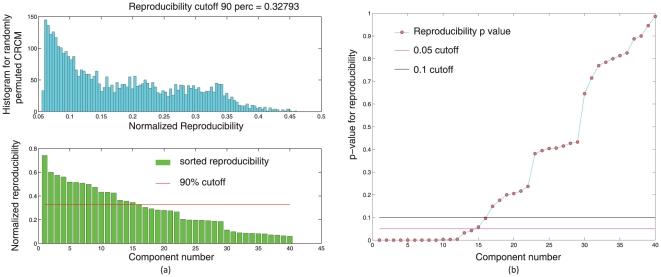
Spatial Independent Component Analysis (ICA) decomposes the time by space functional MRI (fMRI) matrix into a set of 1-D basis time courses and their associated 3-D spatial maps that are optimized for mutual independence. When applied to resting state fMRI (rsfMRI), ICA produces several spatial independent components (ICs) that seem to have biological relevance - the so-called resting state networks (RSNs). The ICA problem is well posed when the true data generating process follows a linear mixture of ICs model in terms of the identifiability of the mixing matrix. However, the contrast function used for promoting mutual independence in ICA is dependent on the finite amount of observed data and is potentially non-convex with multiple local minima. Hence, each run of ICA could produce potentially different IC estimates even for the same data. One technique to deal with this run-to-run variability of ICA was proposed by [1] in their algorithm RAICAR which allows for the selection of only those ICs that have a high run-to-run reproducibility. We propose an enhancement to the original RAICAR algorithm that enables us to assign reproducibility p-values to each IC and allows for an objective assessment of both within subject and across subjects reproducibility. We call the resulting algorithm RAICAR-N (N stands for null hypothesis test), and we have applied it to publicly available human rsfMRI data (http://www.nitrc.org). Our reproducibility analyses indicated that many of the published RSNs in rsfMRI literature are highly reproducible. However, we found several other RSNs that are highly reproducible but not frequently listed in the literature.
空间独立成分分析(ICA)将时间-空间功能磁共振成像(fMRI)矩阵分解为一组优化的相互独立的 1-D 基时程及其相关的 3-D 空间图谱。当应用于静息态 fMRI(rsfMRI)时,ICA 会产生几个具有生物学相关性的空间独立成分(ICs),即所谓的静息态网络(RSNs)。当真实数据生成过程遵循 IC 混合模型的线性混合时,ICA 问题是有解的,这是基于混合矩阵的可识别性。然而,ICA 中用于促进相互独立性的对比函数取决于观察到的有限数量的数据,并且可能是非凸的,具有多个局部最小值。因此,即使对于相同的数据,ICA 的每次运行都可能产生潜在不同的 IC 估计。[1]在他们的 RAICAR 算法中提出了一种处理 ICA 运行间可变性的技术,该技术允许选择那些具有高运行间可重复性的 ICs。我们对原始 RAICAR 算法进行了改进,使我们能够为每个 IC 分配可重复性 p 值,并对个体内和个体间的可重复性进行客观评估。我们将得到的算法称为 RAICAR-N(N 代表零假设检验),并将其应用于公开可用的人类 rsfMRI 数据(http://www.nitrc.org)。我们的可重复性分析表明,许多 rsfMRI 文献中发表的 RSNs 具有高度的可重复性。然而,我们发现了其他几个具有高度可重复性但在文献中未经常列出的 RSNs。



 Zotero 插件