
APC/C 介导的多泛素化提供了细胞周期蛋白 B1 的另一种降解信号。
APC/C-mediated multiple monoubiquitylation provides an alternative degradation signal for cyclin B1.
机构信息
Department of Cell Biology, Harvard Medical School, 240 Longwood Avenue, Boston, Massachusetts 02115, USA.
出版信息
Nat Cell Biol. 2012 Jan 29;14(2):168-76. doi: 10.1038/ncb2425.
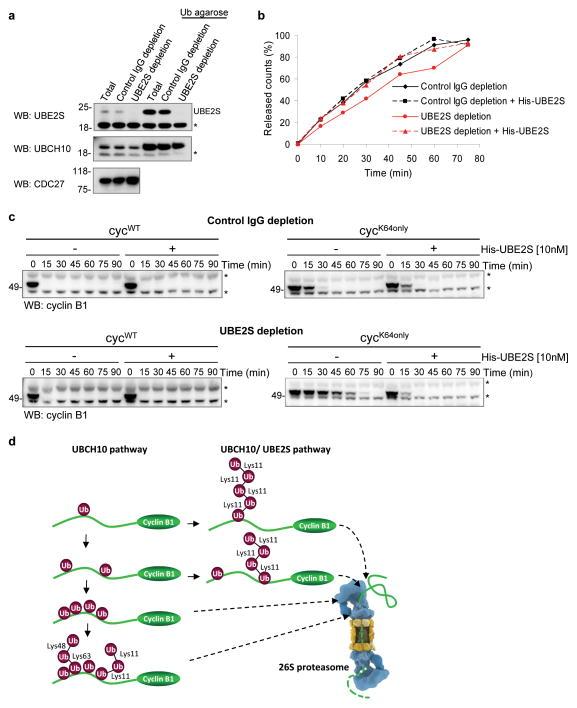
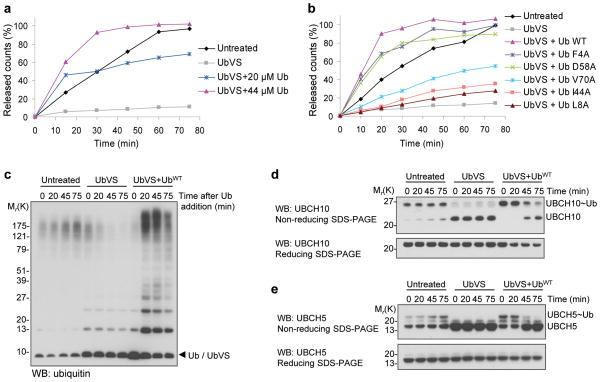
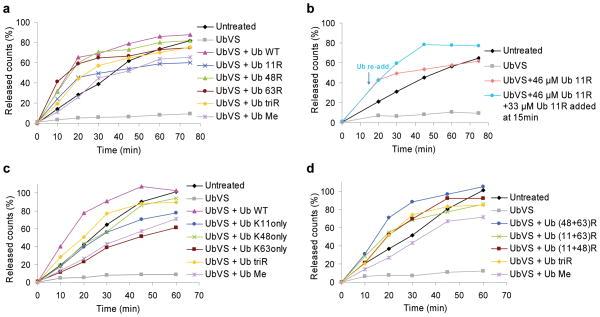
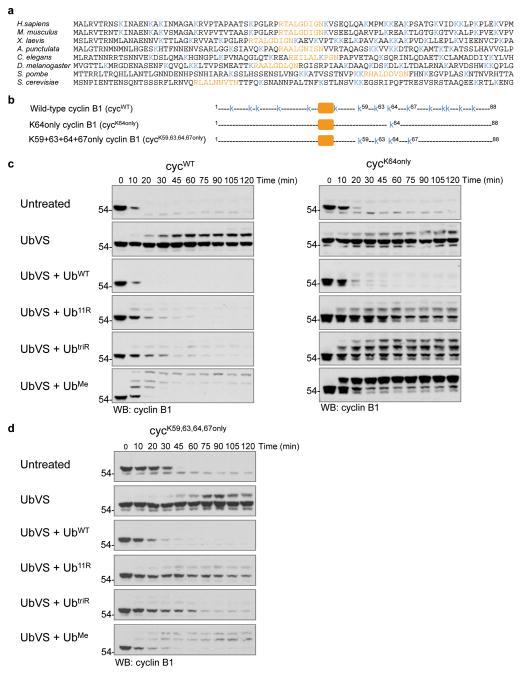
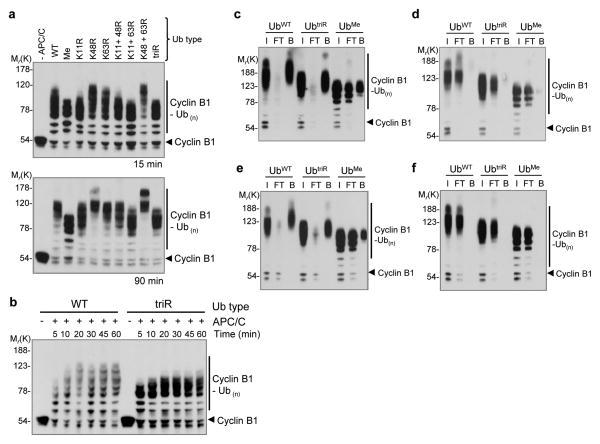
The anaphase-promoting complex or cyclosome (APC/C) initiates mitotic exit by ubiquitylating cell-cycle regulators such as cyclin B1 and securin. Lys 48-linked ubiquitin chains represent the canonical signal targeting proteins for degradation by the proteasome, but they are not required for the degradation of cyclin B1. Lys 11-linked ubiquitin chains have been implicated in degradation of APC/C substrates, but the Lys 11-chain-forming E2 UBE2S is not essential for mitotic exit, raising questions about the nature of the ubiquitin signal that targets APC/C substrates for degradation. Here we demonstrate that multiple monoubiquitylation of cyclin B1, catalysed by UBCH10 or UBC4/5, is sufficient to target cyclin B1 for destruction by the proteasome. When the number of ubiquitylatable lysines in cyclin B1 is restricted, Lys 11-linked ubiquitin polymers elaborated by UBE2S become increasingly important. We therefore explain how a substrate that contains multiple ubiquitin acceptor sites confers flexibility in the requirement for particular E2 enzymes in modulating the rate of ubiquitin-dependent proteolysis.
后期促进复合物或细胞周期蛋白体(APC/C)通过泛素化细胞周期调节剂,如细胞周期蛋白 B1 和 securin,启动有丝分裂退出。赖氨酸 48 连接的泛素链代表将蛋白质靶向降解的典型信号,但它们不是细胞周期蛋白 B1 降解所必需的。赖氨酸 11 连接的泛素链已被牵连到 APC/C 底物的降解中,但赖氨酸 11 链形成 E2 UBE2S 对于有丝分裂退出并非必需,这引发了关于将 APC/C 底物靶向降解的泛素信号的性质的问题。在这里,我们证明了由 UBCH10 或 UBC4/5 催化的细胞周期蛋白 B1 的多种单泛素化足以将细胞周期蛋白 B1 靶向蛋白酶体进行破坏。当细胞周期蛋白 B1 中可泛素化的赖氨酸数量受到限制时,UBE2S 产生的赖氨酸 11 连接的泛素聚合物变得越来越重要。因此,我们解释了包含多个泛素接受位点的底物如何在调节泛素依赖性蛋白水解的特定 E2 酶的速率要求方面赋予灵活性。

 Zotero 插件