
黏着斑处的细胞外基质侵袭性降解是通过黏着斑激酶(FAK)-p130 衔接蛋白(Cas)复合物募集蛋白酶来实现的。
Invasive matrix degradation at focal adhesions occurs via protease recruitment by a FAK-p130Cas complex.
机构信息
Department of Biochemistry and Molecular Biology, and the Center for Basic Research in Digestive Diseases, Mayo Clinic and Graduate School, Rochester, MN 55905, USA.
出版信息
J Cell Biol. 2012 Feb 6;196(3):375-85. doi: 10.1083/jcb.201105153. Epub 2012 Jan 30.
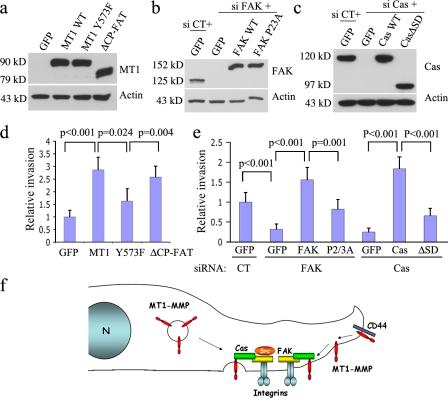
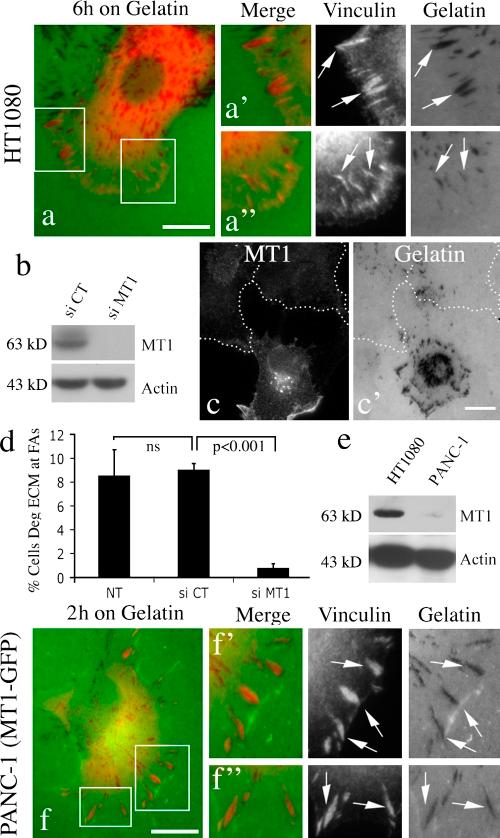
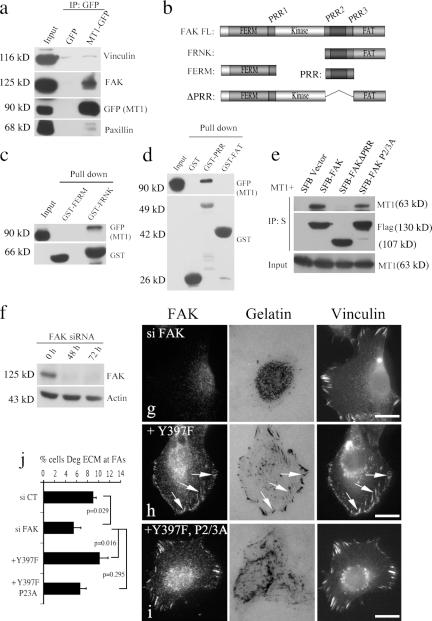
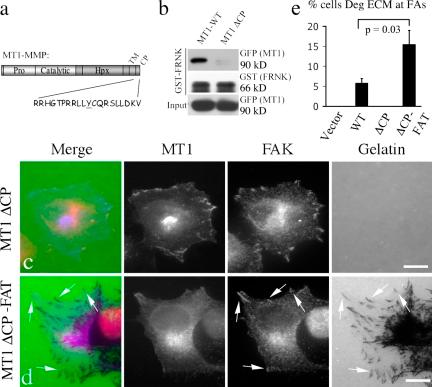
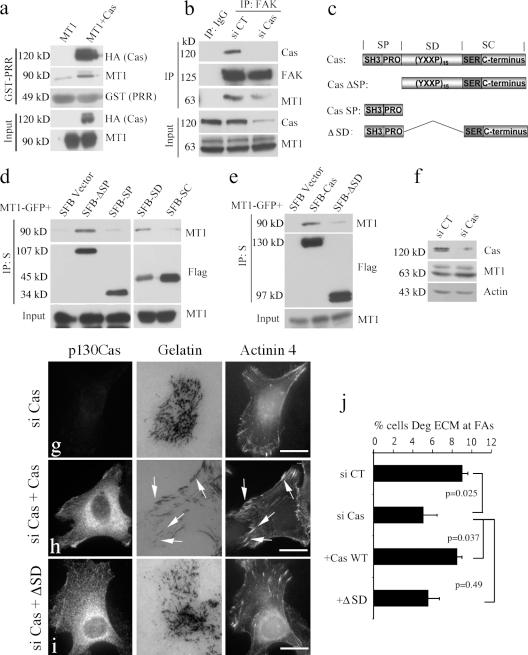
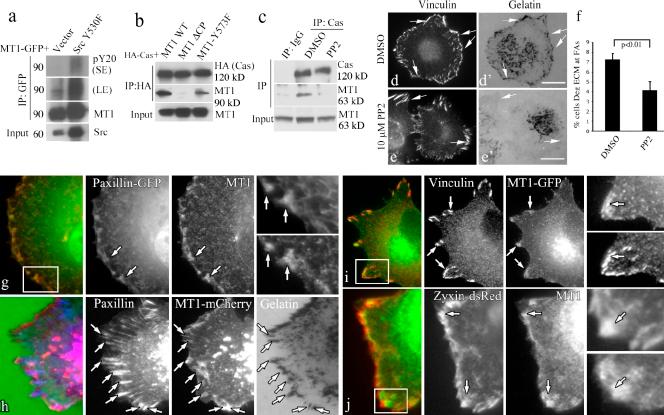
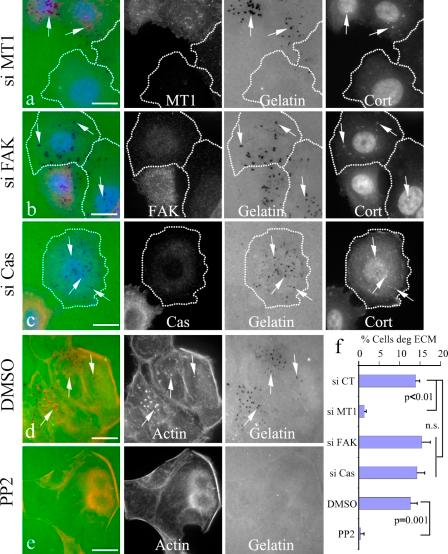
Tumor cell migration and the concomitant degradation of extracellular matrix (ECM) are two essential steps in the metastatic process. It is well established that focal adhesions (FAs) play an important role in regulating migration; however, whether these structures contribute to matrix degradation is not clear. In this study, we report that multiple cancer cell lines display degradation of ECM at FA sites that requires the targeted action of MT1-MMP. Importantly, we have found that this MT1-MMP targeting is dependent on an association with a FAK-p130Cas complex situated at FAs and is regulated by Src-mediated phosphorylation of Tyr 573 at the cytoplasmic tail of MT1. Disrupting the FAK-p130Cas-MT1 complex significantly impairs FA-mediated degradation and tumor cell invasion yet does not appear to affect invadopodia formation or function. These findings demonstrate a novel function for FAs and also provide molecular insights into MT1-MMP targeting and function.
肿瘤细胞迁移和细胞外基质(ECM)的伴随降解是转移过程中的两个重要步骤。已经证实,焦点黏附(FA)在调节迁移中起着重要作用;然而,这些结构是否有助于基质降解尚不清楚。在这项研究中,我们报告说,多种癌细胞系在 FA 部位显示 ECM 的降解,这需要 MT1-MMP 的靶向作用。重要的是,我们发现这种 MT1-MMP 的靶向作用依赖于位于 FA 处的 FAK-p130Cas 复合物的关联,并且受细胞质尾 MT1 上 Src 介导的 Tyr 573 磷酸化调节。破坏 FAK-p130Cas-MT1 复合物显著损害 FA 介导的降解和肿瘤细胞侵袭,但似乎不影响侵袭小体的形成或功能。这些发现证明了 FA 的新功能,也为 MT1-MMP 的靶向作用和功能提供了分子见解。
 Zotero 插件