
精氨酸补充可改善葡聚糖硫酸钠诱导结肠炎对损伤和炎症的反应。
L-arginine supplementation improves responses to injury and inflammation in dextran sulfate sodium colitis.
机构信息
Division of Gastroenterology, Hepatology, and Nutrition, Department of Medicine, Vanderbilt University Medical Center, Nashville, Tennessee, United States of America.
出版信息
PLoS One. 2012;7(3):e33546. doi: 10.1371/journal.pone.0033546. Epub 2012 Mar 12.
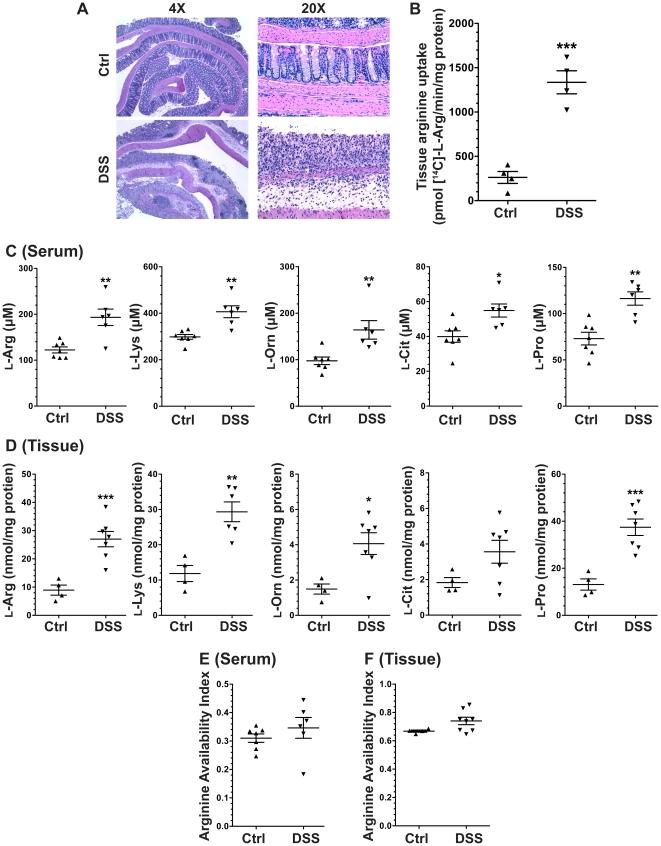
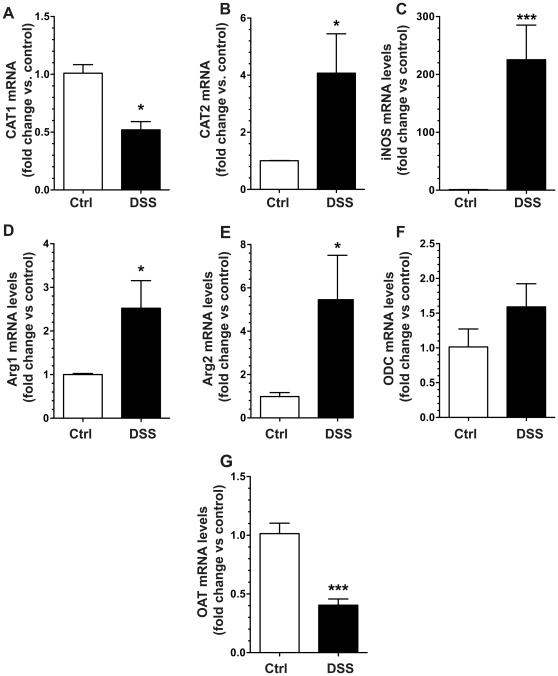
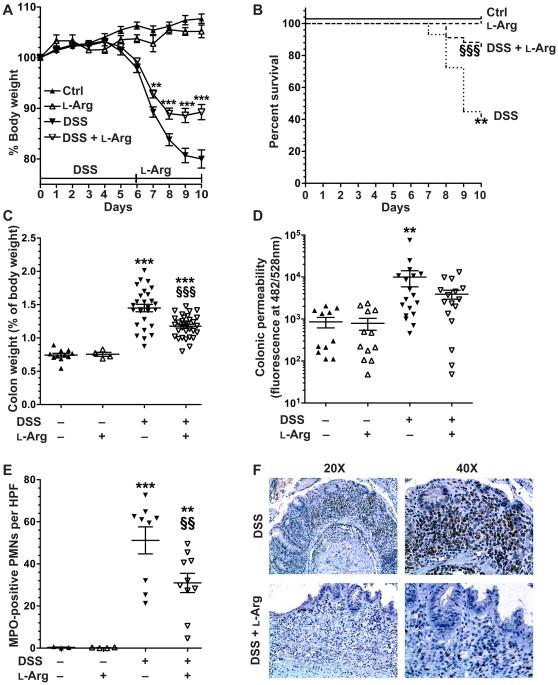
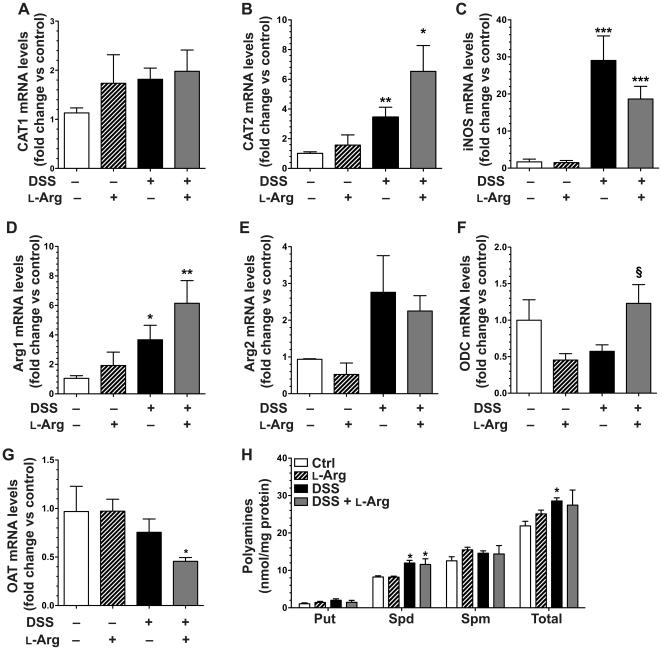
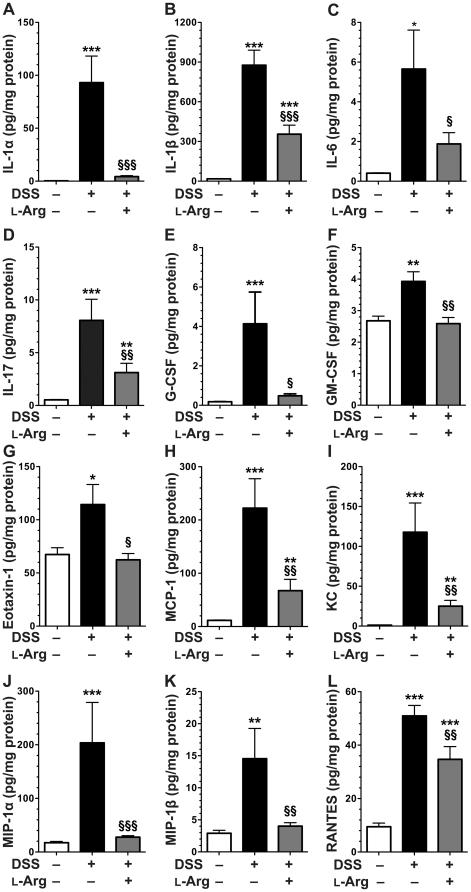
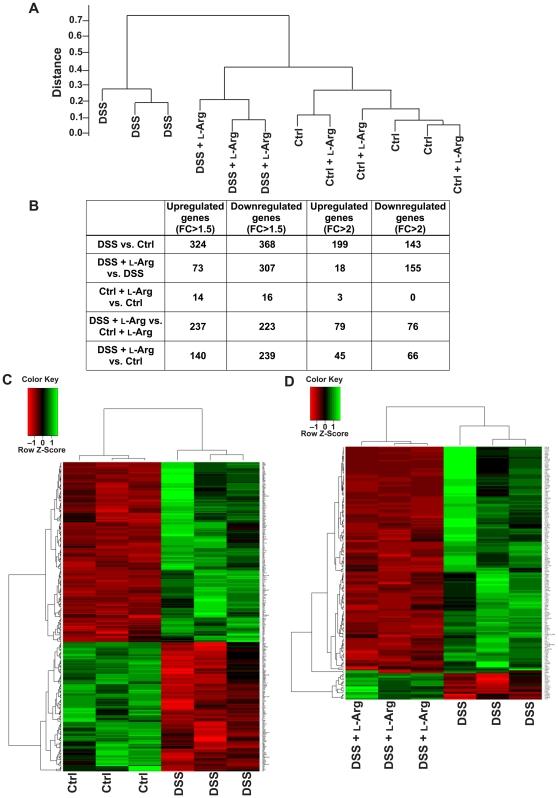
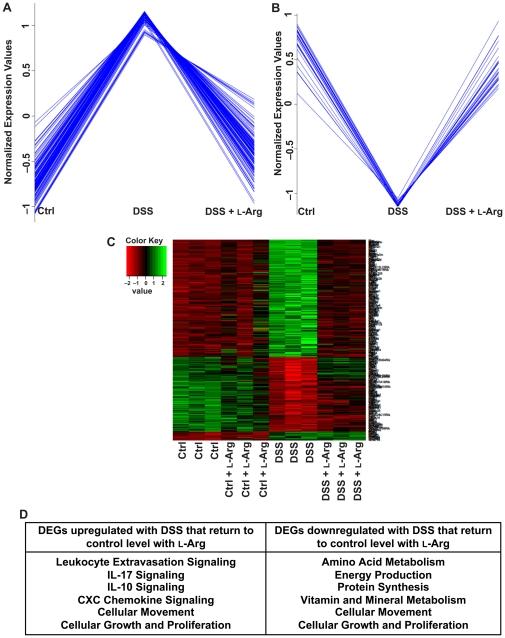
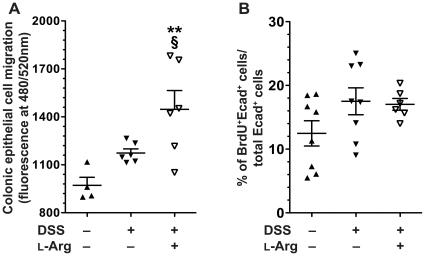
Inflammatory bowel disease (IBD), consisting of Crohn's disease and ulcerative colitis (UC), results in substantial morbidity and is difficult to treat. New strategies for adjunct therapies are needed. One candidate is the semi-essential amino acid, L-arginine (L-Arg), a complementary medicine purported to be an enhancer of immunity and vitality in the lay media. Using dextran sulfate sodium (DSS) as a murine colonic injury and repair model with similarities to human UC, we assessed the effect of L-Arg, as DSS induced increases in colonic expression of the y(+) cationic amino acid transporter 2 (CAT2) and L-Arg uptake. L-Arg supplementation improved the clinical parameters of survival, body weight loss, and colon weight, and reduced colonic permeability and the number of myeloperoxidase-positive neutrophils in DSS colitis. Luminex-based multi-analyte profiling demonstrated that there was a marked reduction in proinflammatory cytokine and chemokine expression with L-Arg treatment. Genomic analysis by microarray demonstrated that DSS-treated mice supplemented with L-Arg clustered more closely with mice not exposed to DSS than to those receiving DSS alone, and revealed that multiple genes that were upregulated or downregulated with DSS alone exhibited normalization of expression with L-Arg supplementation. Additionally, L-Arg treatment of mice with DSS colitis resulted in increased ex vivo migration of colonic epithelial cells, suggestive of increased capacity for wound repair. Because CAT2 induction was sustained during L-Arg treatment and inducible nitric oxide (NO) synthase (iNOS) requires uptake of L-Arg for generation of NO, we tested the effect of L-Arg in iNOS(-/-) mice and found that its benefits in DSS colitis were eliminated. These preclinical studies indicate that L-Arg supplementation could be a potential therapy for IBD, and that one mechanism of action may be functional enhancement of iNOS activity.
炎症性肠病(IBD)包括克罗恩病和溃疡性结肠炎(UC),会导致严重的发病率,且难以治疗。需要新的辅助治疗策略。候选药物之一是半必需氨基酸 L-精氨酸(L-Arg),它是一种补充药物,据称在大众媒体中具有增强免疫力和活力的作用。我们使用葡聚糖硫酸钠(DSS)作为一种类似于人类 UC 的鼠结肠损伤和修复模型,评估了 L-Arg 的作用,因为 DSS 诱导的鼠结肠 y(+)阳离子氨基酸转运体 2(CAT2)和 L-Arg 摄取增加。L-Arg 补充改善了 DSS 结肠炎的临床参数,如存活率、体重减轻和结肠重量,降低了结肠通透性和髓过氧化物酶阳性中性粒细胞的数量。Luminex 多分析物分析表明,L-Arg 治疗可显著降低促炎细胞因子和趋化因子的表达。通过微阵列进行的基因组分析表明,用 L-Arg 补充的 DSS 处理的小鼠与未暴露于 DSS 的小鼠聚类更紧密,而与单独接受 DSS 的小鼠聚类更不紧密,并且表明单独用 DSS 上调或下调的多个基因在用 L-Arg 补充后表达正常化。此外,L-Arg 治疗 DSS 结肠炎的小鼠导致结肠上皮细胞的体外迁移增加,提示伤口修复能力增强。由于 CAT2 的诱导在 L-Arg 治疗期间持续存在,并且诱导型一氧化氮合酶(iNOS)需要摄取 L-Arg 来生成 NO,因此我们测试了 L-Arg 在 iNOS(-/-) 小鼠中的作用,发现它在 DSS 结肠炎中的益处被消除。这些临床前研究表明,L-Arg 补充可能是 IBD 的一种潜在治疗方法,其作用机制之一可能是功能性增强 iNOS 活性。


 Zotero 插件