
在 2009 年 H1N1 流感大流行之后,一种基于社区的参与式方法和参与过程为偏远和与世隔绝的安大略省北极地区的第一民族社区制定了文化上适宜和社区知情的大流行计划。
A community-based participatory approach and engagement process creates culturally appropriate and community informed pandemic plans after the 2009 H1N1 influenza pandemic: remote and isolated First Nations communities of sub-arctic Ontario, Canada.
机构信息
Department of Environment and Resource Studies, University of Waterloo, Waterloo, ON, Canada.
出版信息
BMC Public Health. 2012 Apr 3;12:268. doi: 10.1186/1471-2458-12-268.
BACKGROUND
Public health emergencies have the potential to disproportionately impact disadvantaged populations due to pre-established social and economic inequalities. Internationally, prior to the 2009 H1N1 influenza pandemic, existing pandemic plans were created with limited public consultation; therefore, the unique needs and characteristics of some First Nations communities may not be ethically and adequately addressed. Engaging the public in pandemic planning can provide vital information regarding local values and beliefs that may ultimately lead to increased acceptability, feasibility, and implementation of pandemic plans. Thus, the objective of the present study was to elicit and address First Nations community members' suggested modifications to their community-level pandemic plans after the 2009 H1N1 influenza pandemic.
METHODS
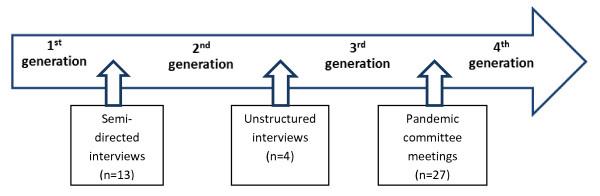
The study area included three remote and isolated First Nations communities located in sub-arctic Ontario, Canada. A community-based participatory approach and community engagement process (i.e., semi-directed interviews (n = 13), unstructured interviews (n = 4), and meetings (n = 27)) were employed. Participants were purposively sampled and represented various community stakeholders (e.g., local government, health care, clergy, education, etc.) involved in the community's pandemic response. Collected data were manually transcribed and coded using deductive and inductive thematic analysis. The data subsequently informed the modification of the community-level pandemic plans.
RESULTS
The primary modifications incorporated in the community-level pandemic plans involved adding community-specific detail. For example, 'supplies' emerged as an additional category of pandemic preparedness and response, since including details about supplies and resources was important due to the geographical remoteness of the study communities. Furthermore, it was important to add details of how, when, where, and who was responsible for implementing recommendations outlined in the pandemic plans. Additionally, the roles and responsibilities of the involved organizations were further clarified.
CONCLUSIONS
Our results illustrate the importance of engaging the public, especially First Nations, in pandemic planning to address local perspectives. The community engagement process used was successful in incorporating community-based input to create up-to-date and culturally-appropriate community-level pandemic plans. Since these pandemic plans are dynamic in nature, we recommend that the plans are continuously updated to address the communities' evolving needs. It is hoped that these modified plans will lead to an improved pandemic response capacity and health outcomes, during the next public health emergency, for these remote and isolated First Nations communities. Furthermore, the suggested modifications presented in this paper may help inform updates to the community-level pandemic plans of other similar communities.
背景
由于预先存在的社会和经济不平等,公共卫生突发事件有可能不成比例地影响弱势群体。在国际上,2009 年 H1N1 流感大流行之前,现有的大流行计划是在有限的公众咨询的情况下制定的;因此,一些第一民族社区的独特需求和特征可能在伦理和充分上得不到解决。让公众参与大流行规划可以提供有关当地价值观和信仰的重要信息,这最终可能会提高大流行计划的可接受性、可行性和实施。因此,本研究的目的是在 2009 年 H1N1 流感大流行之后,征求并解决第一民族社区成员对其社区层面大流行计划的修改建议。
方法
研究区域包括加拿大安大略省北极地区的三个偏远和孤立的第一民族社区。采用社区为基础的参与式方法和社区参与过程(即半定向访谈(n=13)、非结构化访谈(n=4)和会议(n=27))。参与者是有目的地抽样的,代表了参与社区大流行应对的各种社区利益相关者(例如,地方政府、医疗保健、神职人员、教育等)。收集的数据经过手动转录和编码,采用演绎和归纳主题分析。这些数据随后为修改社区层面的大流行计划提供了信息。
结果
纳入社区层面大流行计划的主要修改涉及添加社区特定的细节。例如,“物资”成为大流行准备和应对的一个额外类别,因为由于研究社区的地理位置偏远,包括有关物资和资源的详细信息非常重要。此外,重要的是要添加有关如何、何时、何地以及谁负责实施大流行计划中概述的建议的详细信息。此外,还进一步澄清了参与组织的角色和责任。
结论
我们的研究结果表明,让公众,特别是第一民族参与大流行规划以解决当地观点的重要性。所使用的社区参与过程成功地纳入了基于社区的投入,以制定最新的、文化上合适的社区层面大流行计划。由于这些大流行计划本质上是动态的,我们建议不断更新这些计划以满足社区不断变化的需求。希望这些修改后的计划能够为这些偏远和孤立的第一民族社区在下一次公共卫生突发事件中提高大流行应对能力和健康结果。此外,本文提出的修改建议可能有助于为其他类似社区的社区层面大流行计划提供信息。
 Zotero 插件