
联合 mTOR 和 MEK 抑制对葡萄膜黑色素瘤的影响取决于肿瘤基因型。
Impact of combined mTOR and MEK inhibition in uveal melanoma is driven by tumor genotype.
机构信息
Laboratory of New Drug Development, Memorial Sloan-Kettering Cancer Center, New York, New York, United States of America.
出版信息
PLoS One. 2012;7(7):e40439. doi: 10.1371/journal.pone.0040439. Epub 2012 Jul 10.
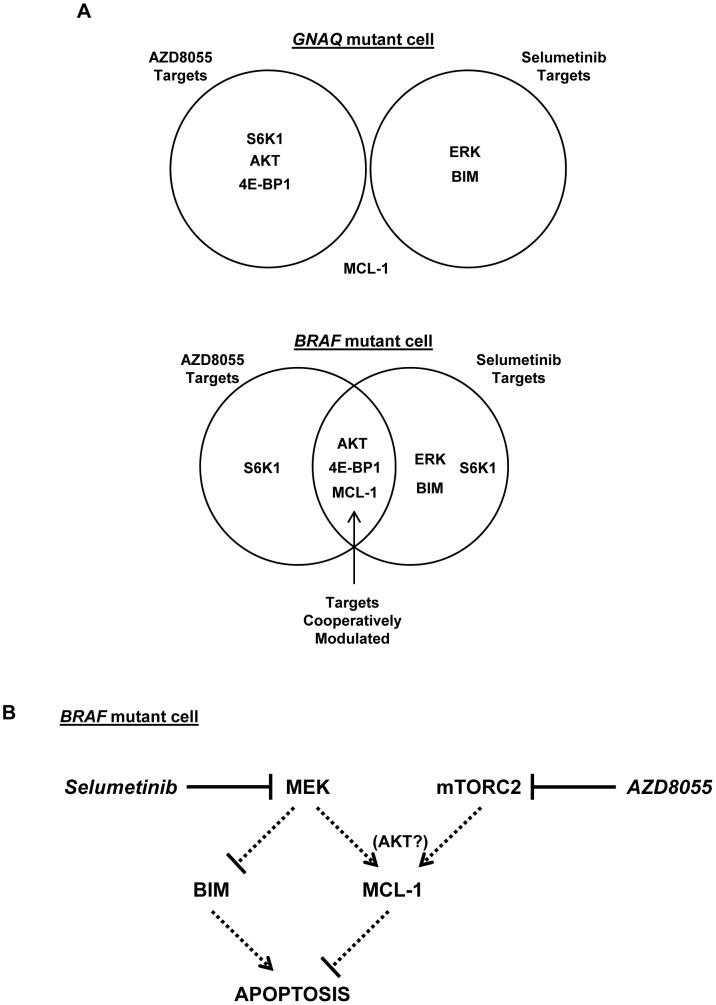
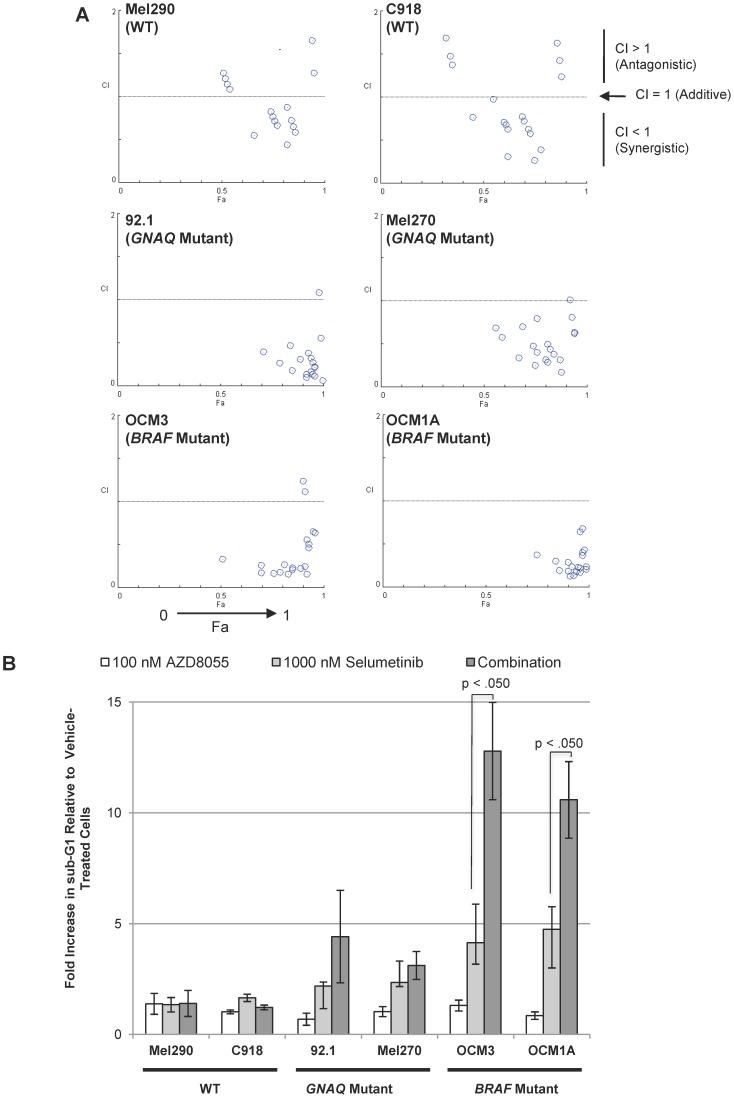
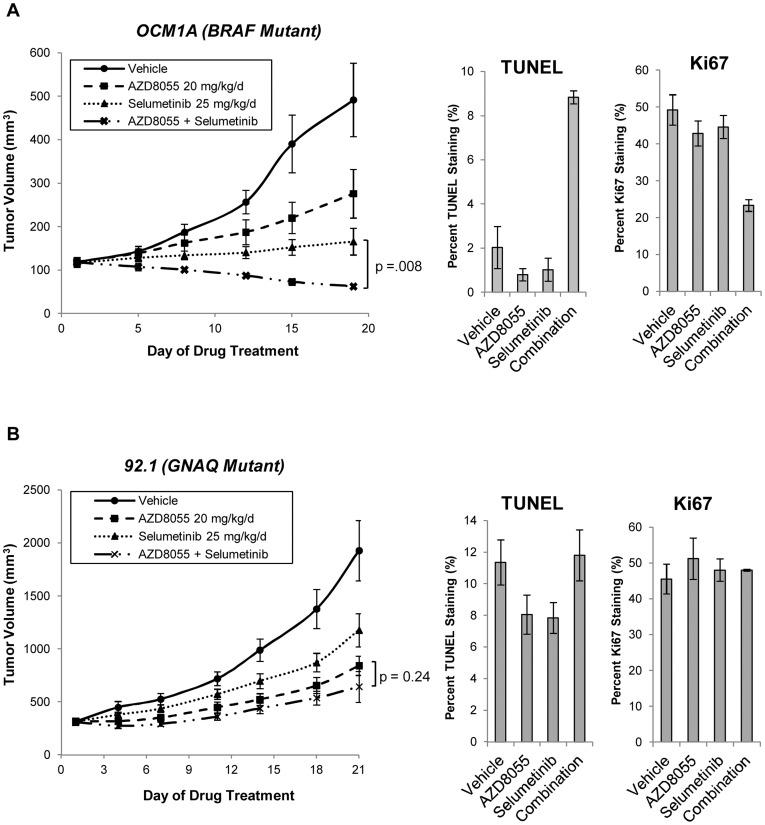
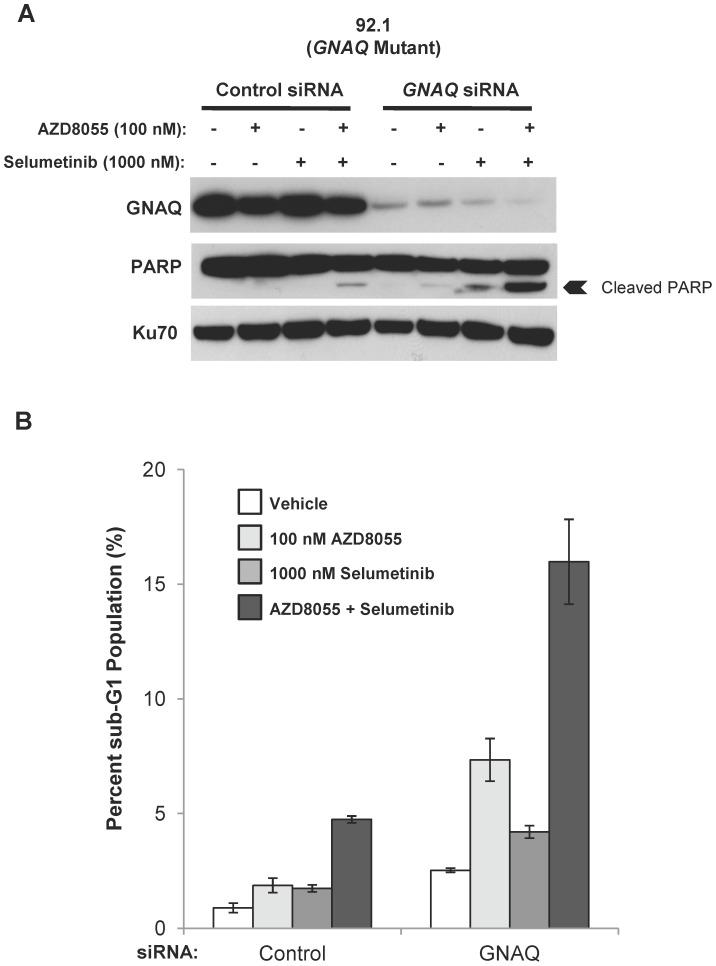
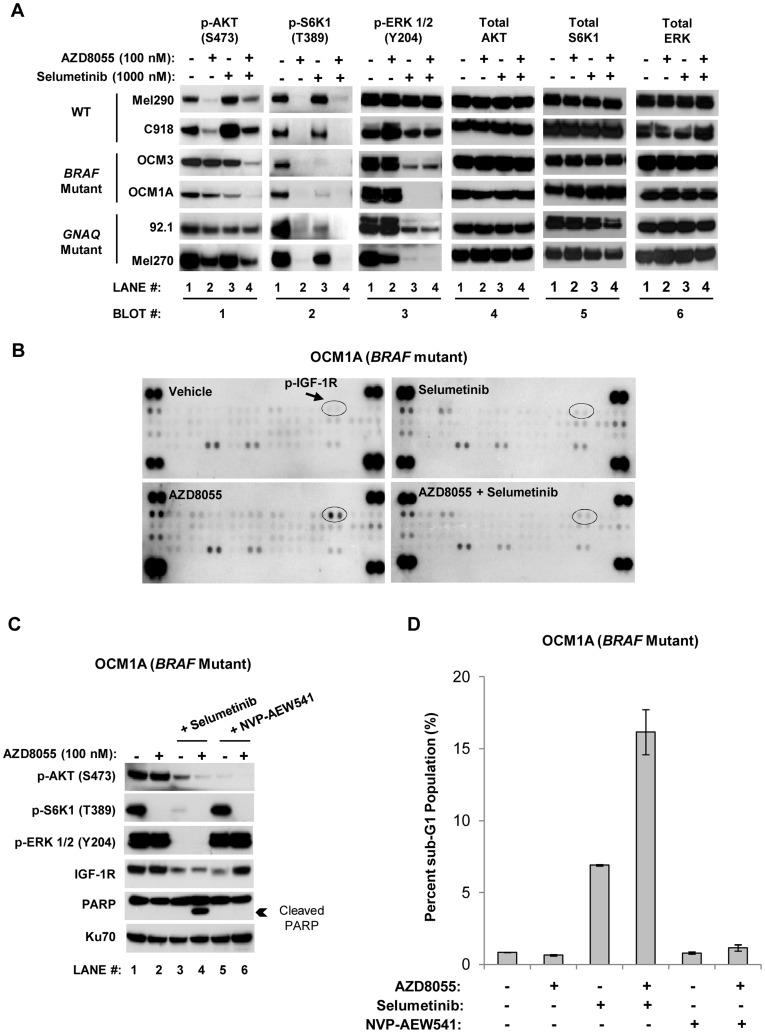
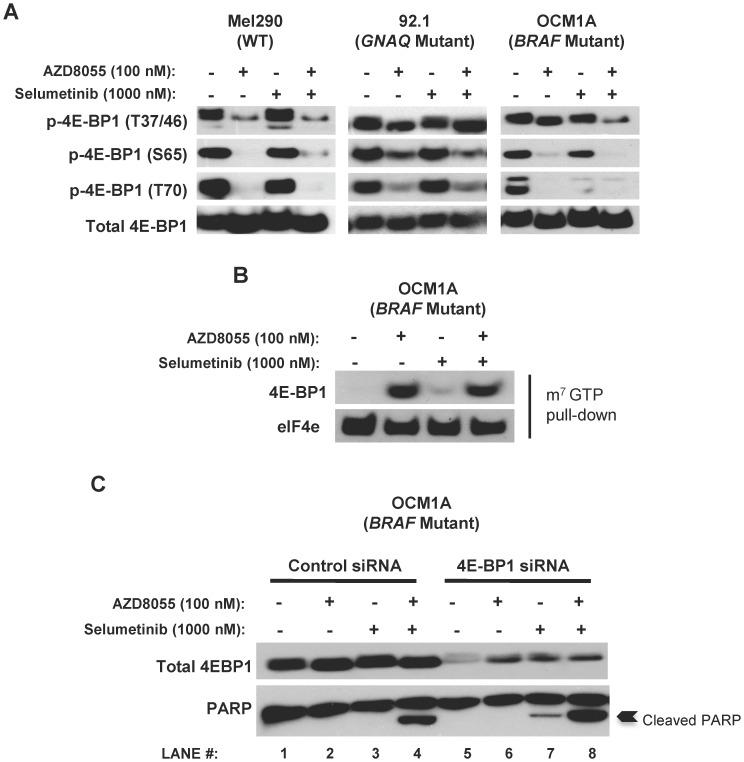
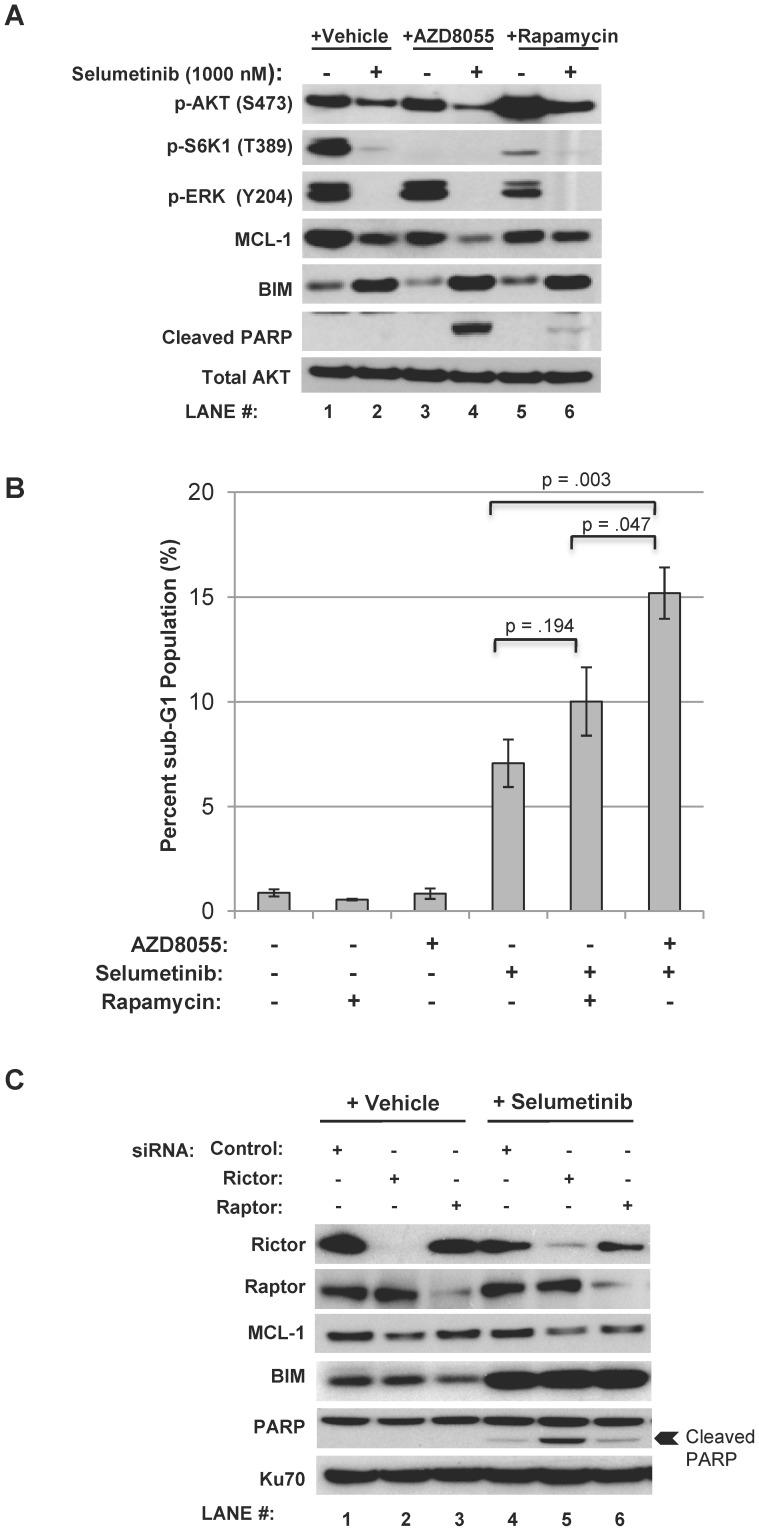
Uveal melanomas possess activation of the mitogen-activated protein kinase (MAPK) and phosphoinositide 3-kinase (PI3K)/AKT/mammalian Target of Rapamycin (mTOR) pathways. MAPK activation occurs via somatic mutations in the heterotrimeric G protein subunits GNAQ and GNA11 for over 70% of tumors and less frequently via V600E BRAF mutations. In this report, we describe the impact of dual pathway inhibition upon uveal melanoma cell lines with the MEK inhibitor selumetinib (AZD6244/ARRY-142886) and the ATP-competitive mTOR kinase inhibitor AZD8055. While synergistic reductions in cell viability were observed with AZD8055/selumetinib in both BRAF and GNAQ mutant cell lines, apoptosis was preferentially induced in BRAF mutant cells only. In vitro apoptosis assay results were predictive of in vivo drug efficacy as tumor regressions were observed only in a BRAF mutant xenograft model, but not GNAQ mutant model. We went on to discover that GNAQ promotes relative resistance to AZD8055/selumetinib-induced apoptosis in GNAQ mutant cells. For BRAF mutant cells, both AKT and 4E-BP1 phosphorylation were modulated by the combination; however, decreasing AKT phosphorylation alone was not sufficient and decreasing 4E-BP1 phosphorylation was not required for apoptosis. Instead, cooperative mTOR complex 2 (mTORC2) and MEK inhibition resulting in downregulation of the pro-survival protein MCL-1 was found to be critical for combination-induced apoptosis. These results suggest that the clinical efficacy of combined MEK and mTOR kinase inhibition will be determined by tumor genotype, and that BRAF mutant malignancies will be particularly susceptible to this strategy.
葡萄膜黑色素瘤存在丝裂原活化蛋白激酶(MAPK)和磷酸肌醇 3-激酶(PI3K)/AKT/雷帕霉素靶蛋白(mTOR)通路的激活。超过 70%的肿瘤中,MAPK 的激活是通过异三聚体 G 蛋白亚基 GNAQ 和 GNA11 的体细胞突变发生的,而较少通过 V600E BRAF 突变发生。在本报告中,我们描述了双重通路抑制对具有 MEK 抑制剂 selumetinib(AZD6244/ARRY-142886)和 ATP 竞争性 mTOR 激酶抑制剂 AZD8055 的葡萄膜黑色素瘤细胞系的影响。虽然在 BRAF 和 GNAQ 突变细胞系中,AZD8055/selumetinib 协同降低细胞活力,但仅在 BRAF 突变细胞中优先诱导细胞凋亡。体外凋亡测定结果可预测体内药物疗效,因为仅在 BRAF 突变异种移植模型中观察到肿瘤消退,而在 GNAQ 突变模型中则没有。我们继续发现 GNAQ 促进 GNAQ 突变细胞对 AZD8055/selumetinib 诱导的凋亡的相对耐药性。对于 BRAF 突变细胞,组合可调节 AKT 和 4E-BP1 的磷酸化;然而,单独降低 AKT 磷酸化是不够的,并且降低 4E-BP1 磷酸化不是凋亡所必需的。相反,发现协同的 mTOR 复合物 2(mTORC2)和 MEK 抑制导致促生存蛋白 MCL-1 的下调对于组合诱导的凋亡至关重要。这些结果表明,联合 MEK 和 mTOR 激酶抑制的临床疗效将取决于肿瘤基因型,并且 BRAF 突变恶性肿瘤将特别容易受到这种策略的影响。

 Zotero 插件