
凝溶胶蛋白通过调节尿激酶型纤溶酶原激活物级联反应诱导结直肠肿瘤细胞侵袭。
Gelsolin induces colorectal tumor cell invasion via modulation of the urokinase-type plasminogen activator cascade.
机构信息
Department of Physiology, Yong Loo Lin School of Medicine, National University of Singapore, Singapore, Singapore.
出版信息
PLoS One. 2012;7(8):e43594. doi: 10.1371/journal.pone.0043594. Epub 2012 Aug 21.
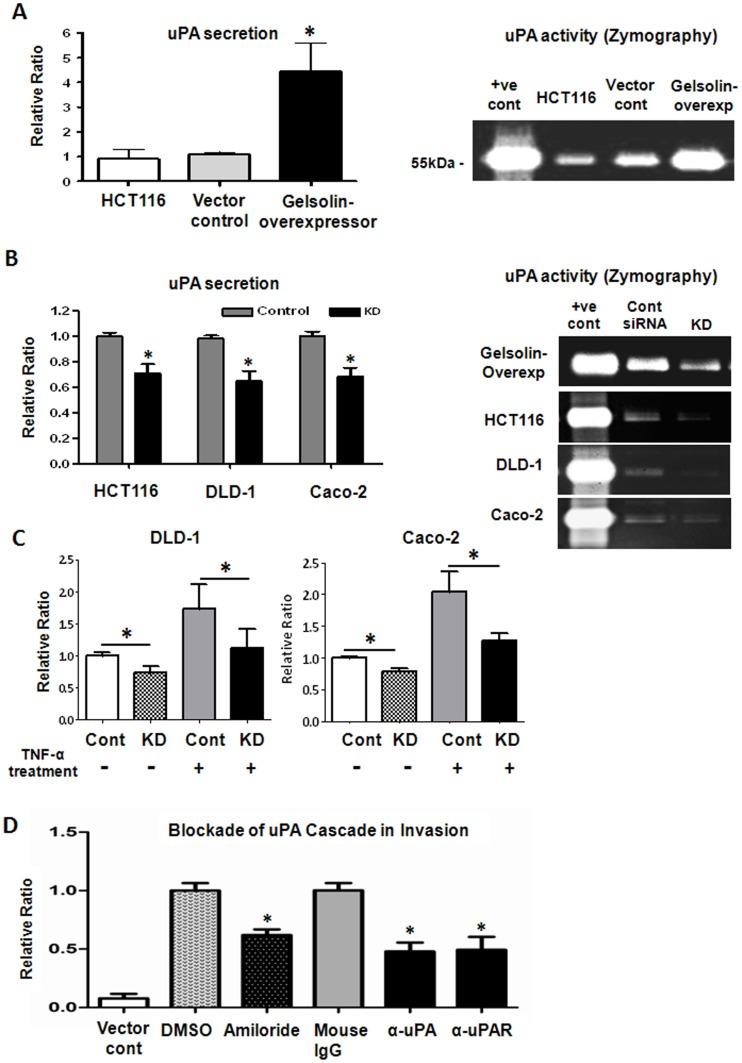
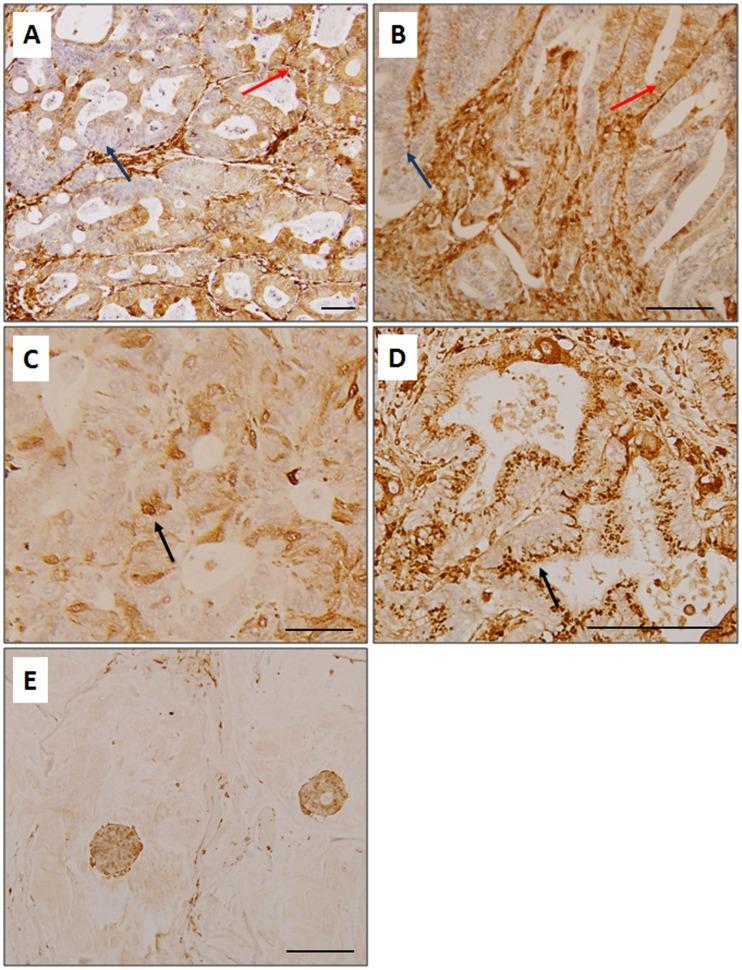
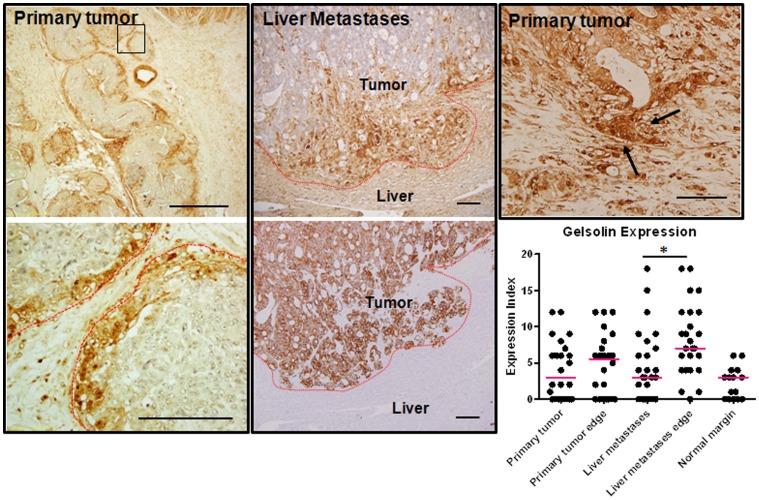
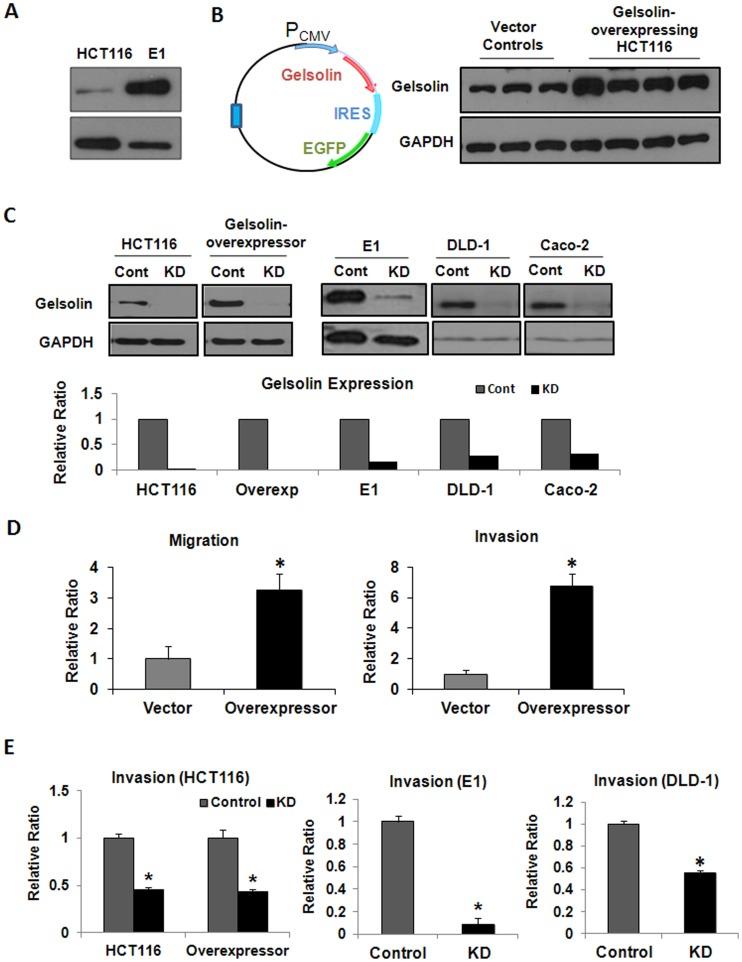
Gelsolin is a cytoskeletal protein which participates in actin filament dynamics and promotes cell motility and plasticity. Although initially regarded as a tumor suppressor, gelsolin expression in certain tumors correlates with poor prognosis and therapy-resistance. In vitro, gelsolin has anti-apoptotic and pro-migratory functions and is critical for invasion of some types of tumor cells. We found that gelsolin was highly expressed at tumor borders infiltrating into adjacent liver tissues, as examined by immunohistochemistry. Although gelsolin contributes to lamellipodia formation in migrating cells, the mechanisms by which it induces tumor invasion are unclear. Gelsolin's influence on the invasive activity of colorectal cancer cells was investigated using overexpression and small interfering RNA knockdown. We show that gelsolin is required for invasion of colorectal cancer cells through matrigel. Microarray analysis and quantitative PCR indicate that gelsolin overexpression induces the upregulation of invasion-promoting genes in colorectal cancer cells, including the matrix-degrading urokinase-type plasminogen activator (uPA). Conversely, gelsolin knockdown reduces uPA levels, as well as uPA secretion. The enhanced invasiveness of gelsolin-overexpressing cells was attenuated by treatment with function-blocking antibodies to either uPA or its receptor uPAR, indicating that uPA/uPAR activity is crucial for gelsolin-dependent invasion. In summary, our data reveals novel functions of gelsolin in colorectal tumor cell invasion through its modulation of the uPA/uPAR cascade, with potentially important roles in colorectal tumor dissemination to metastatic sites.
肌动蛋白凝胶蛋白是一种细胞骨架蛋白,参与肌动蛋白丝动力学,并促进细胞运动性和可塑性。尽管最初被认为是一种肿瘤抑制因子,但某些肿瘤中的凝胶蛋白表达与预后不良和耐药性相关。在体外,凝胶蛋白具有抗细胞凋亡和促迁移功能,对于某些类型的肿瘤细胞的侵袭至关重要。我们发现,通过免疫组织化学检查,凝胶蛋白在浸润到相邻肝组织中的肿瘤边界处高度表达。虽然凝胶蛋白有助于迁移细胞中片状伪足的形成,但它诱导肿瘤侵袭的机制尚不清楚。通过过表达和小干扰 RNA 敲低研究了凝胶蛋白对结直肠癌细胞侵袭活性的影响。我们表明,凝胶蛋白是结直肠癌细胞通过基质胶侵袭所必需的。微阵列分析和定量 PCR 表明,凝胶蛋白过表达诱导结直肠癌细胞中促进侵袭的基因上调,包括基质降解尿激酶型纤溶酶原激活物 (uPA)。相反,凝胶蛋白敲低会降低 uPA 水平及其分泌。用针对 uPA 或其受体 uPAR 的功能阻断抗体处理可减弱过表达凝胶蛋白的细胞的侵袭性,表明 uPA/uPAR 活性对于凝胶蛋白依赖性侵袭至关重要。总之,我们的数据揭示了凝胶蛋白在结直肠肿瘤细胞侵袭中的新功能,通过其对 uPA/uPAR 级联的调节,在结直肠肿瘤向转移部位扩散中可能具有重要作用。

 Zotero 插件