
温度和光照胁迫适应的转录组分析在巨藻(褐藻门)中。
Transcriptomic analysis of acclimation to temperature and light stress in Saccharina latissima (Phaeophyceae).
机构信息
Department of Functional Ecology, Alfred Wegener Institute for Polar and Marine Research, Bremerhaven, Germany.
出版信息
PLoS One. 2012;7(8):e44342. doi: 10.1371/journal.pone.0044342. Epub 2012 Aug 28.
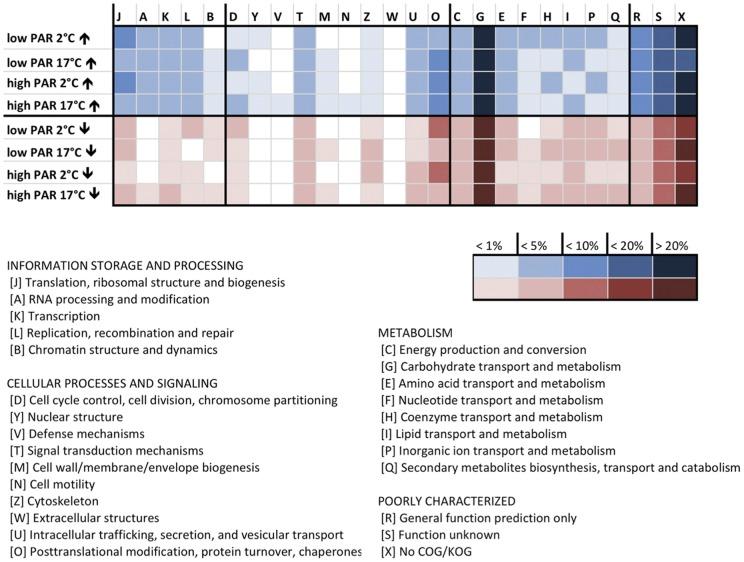
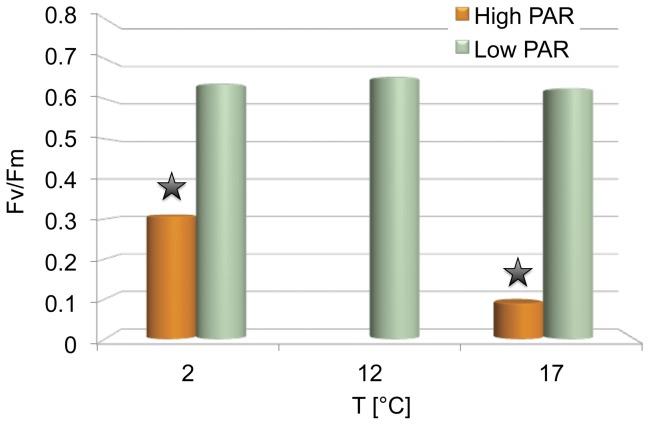
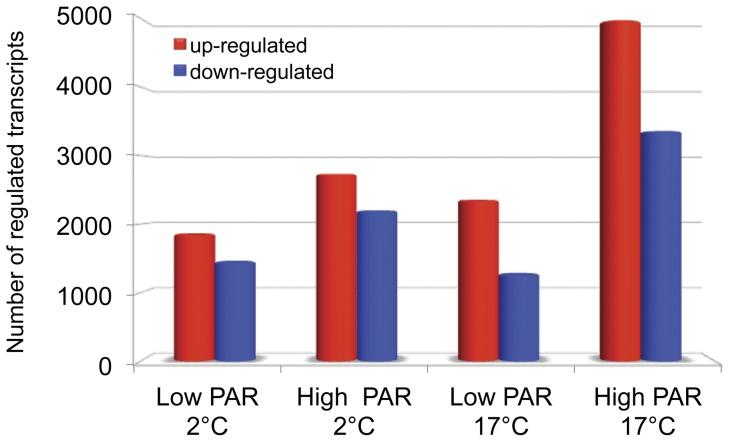
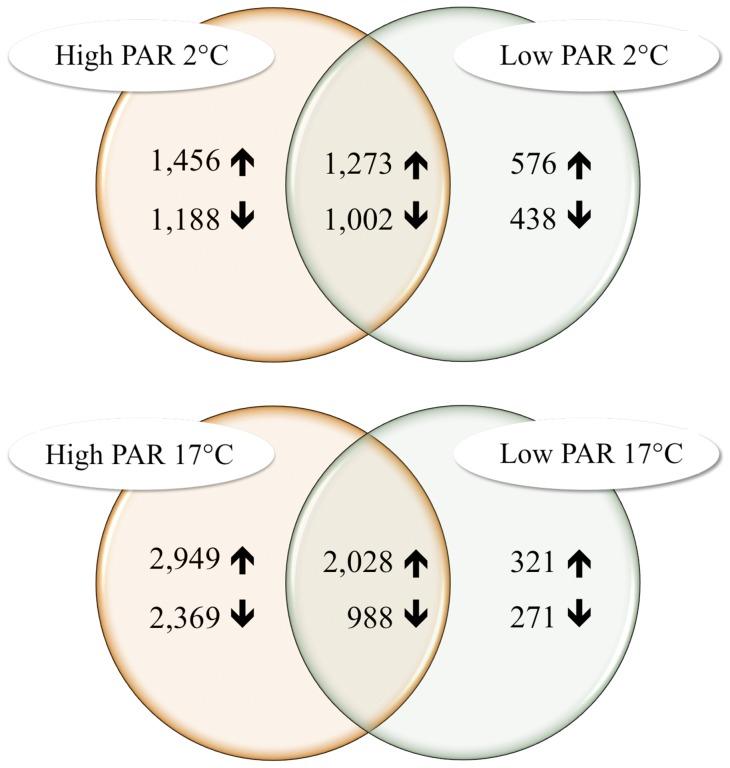
Kelps, brown algae of the order Laminariales, dominate rocky shores and form huge kelp beds which provide habitat and nurseries for various marine organisms. Whereas the basic physiological and ecophysiological characteristics of kelps are well studied, the molecular processes underlying acclimation to different light and temperature conditions are still poorly understood. Therefore we investigated the molecular mechanisms underlying the physiological acclimation to light and temperature stress. Sporophytes of S. latissima were exposed to combinations of light intensities and temperatures, and microarray hybridizations were performed to determine changes in gene expression patterns. This first large-scale transcriptomic study of a kelp species shows that S. latissima responds to temperature and light stress with a multitude of transcriptional changes: up to 32% of genes showed an altered expression after the exposure experiments. High temperature had stronger effects on gene expression in S. latissima than low temperature, reflected by the higher number of temperature-responsive genes. We gained insights into underlying molecular processes of acclimation, which includes adjustment of the primary metabolism as well as induction of several ROS scavengers and a sophisticated regulation of Hsps. We show that S. latissima, as a cold adapted species, must make stronger efforts for acclimating to high than to low temperatures. The strongest response was caused by the combination of high temperatures with high light intensities, which proved most harmful for the alga.
巨藻,属于褐藻门的大型褐藻,在多岩石的海岸线上占主导地位,并形成巨大的巨藻床,为各种海洋生物提供栖息地和托儿所。虽然巨藻的基本生理和生态生理特征已经得到很好的研究,但适应不同光照和温度条件的分子过程仍知之甚少。因此,我们研究了适应光照和温度胁迫的分子机制。我们将 S. latissima 的孢子体暴露在不同光照强度和温度的组合下,并进行微阵列杂交,以确定基因表达模式的变化。这是对一种巨藻物种进行的首次大规模转录组学研究表明,S. latissima 对温度和光照胁迫有多种转录变化的反应:多达 32%的基因在暴露实验后表达发生改变。高温对 S. latissima 的基因表达影响大于低温,这反映在更多的温度响应基因上。我们深入了解了适应的潜在分子过程,其中包括对初级代谢的调整,以及几种 ROS 清除剂的诱导和 Hsps 的复杂调节。我们表明,S. latissima 作为一种适应寒冷的物种,必须更加努力地适应高温而不是低温。最强的反应是高温与高光强的组合,这对藻类最有害。
 Zotero 插件