
成年 P301S 转基因小鼠脑片器官培养--用于 tau 病研究的模型。
Organotypic brain slice cultures of adult transgenic P301S mice--a model for tauopathy studies.
机构信息
Institute of Bioanalytical Chemistry, Center for Biotechnology and Biomedicine, BBZ, University of Leipzig, Leipzig, Germany.
出版信息
PLoS One. 2012;7(9):e45017. doi: 10.1371/journal.pone.0045017. Epub 2012 Sep 11.
BACKGROUND
Organotypic brain slice cultures represent an excellent compromise between single cell cultures and complete animal studies, in this way replacing and reducing the number of animal experiments. Organotypic brain slices are widely applied to model neuronal development and regeneration as well as neuronal pathology concerning stroke, epilepsy and Alzheimer's disease (AD). AD is characterized by two protein alterations, namely tau hyperphosphorylation and excessive amyloid β deposition, both causing microglia and astrocyte activation. Deposits of hyperphosphorylated tau, called neurofibrillary tangles (NFTs), surrounded by activated glia are modeled in transgenic mice, e.g. the tauopathy model P301S.
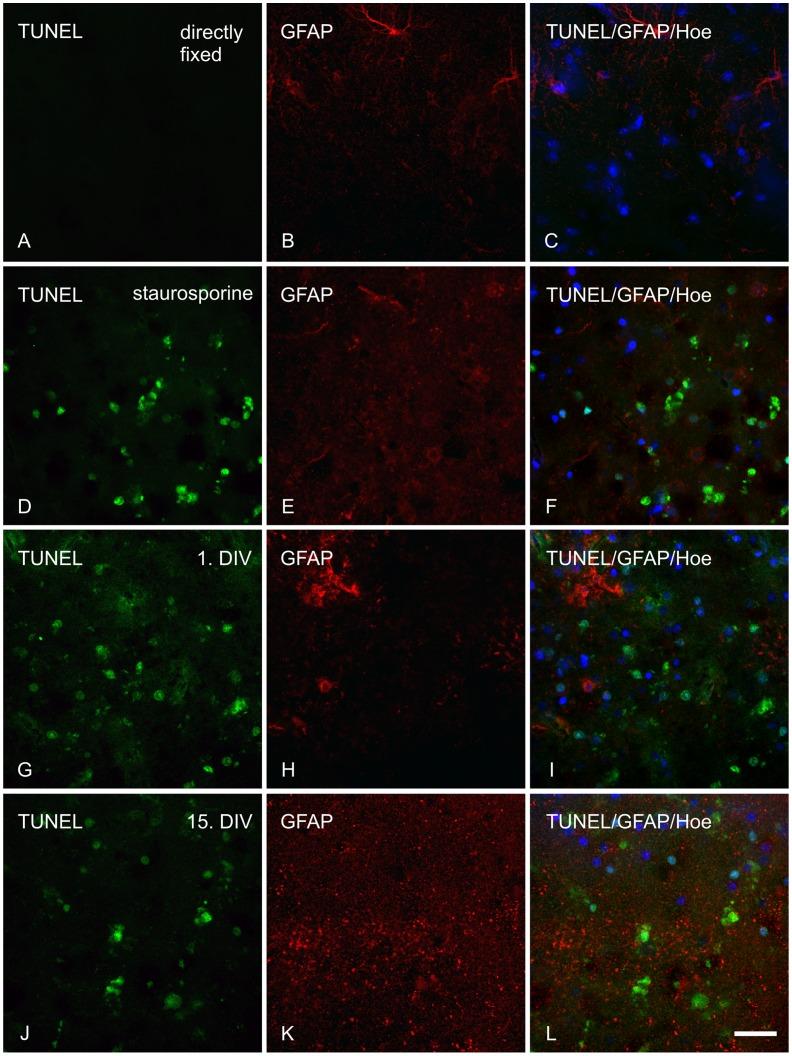
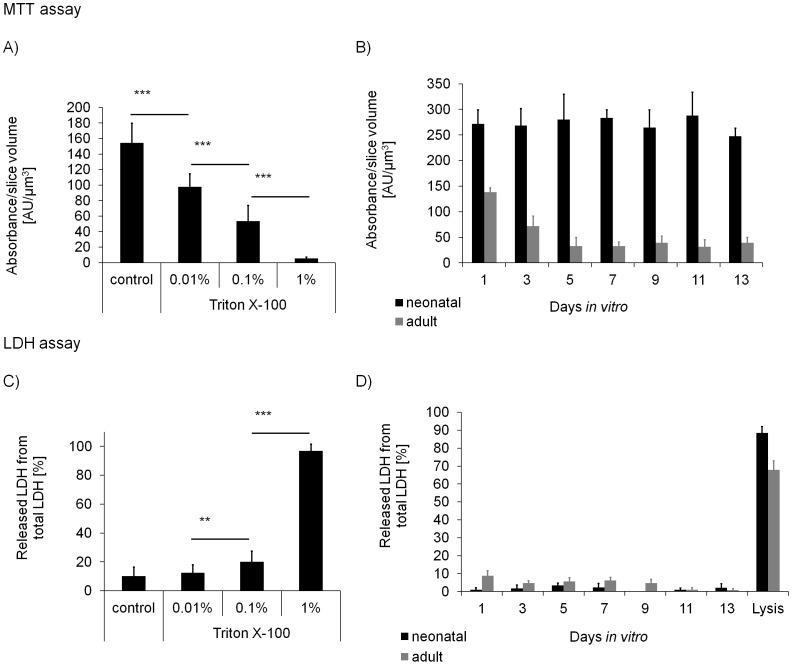
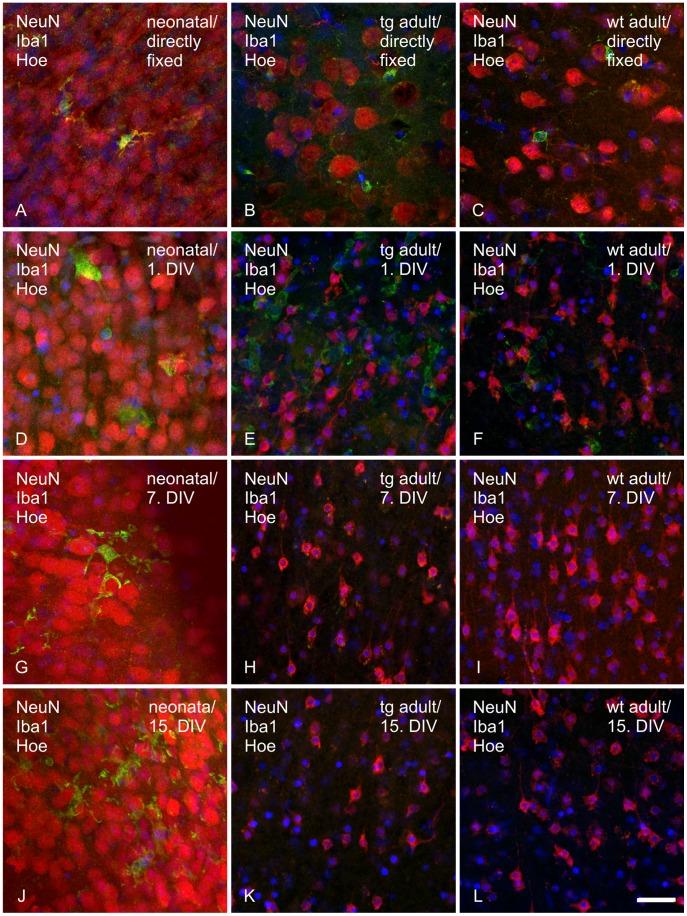
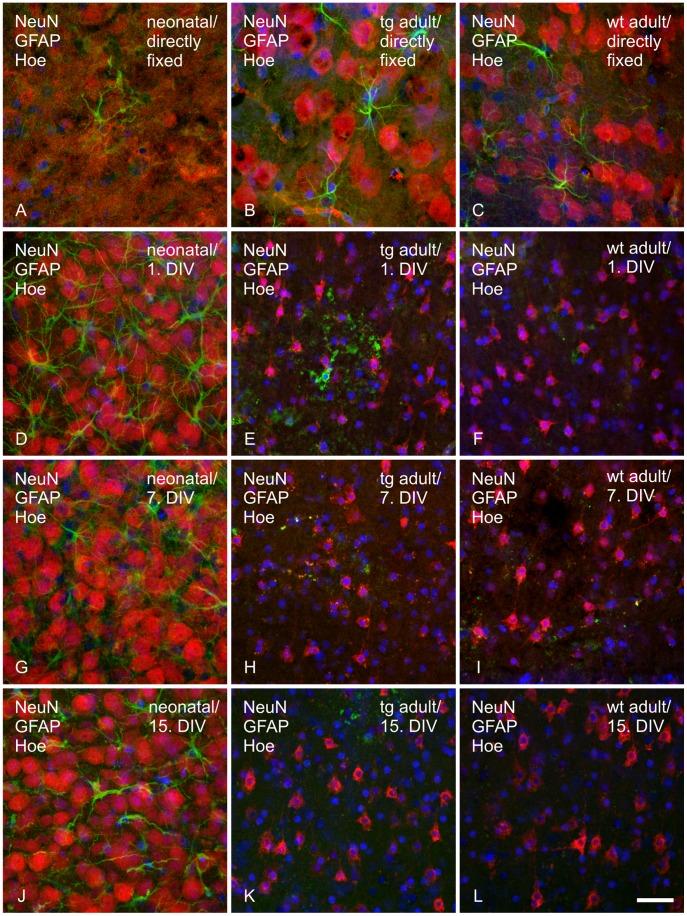
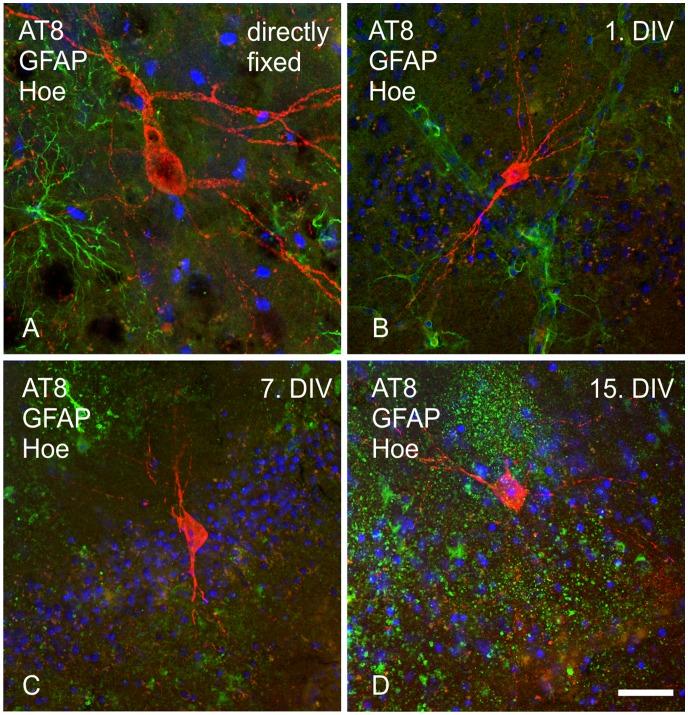
METHODOLOGY/PRINCIPAL FINDINGS: In this study we explore the benefits and limitations of organotypic brain slice cultures made of mature adult transgenic mice as a potential model system for the multifactorial phenotype of AD. First, neonatal (P1) and adult organotypic brain slice cultures from 7- to 10-month-old transgenic P301S mice have been compared with regard to vitality, which was monitored with the lactate dehydrogenase (LDH)- and the MTT (3-(4,5-Dimethylthiazol-2-yl)-2,5-diphenyltetrazolium bromide) assays over 15 days. Neonatal slices displayed a constant high vitality level, while the vitality of adult slice cultures decreased significantly upon cultivation. Various preparation and cultivation conditions were tested to augment the vitality of adult slices and improvements were achieved with a reduced slice thickness, a mild hypothermic cultivation temperature and a cultivation CO(2) concentration of 5%. Furthermore, we present a substantial immunohistochemical characterization analyzing the morphology of neurons, astrocytes and microglia in comparison to neonatal tissue.
CONCLUSION/SIGNIFICANCE: Until now only adolescent animals with a maximum age of two months have been used to prepare organotypic brain slices. The current study provides evidence that adult organotypic brain slice cultures from 7- to 10-month-old mice independently of the transgenic modification undergo slow programmed cell death, caused by a dysfunction of the neuronal repair systems.
背景
器官型脑片培养物代表了单细胞培养和完整动物研究之间的一个极好的折衷方案,从而取代和减少动物实验的数量。器官型脑片广泛应用于神经元发育和再生以及涉及中风、癫痫和阿尔茨海默病(AD)的神经元病理学模型。AD 的特征是两种蛋白质改变,即 tau 过度磷酸化和过度淀粉样β沉积,这两种改变都会导致小胶质细胞和星形胶质细胞的激活。过度磷酸化的 tau 沉积物称为神经原纤维缠结(NFTs),被激活的胶质细胞包围,在转基因小鼠中建模,例如 tauopathy 模型 P301S。
方法/主要发现:在这项研究中,我们探讨了成熟成年转基因小鼠器官型脑片培养物作为 AD 多因素表型潜在模型系统的优势和局限性。首先,比较了来自 7 至 10 个月大的转基因 P301S 小鼠的新生(P1)和成年器官型脑片培养物,通过乳酸脱氢酶(LDH)和 MTT(3-(4,5-二甲基噻唑-2-基)-2,5-二苯基四唑溴盐)测定法在 15 天内监测活力。新生切片显示出恒定的高活力水平,而成年切片培养物的活力在培养过程中显著下降。测试了各种制备和培养条件,以提高成年切片的活力,并通过降低切片厚度、轻度低温培养温度和 5%的培养 CO(2)浓度实现了改进。此外,我们还展示了一项实质性的免疫组织化学特征分析,比较了神经元、星形胶质细胞和小胶质细胞的形态。
结论/意义:到目前为止,只有最大年龄为两个月的青少年动物被用于制备器官型脑片。本研究提供的证据表明,来自 7 至 10 个月大的小鼠的成年器官型脑片培养物,无论是否经过转基因修饰,都会经历由神经元修复系统功能障碍引起的缓慢程序性细胞死亡。

 Zotero 插件