
ThioFinder:一个基于网络的工具,用于在 DNA 序列中识别硫肽基因簇。
ThioFinder: a web-based tool for the identification of thiopeptide gene clusters in DNA sequences.
机构信息
State Key Laboratory of Microbial Metabolism, Shanghai Jiaotong University, Shanghai, China.
出版信息
PLoS One. 2012;7(9):e45878. doi: 10.1371/journal.pone.0045878. Epub 2012 Sep 24.
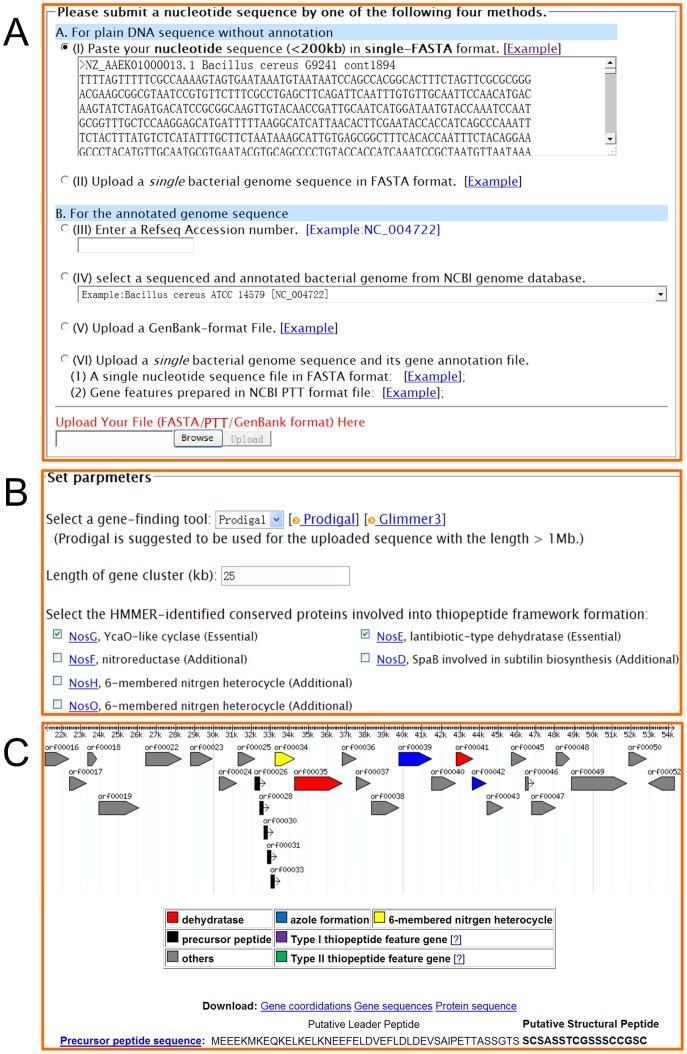
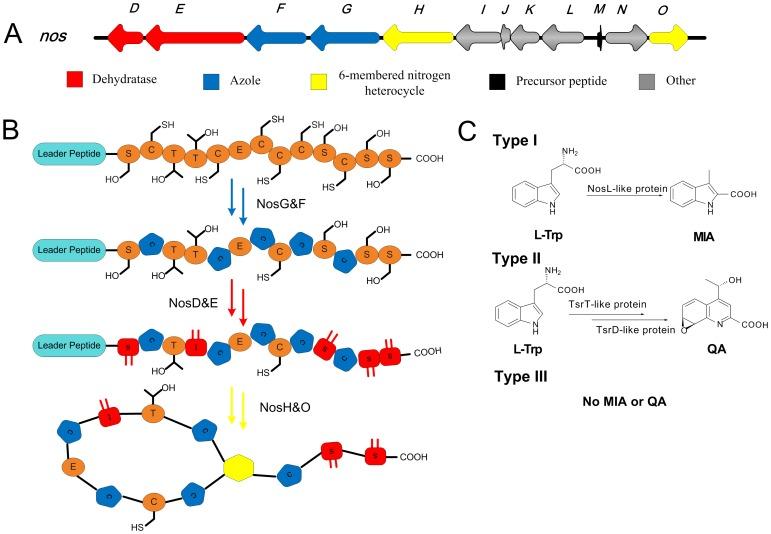
Thiopeptides are a growing class of sulfur-rich, highly modified heterocyclic peptides that are mainly active against Gram-positive bacteria including various drug-resistant pathogens. Recent studies also reveal that many thiopeptides inhibit the proliferation of human cancer cells, further expanding their application potentials for clinical use. Thiopeptide biosynthesis shares a common paradigm, featuring a ribosomally synthesized precursor peptide and conserved posttranslational modifications, to afford a characteristic core system, but differs in tailoring to furnish individual members. Identification of new thiopeptide gene clusters, by taking advantage of increasing information of DNA sequences from bacteria, may facilitate new thiopeptide discovery and enrichment of the unique biosynthetic elements to produce novel drug leads by applying the principle of combinatorial biosynthesis. In this study, we have developed a web-based tool ThioFinder to rapidly identify thiopeptide biosynthetic gene cluster from DNA sequence using a profile Hidden Markov Model approach. Fifty-four new putative thiopeptide biosynthetic gene clusters were found in the sequenced bacterial genomes of previously unknown producing microorganisms. ThioFinder is fully supported by an open-access database ThioBase, which contains the sufficient information of the 99 known thiopeptides regarding the chemical structure, biological activity, producing organism, and biosynthetic gene (cluster) along with the associated genome if available. The ThioFinder website offers researchers a unique resource and great flexibility for sequence analysis of thiopeptide biosynthetic gene clusters. ThioFinder is freely available at http://db-mml.sjtu.edu.cn/ThioFinder/.
硫肽是一类不断增长的富含硫的高度修饰杂环肽,主要对革兰氏阳性菌(包括各种耐药病原体)具有活性。最近的研究还表明,许多硫肽能抑制人类癌细胞的增殖,进一步扩大了其在临床应用中的潜力。硫肽生物合成具有共同的范例,其特征是核糖体合成的前体肽和保守的翻译后修饰,从而提供了一个特征核心系统,但在修饰以提供各个成员方面有所不同。利用从细菌中获得的越来越多的 DNA 序列信息,识别新的硫肽基因簇,可能有助于新的硫肽发现,并通过应用组合生物合成的原理丰富独特的生物合成元件,从而产生新的药物先导。在本研究中,我们开发了一个基于网络的工具 ThioFinder,该工具使用基于轮廓的隐马尔可夫模型方法从 DNA 序列中快速识别硫肽生物合成基因簇。在先前未知的产微生物的测序细菌基因组中发现了 54 个新的推定硫肽生物合成基因簇。ThioFinder 完全由开放访问数据库 ThioBase 支持,该数据库包含了 99 种已知硫肽的足够信息,包括化学结构、生物活性、产生菌和生物合成基因(簇),以及相关的基因组(如果有的话)。ThioFinder 网站为研究人员提供了一个独特的资源和灵活性,用于分析硫肽生物合成基因簇的序列。ThioFinder 可免费在 http://db-mml.sjtu.edu.cn/ThioFinder/ 获取。


 Zotero 插件