
收银台附近的健康零食:关于货架布局和产品种类结构对消费者选择影响的实验室和实地研究。
Healthy snacks at the checkout counter: a lab and field study on the impact of shelf arrangement and assortment structure on consumer choices.
机构信息
Wageningen University, Marketing and Consumer Behaviour Group, Hollandseweg 1, Wageningen, The Netherlands.
出版信息
BMC Public Health. 2012 Dec 12;12:1072. doi: 10.1186/1471-2458-12-1072.
BACKGROUND
The essence of nudging is to adapt the environment in which consumers make decisions to help them make better choices, without forcing certain outcomes upon them. To determine how consumers can effectively be guided to select healthier snacks, we examine the effect of manipulating the assortment structure and shelf layout of an impulse display including both healthy and unhealthy snacks near the checkout counter of a canteen.
METHODS
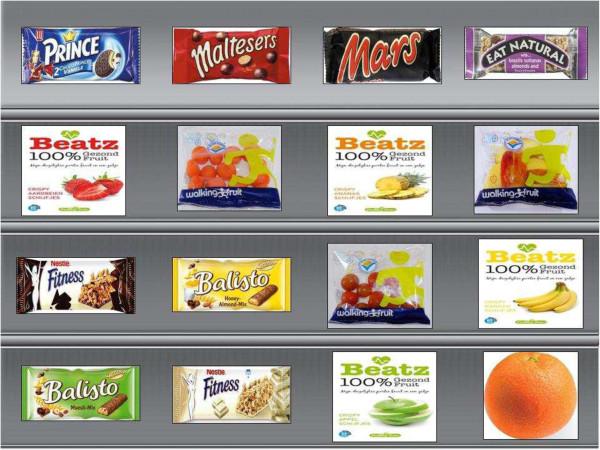
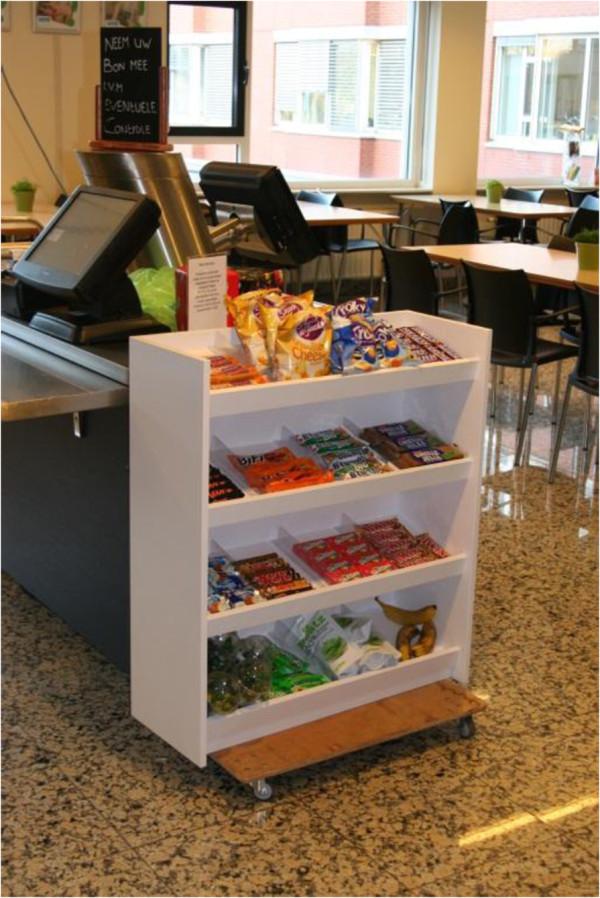
Both a lab and field study applied a two-factor experimental design manipulating snack offerings both in an on-screen choice environment and a natural environment (hospital staff restaurant). Shelf arrangement (i.e. accessibility) was altered by putting healthy snacks at higher shelves versus lower shelves. Assortment structure (i.e. availability) was altered by offering an assortment that either included 25% or 75% healthy snacks. Participants in the lab study (n = 158) made a choice from a shelf display. A brief survey following snack selection asked participants to evaluate the assortment and their choice. The field experiment took place in a hospital canteen. Daily sales data were collected for a period of four weeks. On completion of the field study, employees (n = 92) filled out a questionnaire about all four displays and rated their attractiveness, healthiness and perceived freedom of choice.
RESULTS
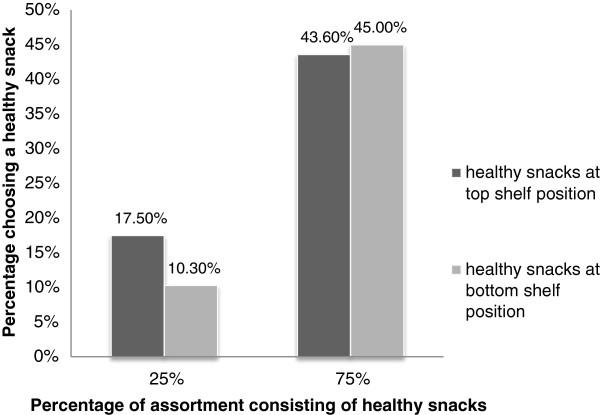
The lab study showed a higher probability of healthy snack choice when 75% of the assortment consisted of healthy snacks compared to conditions with 25% healthy snack assortments, even though choices were not rated less satisfying or more restrictive. Regarding shelf display location of healthy snacks, no significant differences were observed. There was also no significant shelf arrangement by assortment structure interactive effect. The field study replicated these findings, in that this assortment structure led to higher sales of healthy snacks. Sales of unhealthy and total snacks were not impacted by manipulations (no main or interaction effects). Employees preferred shelf displays including a larger healthy snack assortment located at top shelves. Employees also felt more freedom in choice when healthy snacks were displayed at top shelves compared to lower shelves.
CONCLUSIONS
Overall, results suggest that increasing the prominence of healthy snacks by enlarging their availability, while permitting access to unhealthy snacks, is a promising strategy to promote sales. These results point to the importance of nudging strategies to encourage healthier snack patterns.
背景
推动的本质是调整消费者做出决策的环境,以帮助他们做出更好的选择,而不是强制他们做出特定的选择。为了确定如何有效地引导消费者选择更健康的零食,我们研究了操纵收银台附近的自动售货机展示架中健康和不健康零食的组合结构和货架布局,以有效引导消费者选择更健康的零食。
方法
实验室和现场研究均采用了两因素实验设计,通过改变屏幕上的选择环境和自然环境(医院员工餐厅)中零食的供应情况来操纵零食供应。通过将健康零食放在较高的货架上而不是较低的货架上来改变货架排列(即可及性)。通过提供包含 25%或 75%健康零食的组合来改变组合结构(即供应情况)。实验室研究中的参与者(n=158)从货架展示中进行选择。选择完零食后,会进行简短的调查,询问参与者对组合和选择的评价。现场实验在一家医院餐厅进行。四周内每天收集销售数据。现场研究结束后,员工(n=92)填写了一份关于所有四个展示架的问卷,并对他们的吸引力、健康度和感知的选择自由进行了评价。
结果
与包含 25%健康零食组合的条件相比,当 75%的组合由健康零食组成时,选择健康零食的概率更高,尽管选择不会被评为不那么令人满意或更具限制性。关于健康零食的货架展示位置,没有观察到显著差异。也没有观察到货架排列和组合结构之间的显著交互效应。现场研究复制了这些发现,即这种组合结构导致了健康零食的销售额更高。不健康和总零食的销售额不受操纵的影响(没有主要或交互效应)。员工更喜欢包括位于较高货架上较大健康零食组合的货架展示。与较低的货架相比,当健康零食位于较高的货架上时,员工也感到有更多的选择自由。
结论
总的来说,结果表明,通过扩大健康零食的供应来增加其知名度,同时允许购买不健康的零食,是促进销售的一种有前途的策略。这些结果表明,推动策略对于鼓励更健康的零食模式非常重要。

 Zotero 插件