
CpG 寡核苷酸结合在大西洋鲑鱼(Salmo salar)中的 TLR9 和 RRM 蛋白。
CpG oligonucleotides bind TLR9 and RRM-containing proteins in Atlantic salmon (Salmo salar).
机构信息
Norwegian College of Fishery Science, University of Tromsø, N-9037, Tromsø, Norway.
出版信息
BMC Immunol. 2013 Mar 1;14:12. doi: 10.1186/1471-2172-14-12.
BACKGROUND
Bacterial DNA is well-known for its potent immunostimulatory properties which have been attributed to the abundance of CpG dinucleotides within the genomes of prokaryotes. Research has found that mammalian TLR9 is a receptor which mediates the immune response to CpG DNA; however, its functional properties in non-mammalian vertebrates are still poorly characterized. Leukocytes isolated from lower vertebrates, including teleosts, respond to CpG DNA and TLR9 has been identified in many fish species; however, the ligand-binding properties of fish TLR9 have, so far, not been studied. The fact that some vertebrates, like chicken, lack TLR9 and use an alternative molecule (TLR21) as a receptor for CpGs has questioned the functional conservation of TLR9 within vertebrates.
RESULTS
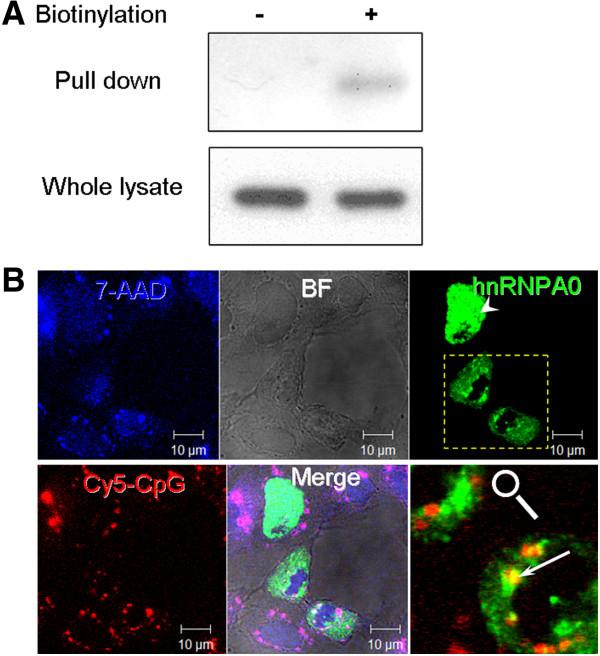
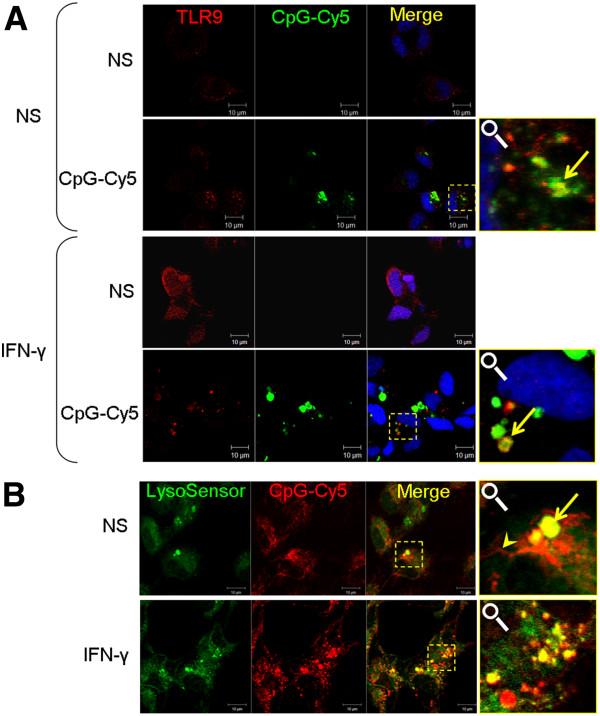
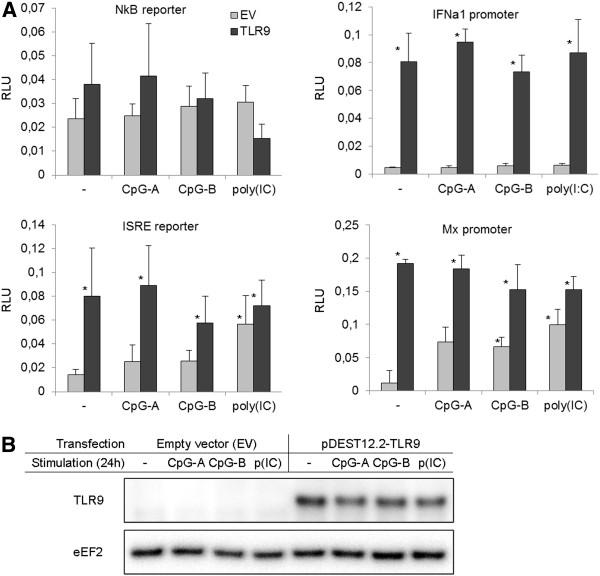
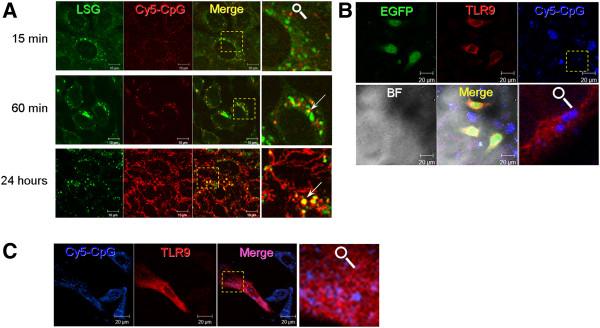
In the current study, TLR9 from Atlantic salmon (SsTLR9) has been found to interact with synthetic oligonucleotides via a CpG-independent but a pH-dependent mechanism. The endogenous receptor, expressed by primary mononuclear phagocytes colocalizes with CpG oligonucleotides (ODNs) in vesicles that appear to be endosomes. When overexpressed in salmonid cell lines, SsTLR9 spontaneously activates ISRE-containing promoters of genes involved in the IFN response; however, the transgenic receptor fails to translocate to CpG-containing endosomes. This indicates that only specific immune cell types have the ability to relocate the receptor to the appropriate cellular compartments where it may become activated by its ligand. In addition, through co-precipitation and mass spectrometry, two salmon proteins - hnRNPA0 and NCOA5, which both contain RNA-binding domains (RRM), were found to bind CpG ODNs, suggesting they may be involved in the CpG response in salmon leukocytes.
CONCLUSION
The presented data are the first to demonstrate that the DNA-binding properties of TLR9 are conserved between teleosts and mammals. The current study also identifies additional molecules which may function as mediators of the immunostimulatory properties of foreign DNA.
背景
细菌 DNA 以其强烈的免疫刺激性而闻名,这种特性归因于原核生物基因组中大量的 CpG 二核苷酸。研究发现,哺乳动物 TLR9 是一种介导对 CpG DNA 免疫反应的受体;然而,其在非哺乳动物脊椎动物中的功能特性仍未得到充分描述。包括硬骨鱼在内的低等脊椎动物的白细胞对 CpG DNA 有反应,并且在许多鱼类中都鉴定出了 TLR9;然而,到目前为止,鱼类 TLR9 的配体结合特性尚未得到研究。有些脊椎动物,如鸡,缺乏 TLR9 并使用替代分子(TLR21)作为 CpG 的受体,这使得 TLR9 在脊椎动物中的功能保守性受到质疑。
结果
在本研究中,发现大西洋鲑(SsTLR9)的 TLR9 通过一种不依赖 CpG 但依赖 pH 的机制与合成寡核苷酸相互作用。内源性受体由原代单核吞噬细胞表达,与似乎是内体的小泡中的 CpG 寡核苷酸(ODN)共定位。当在鲑鱼细胞系中过表达时,SsTLR9 会自发激活参与 IFN 反应的基因中的 ISRE 含有启动子;然而,转基因受体不能易位到含有 CpG 的内体。这表明只有特定的免疫细胞类型有能力将受体重新定位到适当的细胞区室,在那里它可能被其配体激活。此外,通过共沉淀和质谱分析,发现两种鲑鱼蛋白——hnRNPA0 和 NCOA5,它们都含有 RNA 结合结构域(RRM),与 CpG ODN 结合,这表明它们可能参与鲑鱼白细胞中的 CpG 反应。
结论
本研究首次证明 TLR9 的 DNA 结合特性在硬骨鱼和哺乳动物之间是保守的。本研究还鉴定出了其他可能作为外源 DNA 免疫刺激性的介质的分子。


 Zotero 插件