
抑瘤 microRNA-874 通过靶向组蛋白去乙酰化酶 1 促进头颈部鳞状细胞癌的细胞增殖。
Tumour-suppressive microRNA-874 contributes to cell proliferation through targeting of histone deacetylase 1 in head and neck squamous cell carcinoma.
机构信息
Department of Functional Genomics, Chiba University Graduate School of Medicine, Chiba, Japan.
出版信息
Br J Cancer. 2013 Apr 30;108(8):1648-58. doi: 10.1038/bjc.2013.122. Epub 2013 Apr 4.
BACKGROUND
Our recent studies of microRNA (miRNA) expression signature demonstrated that microRNA-874 (miR-874) was significantly downregulated in maxillary sinus squamous cell carcinoma (MSSCC), and a putative tumour-suppressive miRNA in human cancers. Our aim of this study was to investigate the functional significance of miR-874 in cancer cells and to identify novel miR-874-mediated cancer pathways and responsible genes in head and neck squamous cell carcinoma (HNSCC).
METHODS
Gain-of-function studies using mature miR-874 were performed to investigate cell proliferation and cell cycle distribution in HNSCC cell lines (SAS and FaDu). To identify miR-874-mediated molecular pathways and targets, we utilised gene expression analysis and in silico database analysis. Loss-of-function assays were performed to investigate the functional significance of miR-874 target genes.
RESULTS
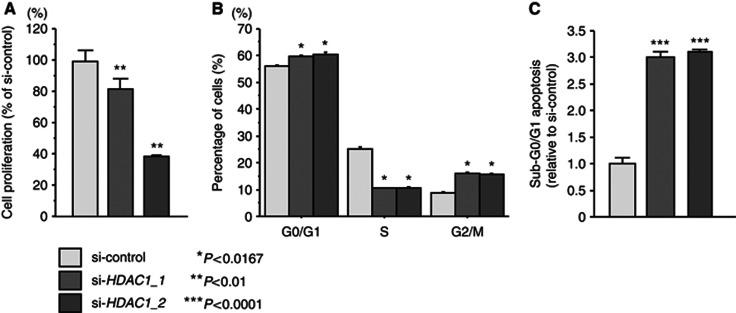
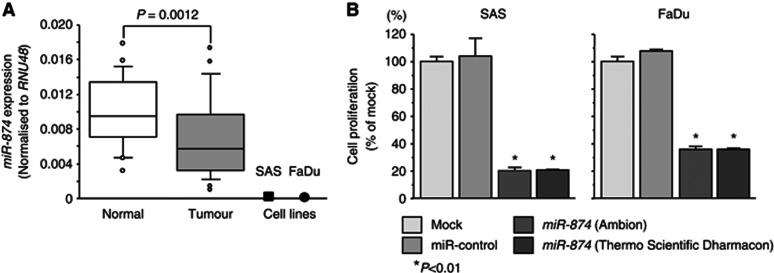
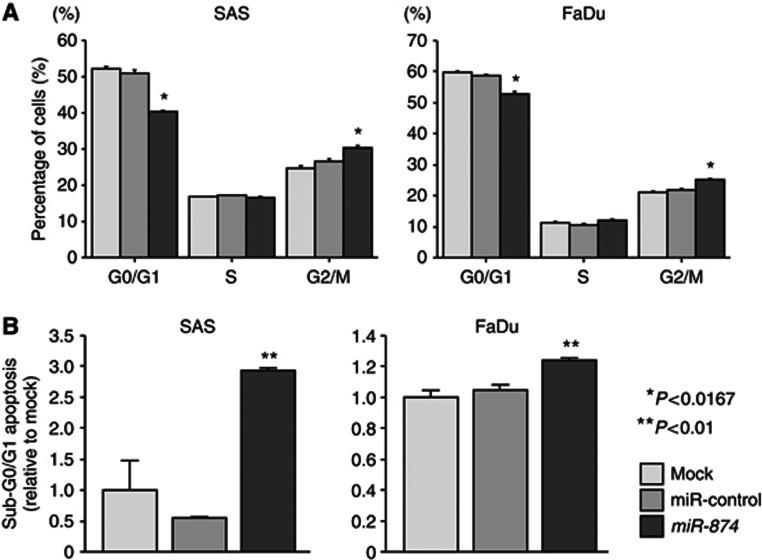
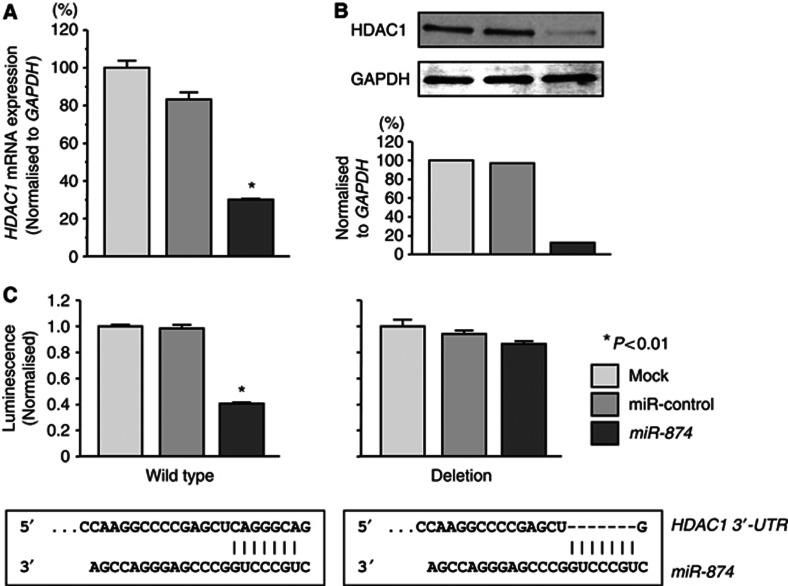
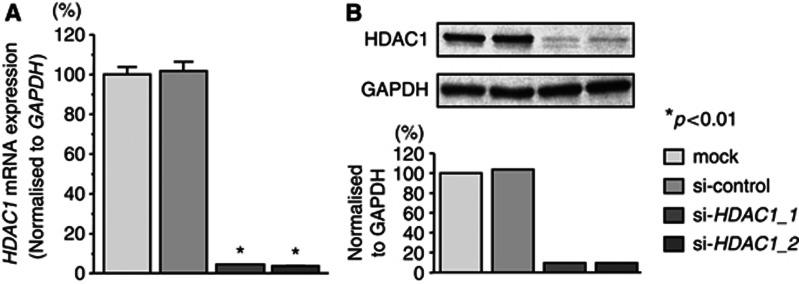
Expression levels of miR-874 were significantly downregulated in HNSCC tissues (including oral, pharyngeal and laryngeal SCCs) compared with normal counterpart epithelia. Restoration of miR-874 in SAS and FaDu cell lines revealed significant inhibition of cell proliferation and induction of G2/M arrest and cell apoptosis. Our expression data and in silico analysis demonstrated that miR-874 modulated the cell cycle pathway. Moreover, histone deacetylase 1 (HDAC1) was a candidate target of miR-874 regulation. Luciferase reporter assays showed that miR-874 directly regulated HDAC1. Silencing of the HDAC1 gene significantly inhibited cell proliferation and induced G2/M arrest and cell apoptosis in SAS cells.
CONCLUSIONS
Downregulation of miR-874 was a frequent event in HNSCC. miR-874 acted as a tumour suppressor and directly targeted HDAC1. Recognition of tumour-suppressive miRNA-mediated cancer pathways provides new insights into the potential mechanisms of HNSCC oncogenesis and suggests novel therapeutic strategies for the disease.
背景
我们最近的 miRNA(miRNA)表达谱研究表明,miR-874 在上颌窦鳞状细胞癌(MSSCC)中显著下调,是人类癌症中潜在的肿瘤抑制 miRNA。本研究旨在探讨 miR-874 在癌症细胞中的功能意义,并鉴定头颈部鳞状细胞癌(HNSCC)中新型 miR-874 介导的癌症途径和靶基因。
方法
使用成熟的 miR-874 进行功能获得研究,以研究 HNSCC 细胞系(SAS 和 FaDu)中的细胞增殖和细胞周期分布。为了鉴定 miR-874 介导的分子途径和靶标,我们利用基因表达分析和计算机数据库分析。进行功能丧失实验以研究 miR-874 靶基因的功能意义。
结果
与正常对照上皮相比,HNSCC 组织(包括口腔、咽和喉 SCC)中 miR-874 的表达水平显著下调。在 SAS 和 FaDu 细胞系中恢复 miR-874 的表达显示出对细胞增殖的显著抑制作用,并诱导 G2/M 期阻滞和细胞凋亡。我们的表达数据和计算机分析表明,miR-874 调节细胞周期途径。此外,组蛋白去乙酰化酶 1(HDAC1)是 miR-874 调节的候选靶标。荧光素酶报告基因实验表明,miR-874 直接调节 HDAC1。沉默 HDAC1 基因可显著抑制 SAS 细胞的增殖,并诱导 G2/M 期阻滞和细胞凋亡。
结论
miR-874 在 HNSCC 中下调是一个常见事件。miR-874 作为肿瘤抑制因子,直接靶向 HDAC1。识别肿瘤抑制 miRNA 介导的癌症途径为 HNSCC 致癌的潜在机制提供了新的见解,并为该疾病提供了新的治疗策略。


 Zotero 插件