
CDK4 T172 磷酸化是中央在一个 CDK7 依赖双向 CDK4/CDK2 的相互作用由 p21 磷酸化在限制点介导。
CDK4 T172 phosphorylation is central in a CDK7-dependent bidirectional CDK4/CDK2 interplay mediated by p21 phosphorylation at the restriction point.
机构信息
WELBIO and Institute of Interdisciplinary Research (IRIBHM), Université Libre de Bruxelles, Brussels, Belgium.
出版信息
PLoS Genet. 2013 May;9(5):e1003546. doi: 10.1371/journal.pgen.1003546. Epub 2013 May 30.
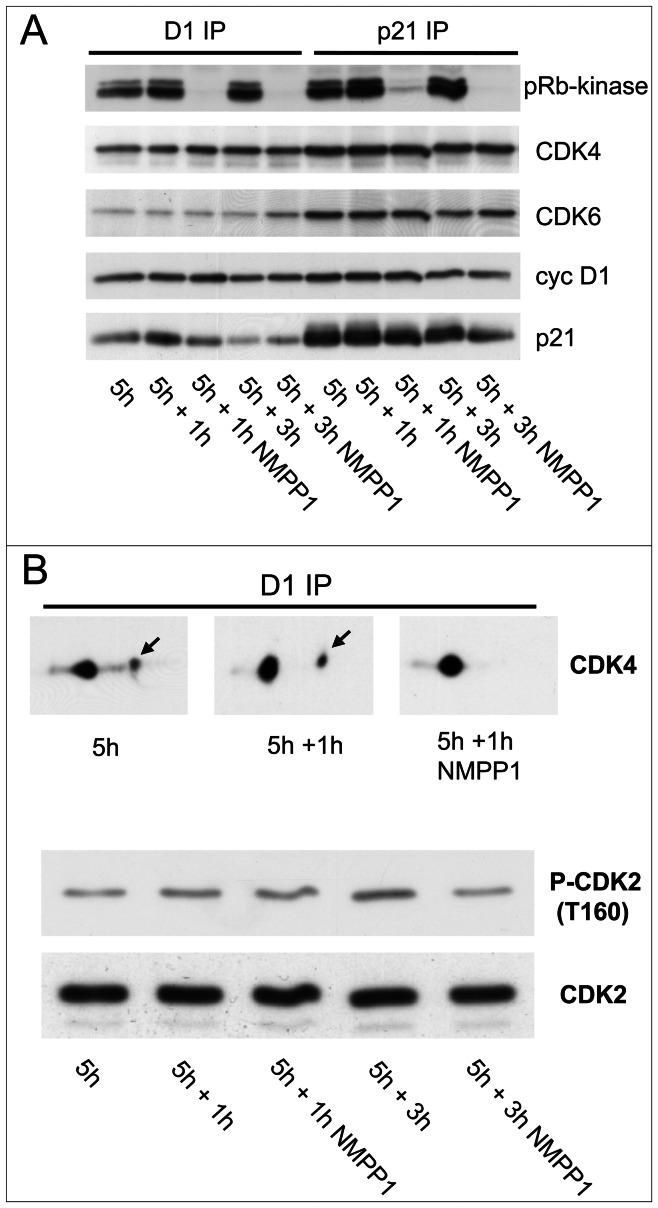
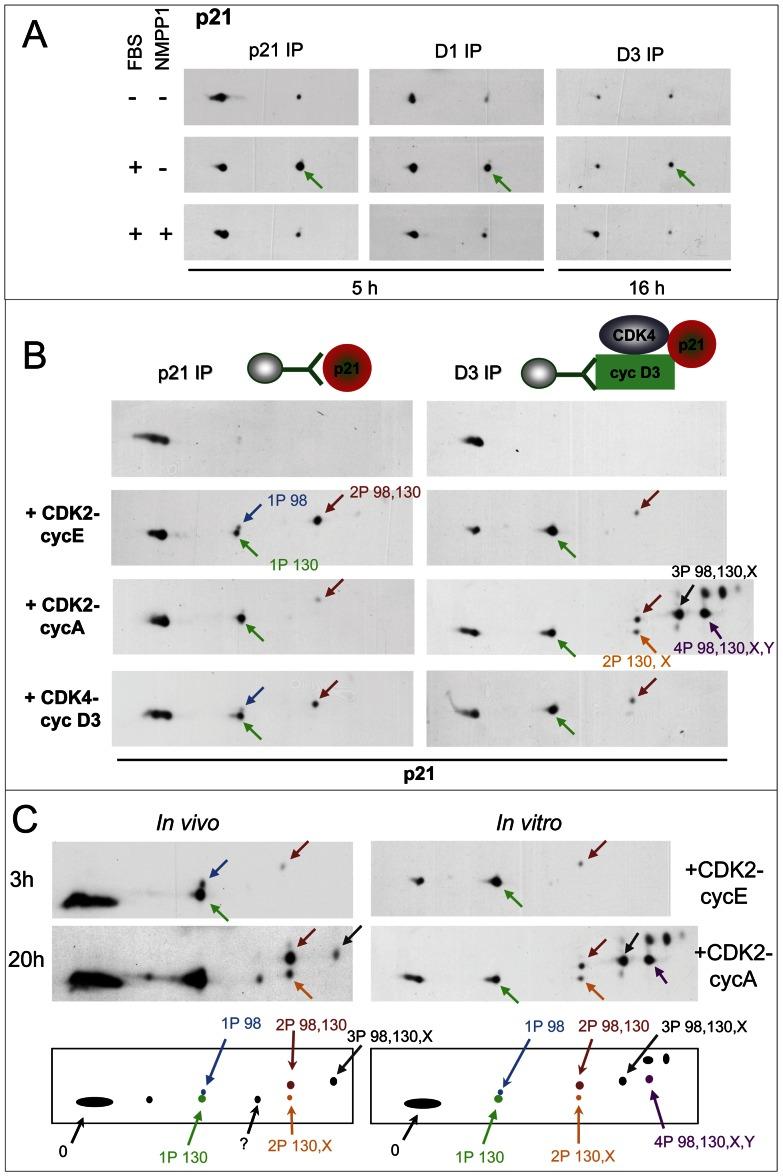
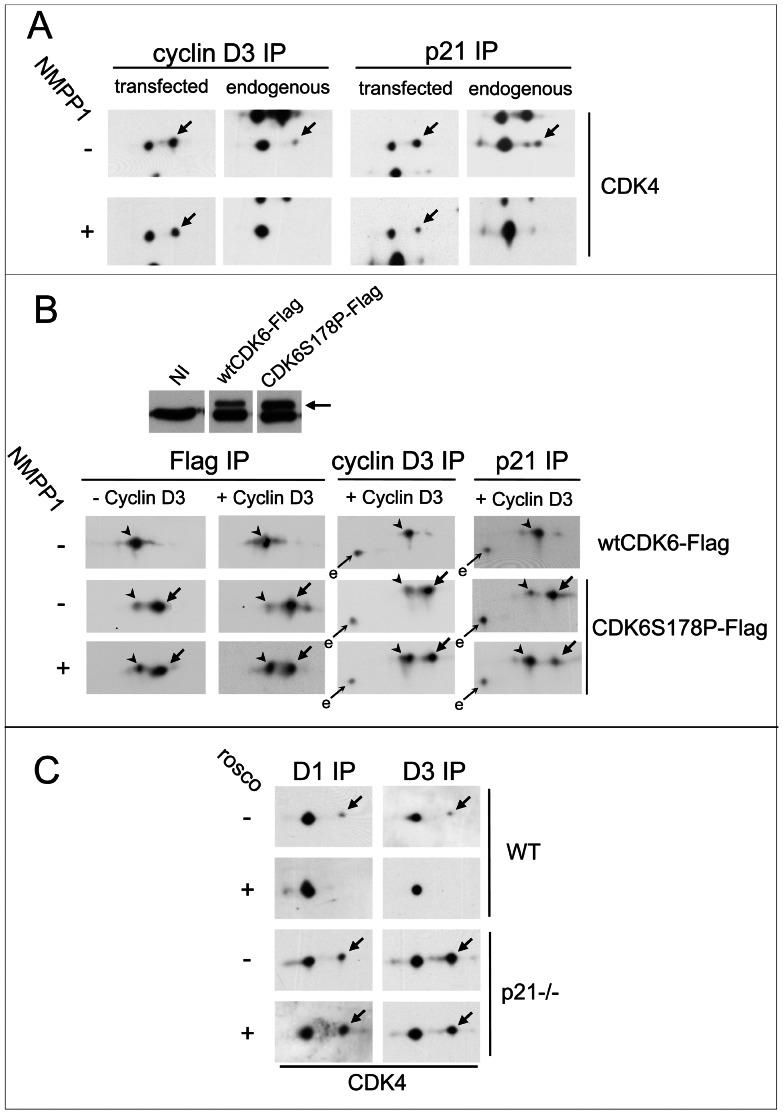
Cell cycle progression, including genome duplication, is orchestrated by cyclin-dependent kinases (CDKs). CDK activation depends on phosphorylation of their T-loop by a CDK-activating kinase (CAK). In animals, the only known CAK for CDK2 and CDK1 is cyclin H-CDK7, which is constitutively active. Therefore, the critical activation step is dephosphorylation of inhibitory sites by Cdc25 phosphatases rather than unrestricted T-loop phosphorylation. Homologous CDK4 and CDK6 bound to cyclins D are master integrators of mitogenic/oncogenic signaling cascades by initiating the inactivation of the central oncosuppressor pRb and cell cycle commitment at the restriction point. Unlike the situation in CDK1 and CDK2 cyclin complexes, and in contrast to the weak but constitutive T177 phosphorylation of CDK6, we have identified the T-loop phosphorylation at T172 as the highly regulated step determining CDK4 activity. Whether both CDK4 and CDK6 phosphorylations are catalyzed by CDK7 remains unclear. To answer this question, we took a chemical-genetics approach by using analogue-sensitive CDK7(as/as) mutant HCT116 cells, in which CDK7 can be specifically inhibited by bulky adenine analogs. Intriguingly, CDK7 inhibition prevented activating phosphorylations of CDK4/6, but for CDK4 this was at least partly dependent on its binding to p21 (cip1) . In response to CDK7 inhibition, p21-binding to CDK4 increased concomitantly with disappearance of the most abundant phosphorylation of p21, which we localized at S130 and found to be catalyzed by both CDK4 and CDK2. The S130A mutation of p21 prevented the activating CDK4 phosphorylation, and inhibition of CDK4/6 and CDK2 impaired phosphorylations of both p21 and p21-bound CDK4. Therefore, specific CDK7 inhibition revealed the following: a crucial but partly indirect CDK7 involvement in phosphorylation/activation of CDK4 and CDK6; existence of CDK4-activating kinase(s) other than CDK7; and novel CDK7-dependent positive feedbacks mediated by p21 phosphorylation by CDK4 and CDK2 to sustain CDK4 activation, pRb inactivation, and restriction point passage.
细胞周期的进展,包括基因组的复制,是由细胞周期蛋白依赖性激酶(CDK)协调的。CDK 的激活依赖于其 T 环的磷酸化,这是由 CDK 激活激酶(CAK)完成的。在动物中,唯一已知的 CDK2 和 CDK1 的 CAK 是组成型激活的 cyclin H-CDK7。因此,关键的激活步骤是通过 Cdc25 磷酸酶去磷酸化抑制性位点,而不是不受限制的 T 环磷酸化。同源 CDK4 和 CDK6 与 cyclin D 结合,通过启动中央肿瘤抑制因子 pRb 的失活和限制点的细胞周期启动,成为有丝分裂/致癌信号级联的主要整合因子。与 CDK1 和 CDK2 周期蛋白复合物的情况不同,与 CDK6 弱但组成型的 T177 磷酸化相反,我们已经确定 T 环上 T172 的磷酸化是决定 CDK4 活性的高度调节步骤。CDK4 和 CDK6 的磷酸化是否都由 CDK7 催化仍不清楚。为了回答这个问题,我们采用了化学遗传学方法,使用类似物敏感的 CDK7(as/as)突变 HCT116 细胞,其中 CDK7 可以被大腺嘌呤类似物特异性抑制。有趣的是,CDK7 抑制阻止了 CDK4/6 的激活磷酸化,但对于 CDK4,这至少部分依赖于其与 p21(cip1)的结合。在 CDK7 抑制后,p21 与 CDK4 的结合增加,同时伴随着最丰富的 p21 磷酸化的消失,我们将其定位在 S130 上,并发现它是由 CDK4 和 CDK2 催化的。p21 的 S130A 突变阻止了激活的 CDK4 磷酸化,而 CDK4/6 和 CDK2 的抑制则损害了 p21 和 p21 结合的 CDK4 的磷酸化。因此,特异性 CDK7 抑制揭示了以下几点:CDK7 对 CDK4 和 CDK6 的磷酸化/激活的关键但部分间接参与;存在除 CDK7 以外的 CDK4 激活激酶;以及由 CDK4 和 CDK2 磷酸化 p21 介导的新型 CDK7 依赖性正反馈,以维持 CDK4 的激活、pRb 的失活和限制点的通过。




 Zotero 插件