
流感病毒在没有片段不匹配的情况下高频发生重配。
Influenza virus reassortment occurs with high frequency in the absence of segment mismatch.
机构信息
Department of Microbiology and Immunology, Emory University School of Medicine, Atlanta, Georgia, United States of America.
出版信息
PLoS Pathog. 2013;9(6):e1003421. doi: 10.1371/journal.ppat.1003421. Epub 2013 Jun 13.
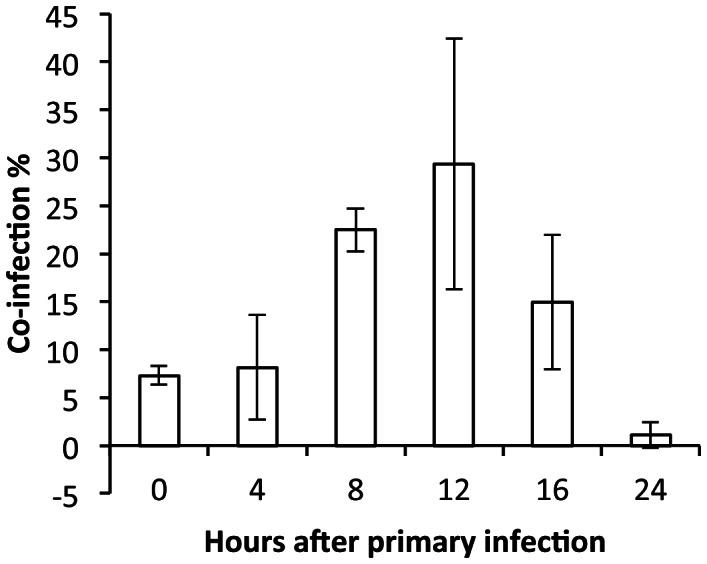
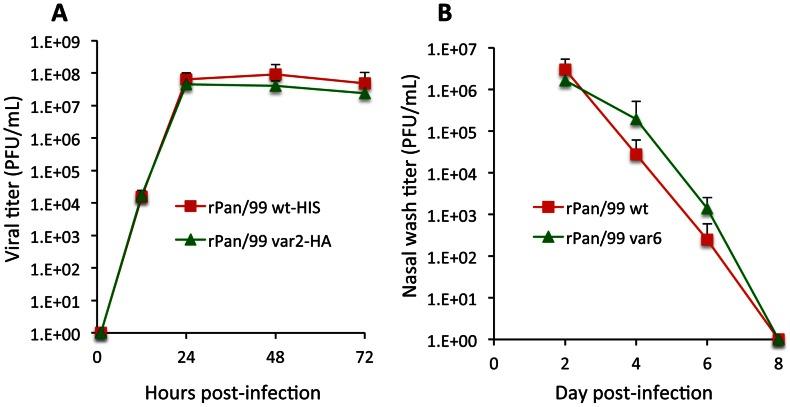
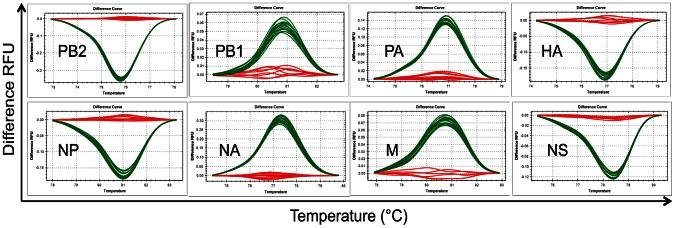
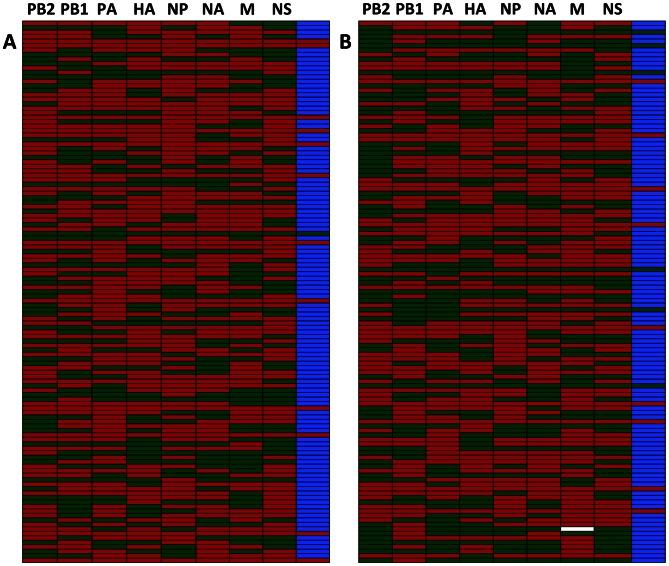
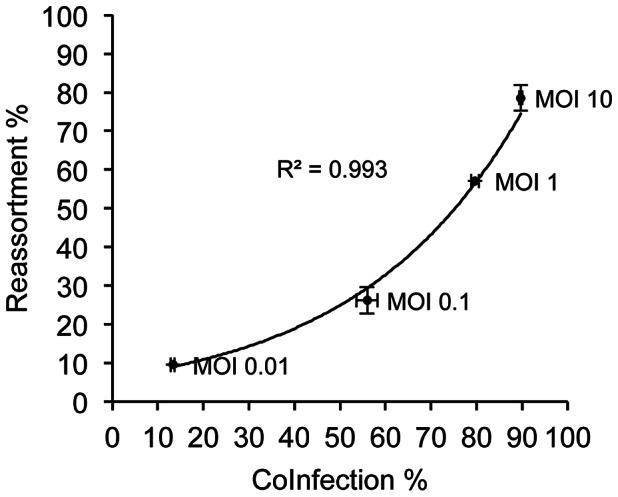
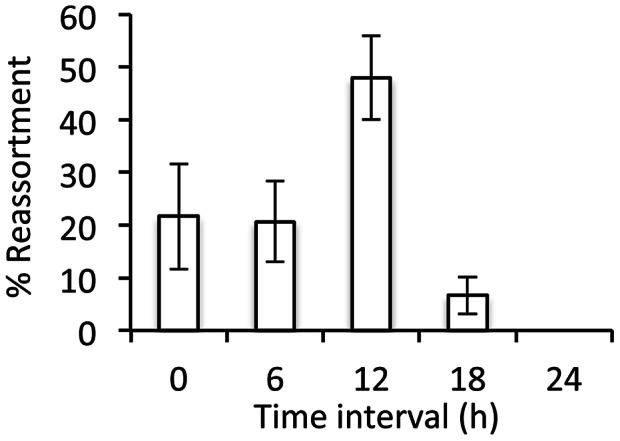
Reassortment is fundamental to the evolution of influenza viruses and plays a key role in the generation of epidemiologically significant strains. Previous studies indicate that reassortment is restricted by segment mismatch, arising from functional incompatibilities among components of two viruses. Additional factors that dictate the efficiency of reassortment remain poorly characterized. Thus, it is unclear what conditions are favorable for reassortment and therefore under what circumstances novel influenza A viruses might arise in nature. Herein, we describe a system for studying reassortment in the absence of segment mismatch and exploit this system to determine the baseline efficiency of reassortment and the effects of infection dose and timing. Silent mutations were introduced into A/Panama/2007/99 virus such that high-resolution melt analysis could be used to differentiate all eight segments of the wild-type and the silently mutated variant virus. The use of phenotypically identical parent viruses ensured that all progeny were equally fit, allowing reassortment to be measured without selection bias. Using this system, we found that reassortment occurred efficiently (88.4%) following high multiplicity infection, suggesting the process is not appreciably limited by intracellular compartmentalization. That co-infection is the major determinant of reassortment efficiency in the absence of segment mismatch was confirmed with the observation that the proportion of viruses with reassortant genotypes increased exponentially with the proportion of cells co-infected. The number of reassortants shed from co-infected guinea pigs was likewise dependent on dose. With 10⁶ PFU inocula, 46%-86% of viruses isolated from guinea pigs were reassortants. The introduction of a delay between infections also had a strong impact on reassortment and allowed definition of time windows during which super-infection led to reassortment in culture and in vivo. Overall, our results indicate that reassortment between two like influenza viruses is efficient but also strongly dependent on dose and timing of the infections.
重配是流感病毒进化的基础,在产生具有流行病学意义的新毒株方面发挥着关键作用。先前的研究表明,重配受到片段不匹配的限制,这是由两种病毒成分之间的功能不相容引起的。决定重配效率的其他因素仍未得到很好的描述。因此,尚不清楚什么条件有利于重配,以及在什么情况下自然界中可能会出现新型甲型流感病毒。在此,我们描述了一种在不存在片段不匹配的情况下研究重配的系统,并利用该系统确定重配的基线效率以及感染剂量和时间的影响。我们将沉默突变引入 A/Panama/2007/99 病毒中,以便使用高分辨率熔解分析区分野生型和沉默突变变体病毒的所有八个片段。使用表型相同的亲本病毒确保了所有后代的适应性相同,从而可以在没有选择偏见的情况下测量重配。使用该系统,我们发现高多重感染后重配效率很高(88.4%),这表明该过程不受细胞内区室化的明显限制。在不存在片段不匹配的情况下,共感染是重配效率的主要决定因素,这一结论得到了证实,即观察到具有重组基因型的病毒比例随共感染细胞的比例呈指数增加。从共感染豚鼠中排出的重组病毒数量也依赖于剂量。用 10⁶ PFU 接种物接种时,从豚鼠中分离出的病毒中有 46%-86%是重组病毒。感染之间的时间延迟也对重配产生了强烈影响,并允许定义在培养和体内超感染导致重配的时间窗口。总的来说,我们的结果表明,两种相似的流感病毒之间的重配是有效的,但也强烈依赖于感染的剂量和时间。

 Zotero 插件