
一项为期六个月的运动干预会影响人类脂肪组织的全基因组 DNA 甲基化模式。
A six months exercise intervention influences the genome-wide DNA methylation pattern in human adipose tissue.
机构信息
Department of Clinical Sciences, Epigenetics and Diabetes, Lund University Diabetes Centre, CRC, Malmö, Sweden.
出版信息
PLoS Genet. 2013 Jun;9(6):e1003572. doi: 10.1371/journal.pgen.1003572. Epub 2013 Jun 27.
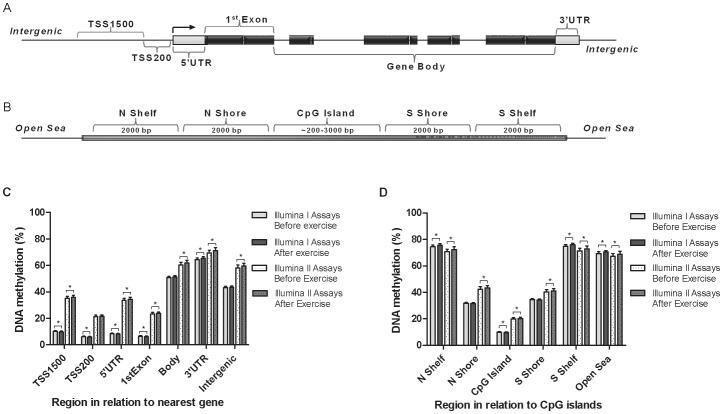
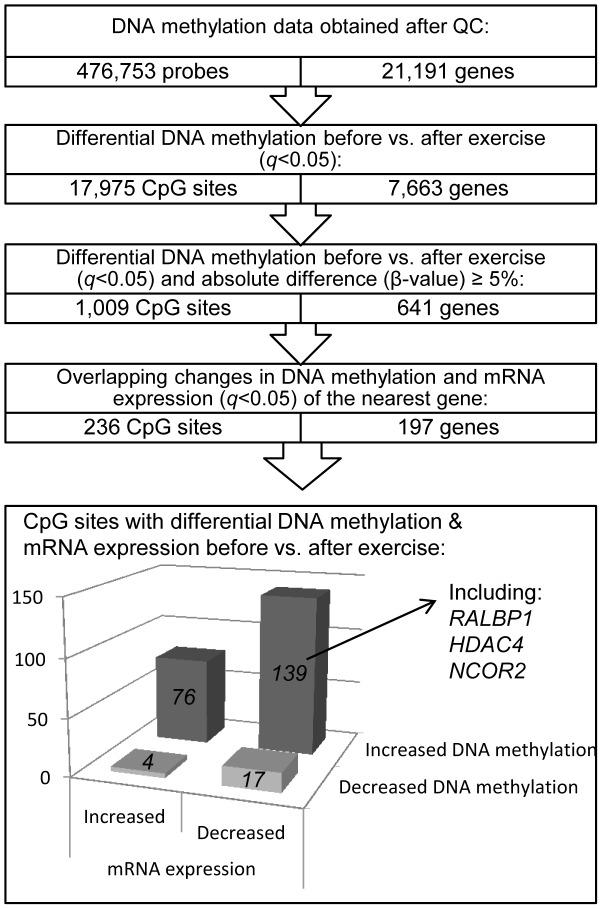
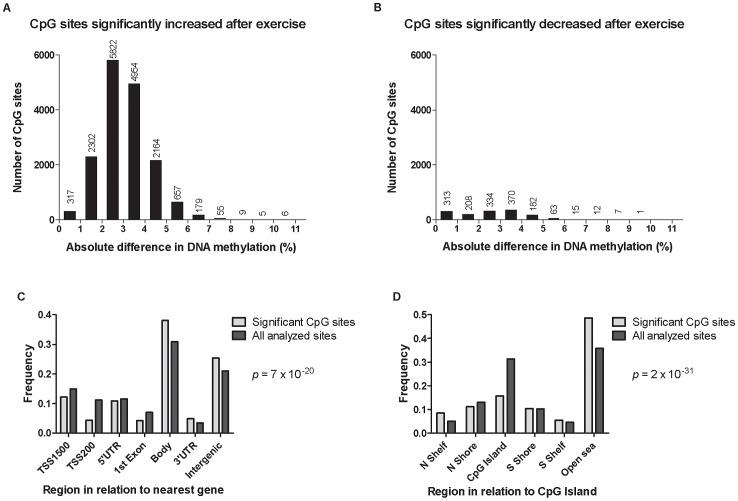
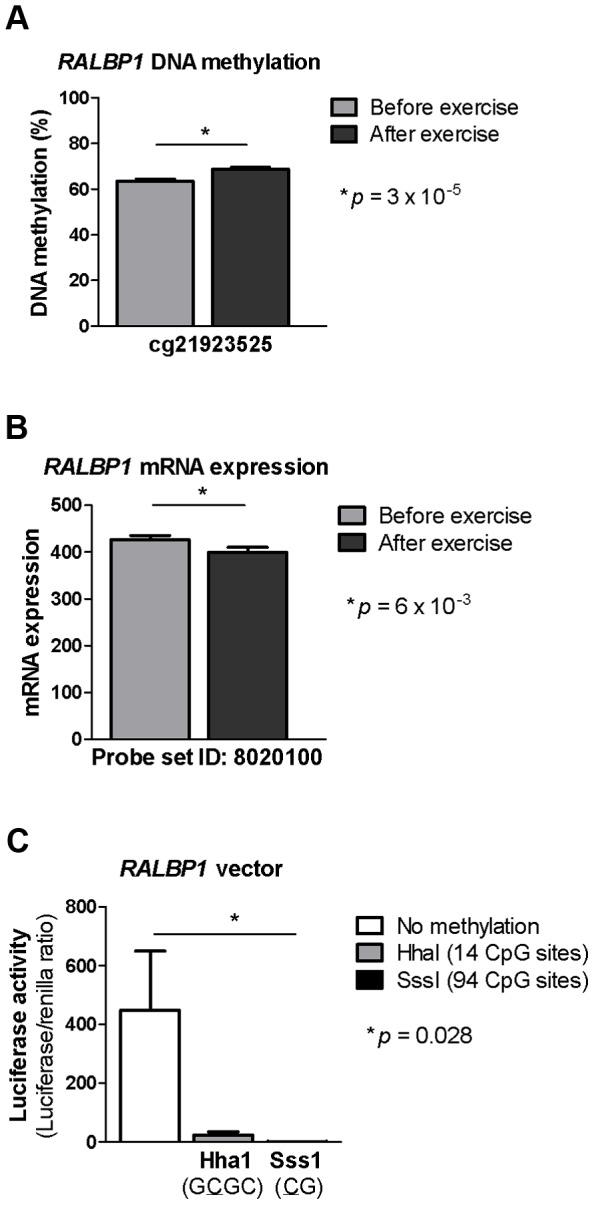
Epigenetic mechanisms are implicated in gene regulation and the development of different diseases. The epigenome differs between cell types and has until now only been characterized for a few human tissues. Environmental factors potentially alter the epigenome. Here we describe the genome-wide pattern of DNA methylation in human adipose tissue from 23 healthy men, with a previous low level of physical activity, before and after a six months exercise intervention. We also investigate the differences in adipose tissue DNA methylation between 31 individuals with or without a family history of type 2 diabetes. DNA methylation was analyzed using Infinium HumanMethylation450 BeadChip, an array containing 485,577 probes covering 99% RefSeq genes. Global DNA methylation changed and 17,975 individual CpG sites in 7,663 unique genes showed altered levels of DNA methylation after the exercise intervention (q<0.05). Differential mRNA expression was present in 1/3 of gene regions with altered DNA methylation, including RALBP1, HDAC4 and NCOR2 (q<0.05). Using a luciferase assay, we could show that increased DNA methylation in vitro of the RALBP1 promoter suppressed the transcriptional activity (p = 0.03). Moreover, 18 obesity and 21 type 2 diabetes candidate genes had CpG sites with differences in adipose tissue DNA methylation in response to exercise (q<0.05), including TCF7L2 (6 CpG sites) and KCNQ1 (10 CpG sites). A simultaneous change in mRNA expression was seen for 6 of those genes. To understand if genes that exhibit differential DNA methylation and mRNA expression in human adipose tissue in vivo affect adipocyte metabolism, we silenced Hdac4 and Ncor2 respectively in 3T3-L1 adipocytes, which resulted in increased lipogenesis both in the basal and insulin stimulated state. In conclusion, exercise induces genome-wide changes in DNA methylation in human adipose tissue, potentially affecting adipocyte metabolism.
表观遗传机制参与基因调控和多种疾病的发生。表观基因组在细胞类型之间存在差异,迄今为止仅对少数几种人类组织进行了特征描述。环境因素可能会改变表观基因组。在这里,我们描述了 23 名健康男性在进行六个月运动干预前后,其之前低水平体力活动的人脂肪组织中的全基因组 DNA 甲基化模式。我们还研究了具有或不具有 2 型糖尿病家族史的 31 个人的脂肪组织 DNA 甲基化差异。使用 Infinium HumanMethylation450 BeadChip 分析 DNA 甲基化,该芯片包含 485,577 个探针,覆盖 99%的 RefSeq 基因。在运动干预后,有 17,975 个个体 CpG 位点(覆盖 7,663 个独特基因)的 DNA 甲基化水平发生了变化(q<0.05)。在 DNA 甲基化发生改变的基因区域中,有 1/3 的基因区域存在差异表达的 mRNA,包括 RALBP1、HDAC4 和 NCOR2(q<0.05)。通过荧光素酶测定,我们可以证明体外 RALBP1 启动子的 DNA 甲基化增加抑制了转录活性(p=0.03)。此外,18 个肥胖候选基因和 21 个 2 型糖尿病候选基因的脂肪组织 DNA 甲基化在运动干预后存在差异(q<0.05),包括 TCF7L2(6 个 CpG 位点)和 KCNQ1(10 个 CpG 位点)。其中 6 个基因的 mRNA 表达同时发生变化。为了了解体内脂肪组织中表现出差异 DNA 甲基化和 mRNA 表达的基因是否会影响脂肪细胞代谢,我们分别在 3T3-L1 脂肪细胞中沉默了 Hdac4 和 Ncor2,结果发现这两种基因在基础状态和胰岛素刺激状态下均促进了脂肪生成。总之,运动诱导了人类脂肪组织中全基因组的 DNA 甲基化变化,可能影响脂肪细胞代谢。

 Zotero 插件