
全球转录组谱分析揭示了长期暴露于金属环境中的野生棕色鳟鱼的金属耐受分子机制。
Global transcriptome profiling reveals molecular mechanisms of metal tolerance in a chronically exposed wild population of brown trout.
机构信息
Biosciences, College of Life & Environmental Sciences, Geoffrey Pope Building, University of Exeter , Exeter, EX4 4QD.
出版信息
Environ Sci Technol. 2013 Aug 6;47(15):8869-77. doi: 10.1021/es401380p. Epub 2013 Jul 24.
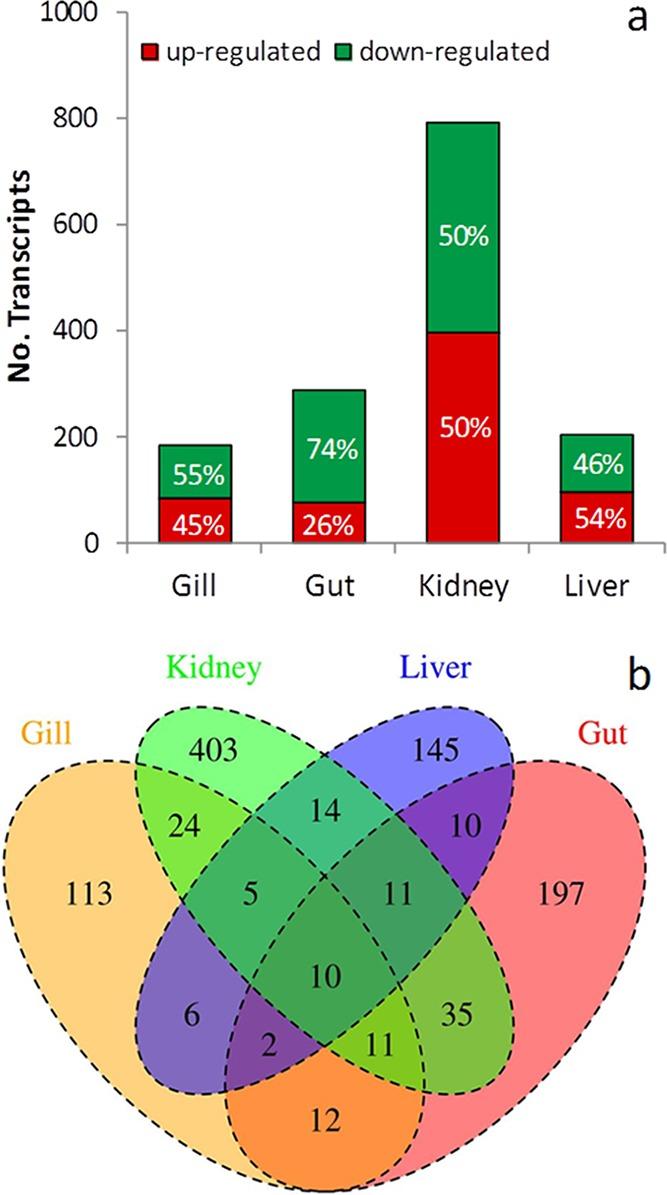
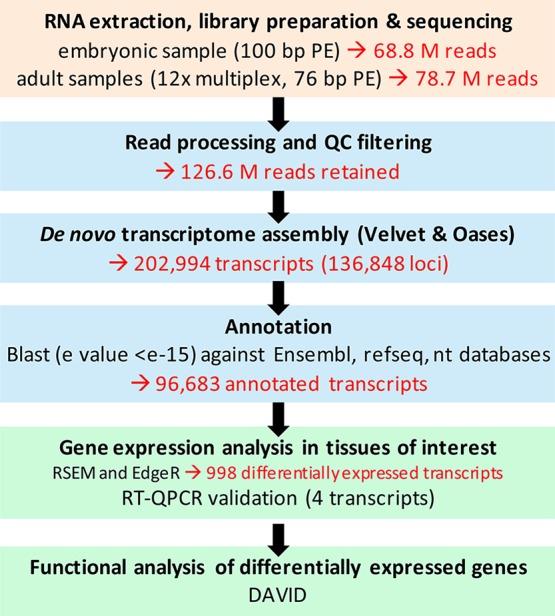
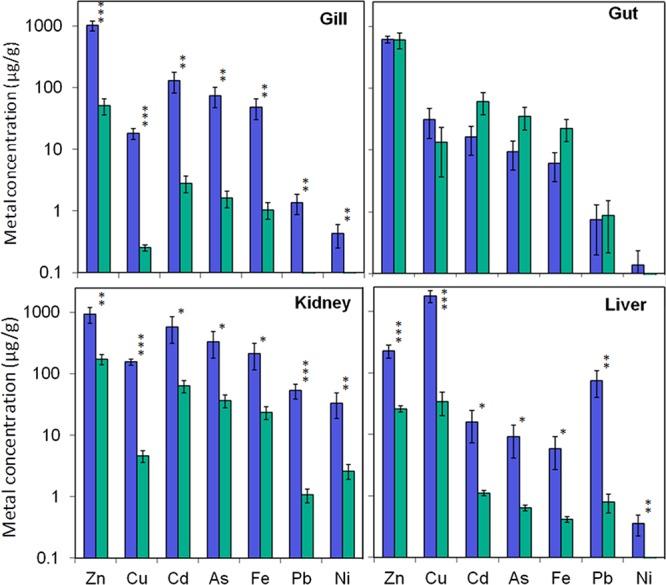
Worldwide, a number of viable populations of fish are found in environments heavily contaminated with metals, including brown trout (Salmo trutta) inhabiting the River Hayle in South-West of England. This population is chronically exposed to a water-borne mixture of metals, including copper and zinc, at concentrations lethal to naïve fish. We aimed to investigate the molecular mechanisms employed by the River Hayle brown trout to tolerate high metal concentrations. To achieve this, we combined tissue metal analysis with whole-transcriptome profiling using RNA-seq on an Illumina platform. Metal concentrations in the Hayle trout, compared to fish from a relatively unimpacted river, were significantly increased in the gills, liver and kidney (63-, 34- and 19-fold respectively), but not the gut. This confirms that these fish can tolerate considerable metal accumulation, highlighting the importance of these tissues in metal uptake (gill), storage and detoxification (liver, kidney). We sequenced, assembled and annotated the brown trout transcriptome using a de novo approach. Subsequent gene expression analysis identified 998 differentially expressed transcripts and functional analysis revealed that metal- and ion-homeostasis pathways are likely to be the most important mechanisms contributing to the metal tolerance exhibited by this population.
在全球范围内,许多鱼类种群都生活在重金属污染严重的环境中,包括栖息在英格兰西南部海厄尔河的褐鳟(Salmo trutta)。这个种群长期暴露在含有铜和锌等金属的水中,其浓度对鱼类是致命的。我们旨在研究海厄尔河褐鳟用于耐受高金属浓度的分子机制。为了实现这一目标,我们结合了组织金属分析和使用 Illumina 平台进行 RNA-seq 的全转录组分析。与来自相对未受影响河流的鱼类相比,海厄尔鳟鱼的鳃、肝和肾中的金属浓度显著升高(分别为 63 倍、34 倍和 19 倍),但肠道中没有。这证实了这些鱼可以耐受相当大的金属积累,突出了这些组织在金属吸收(鳃)、储存和解毒(肝、肾)中的重要性。我们使用从头测序方法对褐鳟的转录组进行了测序、组装和注释。随后的基因表达分析确定了 998 个差异表达的转录本,功能分析表明,金属和离子稳态途径可能是导致该种群表现出金属耐受性的最重要机制。
 Zotero 插件