
二氢辣椒素通过PPARγ/LXRα途径减轻高脂/高胆固醇饮食喂养的apoE(-/-)小鼠的斑块形成。
Dihydrocapsaicin Attenuates Plaque Formation through a PPARγ/LXRα Pathway in apoE(-/-) Mice Fed a High-Fat/High-Cholesterol Diet.
作者信息
Hu Yan-Wei, Ma Xin, Huang Jin-Lan, Mao Xin-Ru, Yang Jun-Yao, Zhao Jia-Yi, Li Shu-Fen, Qiu Yu-Rong, Yang Jia, Zheng Lei, Wang Qian
机构信息
Laboratory Medicine Center, Nanfang Hospital, Southern Medical University, Guangzhou, Guangdong, China.
出版信息
PLoS One. 2013 Jun 26;8(6):e66876. doi: 10.1371/journal.pone.0066876. Print 2013.
AIMS
Atherosclerosis is a chronic inflammatory disease and represents the major cause of cardiovascular morbidity and mortality. There is evidence that dihydrocapsaicin (DHC) can exert multiple pharmacological and physiological effects. Here, we explored the effect of DHC in atherosclerotic plaque progression in apoE(-/-) mice fed a high-fat/high-cholesterol diet.
METHODS AND RESULTS
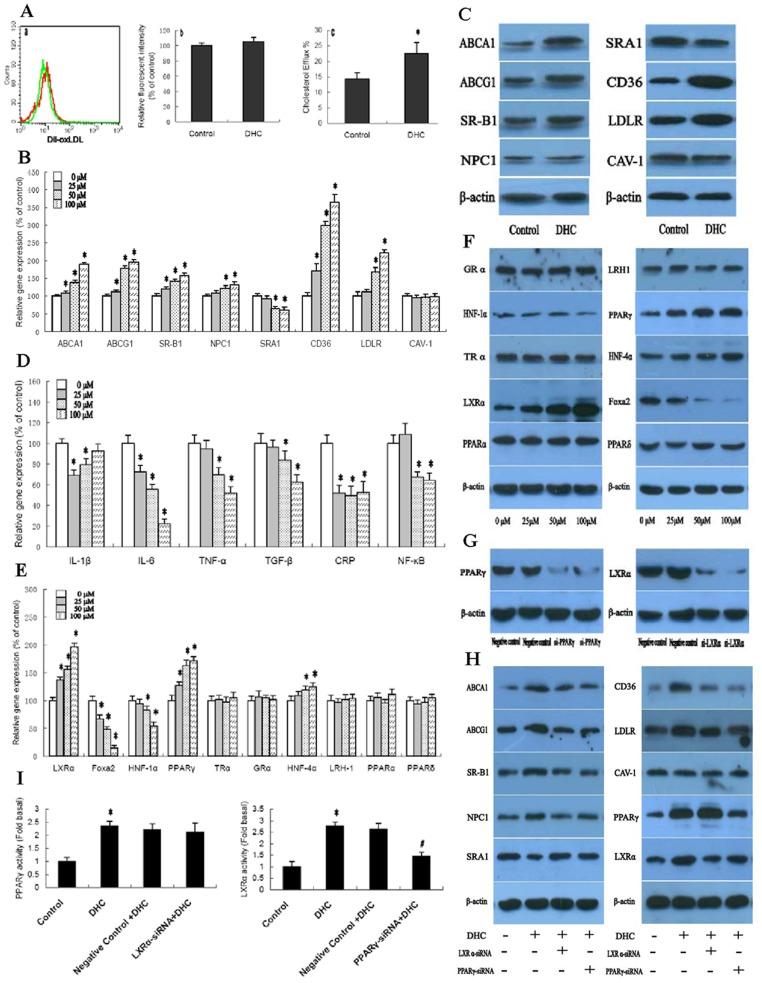
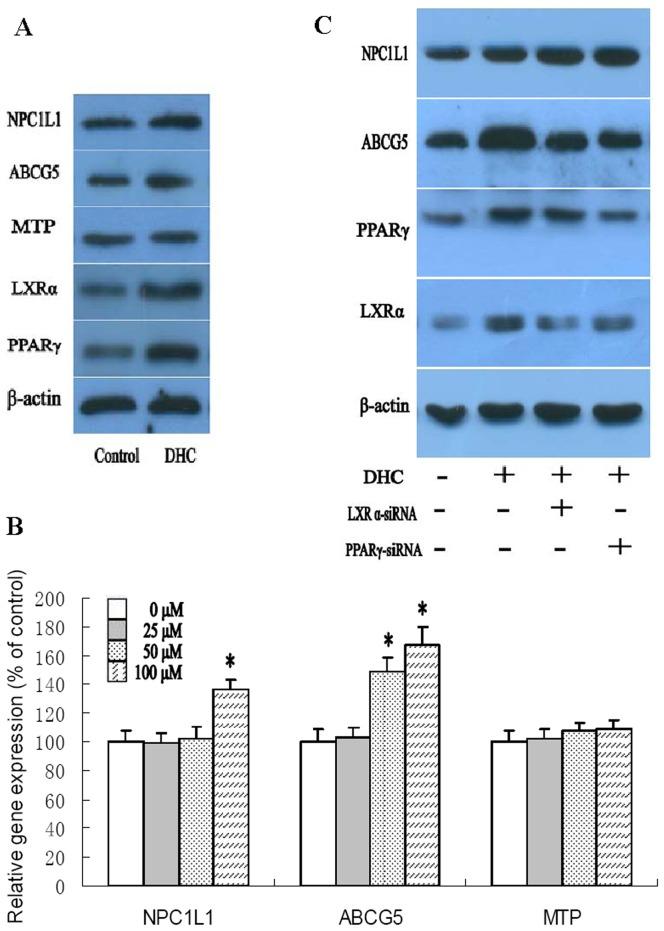
apoE(-/-) mice were randomly divided into two groups and fed a high-fat/high-cholesterol diet with or without DHC for 12 weeks. We demonstrated that cellular cholesterol content was significantly decreased while apoA1-mediated cholesterol efflux was significantly increased following treatment with DHC in THP-1 macrophage-derived foam cells. We also observed that plasma levels of TG, LDL-C, VLDL-C, IL-1β, IL-6, TNF-α and CRP were markedly decreased while plasma levels of apoA1 and HDL-C were significantly increased, and consistent with this, atherosclerotic lesion development was significantly inhibited by DHC treatment of apoE(-/-) mice fed a high-fat/high-cholesterol diet. Moreover, treatment with both LXRα siRNA and PPARγ siRNA made the up-regulation of DHC on ABCA1, ABCG1, ABCG5, SR-B1, NPC1, CD36, LDLR, HMGCR, apoA1 and apoE expression notably abolished while made the down-regulation of DHC on SRA1 expression markedly compensated. And treatment with PPARγ siRNA made the DHC-induced up-regulation of LXRα expression notably abolished while treatment with LXRα siRNA had no effect on DHC-induced PPARγ expression.
CONCLUSION
These observations provide direct evidence that DHC can significantly decrease atherosclerotic plaque formation involving in a PPARγ/LXRα pathway and thus DHC may represent a promising candidate for a therapeutic agent for the treatment or prevention of atherosclerosis.
目的
动脉粥样硬化是一种慢性炎症性疾病,是心血管疾病发病和死亡的主要原因。有证据表明二氢辣椒素(DHC)可发挥多种药理和生理作用。在此,我们探讨了DHC对喂食高脂/高胆固醇饮食的载脂蛋白E基因敲除(apoE(-/-))小鼠动脉粥样硬化斑块进展的影响。
方法与结果
将apoE(-/-)小鼠随机分为两组,分别喂食含或不含DHC的高脂/高胆固醇饮食12周。我们证明,在THP-1巨噬细胞源性泡沫细胞中,用DHC处理后细胞胆固醇含量显著降低,而载脂蛋白A1(apoA1)介导的胆固醇流出显著增加。我们还观察到,喂食高脂/高胆固醇饮食的apoE(-/-)小鼠经DHC处理后,血浆甘油三酯(TG)、低密度脂蛋白胆固醇(LDL-C)、极低密度脂蛋白胆固醇(VLDL-C)、白细胞介素-1β(IL-1β)、白细胞介素-6(IL-6)、肿瘤坏死因子-α(TNF-α)和C反应蛋白(CRP)水平显著降低,而血浆apoA1和高密度脂蛋白胆固醇(HDL-C)水平显著升高,与此一致,DHC处理显著抑制了动脉粥样硬化病变的发展。此外,用肝X受体α(LXRα)小干扰RNA(siRNA)和过氧化物酶体增殖物激活受体γ(PPARγ)siRNA处理均显著消除了DHC对ATP结合盒转运体A1(ABCA1)、ABCG1、ABCG5、清道夫受体B1(SR-B1)、尼曼匹克蛋白C1(NPC1)、CD36、低密度脂蛋白受体(LDLR)、3-羟基-3-甲基戊二酰辅酶A还原酶(HMGCR)、apoA1和apoE表达的上调作用,同时显著补偿了DHC对类固醇受体辅助激活因子1(SRA1)表达的下调作用。用PPARγ siRNA处理显著消除了DHC诱导的LXRα表达上调,而用LXRα siRNA处理对DHC诱导的PPARγ表达无影响。
结论
这些观察结果提供了直接证据,表明DHC可通过PPARγ/LXRα途径显著减少动脉粥样硬化斑块形成,因此DHC可能是治疗或预防动脉粥样硬化的一种有前景的治疗药物候选物。


 Zotero 插件