
过氧亚硝酸盐是体内缺血后处理提供的心脏保护作用的关键介质。
Peroxynitrite is a key mediator of the cardioprotection afforded by ischemic postconditioning in vivo.
机构信息
Department of Hepatobiliary Surgery, the First Affiliated Hospital, Zhejiang University, College of Medicine, Hangzhou, China.
出版信息
PLoS One. 2013 Jul 10;8(7):e70331. doi: 10.1371/journal.pone.0070331. Print 2013.
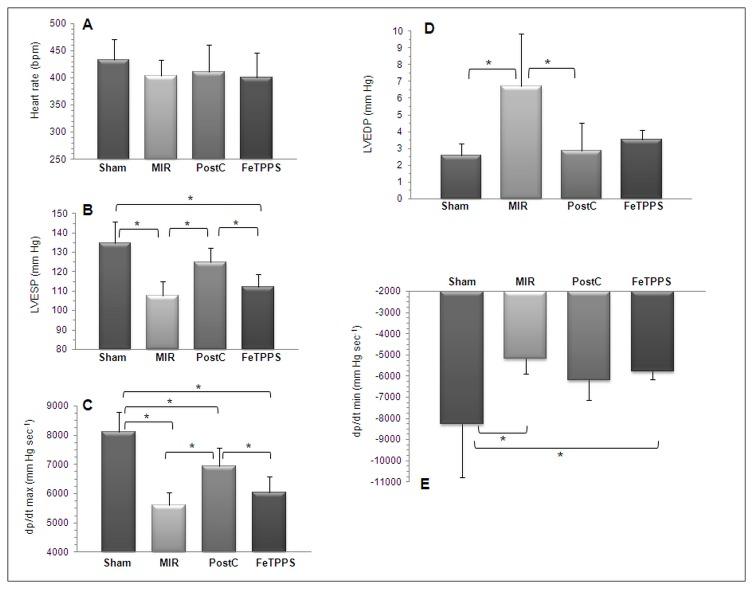
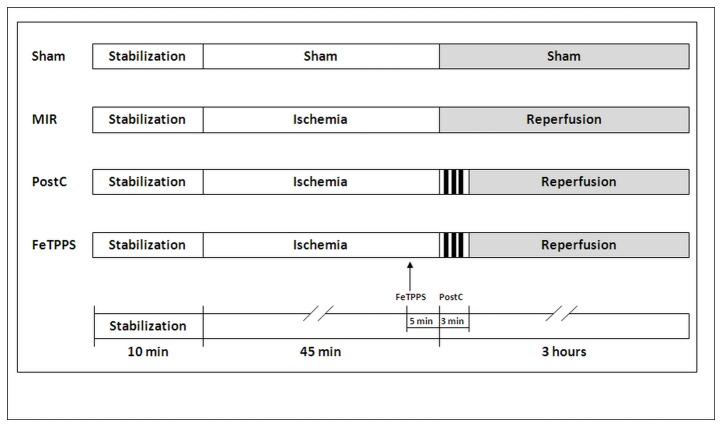
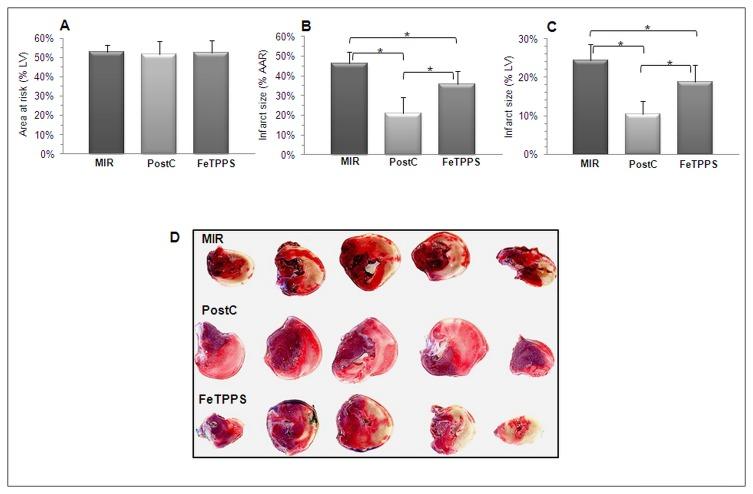
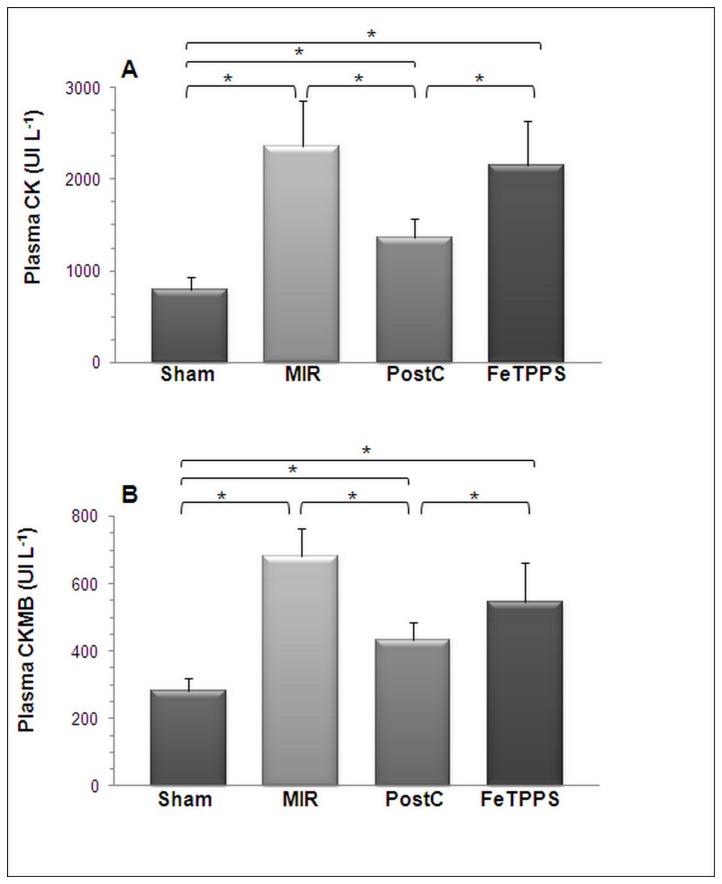
Myocardial ischemic postconditioning (PosC) describes an acquired resistance to lethal ischemia-reperfusion (I/R) injury afforded by brief episodes of I/R applied immediately after the ischemic insult. Cardioprotection is conveyed by parallel signaling pathways converging to prevent mitochondria permeability transition. Recent observations indicated that PostC is associated with free radicals generation, including nitric oxide (NO(.)) and superoxide (O2 (.-)), and that cardioprotection is abrogated by antioxidants. Since NO. And O2 (. -) react to form peroxynitrite, we hypothesized that postC might trigger the formation of peroxyntrite to promote cardioprotection in vivo. Rats were exposed to 45 min of myocardial ischemia followed by 3h reperfusion. PostC (3 cycles of 30 seconds ischemia/30 seconds reperfusion) was applied at the end of index ischemia. In a subgroup of rats, the peroxynitrite decomposition catalyst 5,10,15,20-tetrakis(4-sulphonatophenyl) porphyrinato iron (FeTPPS) was given intravenously (10 mg/kg(-1)) 5 minutes before PostC. Myocardial nitrotyrosine was determined as an index of peroxynitrite formation. Infarct size (colorimetric technique and plasma creatine kinase-CK-levels) and left ventricle (LV) function (micro-tip pressure transducer), were determined. A significant generation of 3-nitrotyrosine was detected just after the PostC manoeuvre. PostC resulted in a marked reduction of infarct size, CK release and LV systolic dysfunction. Treatment with FeTPPS before PostC abrogated the beneficial effects of PostC on myocardial infarct size and LV function. Thus, peroxynitrite formed in the myocardium during PostC induces cardioprotective mechanisms improving both structural and functional integrity of the left ventricle exposed to ischemia and reperfusion in vivo.
心肌缺血后处理(PostC)描述了一种获得性抵抗致命性缺血再灌注(I/R)损伤的能力,这种能力是通过在缺血性损伤后立即应用短暂的 I/R 发作来实现的。这种保护作用是通过平行的信号通路传递的,这些信号通路汇聚在一起,防止线粒体通透性转换。最近的观察表明,PostC 与自由基的产生有关,包括一氧化氮(NO(.))和超氧阴离子(O2(.-)),并且抗氧化剂可以阻断这种保护作用。由于 NO(.)和 O2(.-)反应生成过氧亚硝酸盐,我们假设 PostC 可能触发过氧亚硝酸盐的形成,以促进体内的心脏保护作用。
大鼠暴露于 45 分钟心肌缺血后,再灌注 3 小时。PostC(3 个 30 秒缺血/30 秒再灌注循环)在指数缺血结束时应用。在大鼠的一个亚组中,在 PostC 前 5 分钟静脉内给予过氧亚硝酸盐分解催化剂 5,10,15,20-四(4-磺基苯)卟啉铁(FeTPPS)(10mg/kg(-1))。心肌硝基酪氨酸被作为过氧亚硝酸盐形成的指标来测定。梗死面积(比色法和血浆肌酸激酶-CK 水平)和左心室(LV)功能(微探头压力换能器)也进行了测定。
在 PostC 操作后立即检测到 3-硝基酪氨酸的明显生成。PostC 导致梗死面积、CK 释放和 LV 收缩功能明显减少。在 PostC 前用 FeTPPS 治疗,可消除 PostC 对心肌梗死面积和 LV 功能的有益作用。因此,在 PostC 期间心肌中形成的过氧亚硝酸盐诱导了心脏保护机制,改善了体内缺血再灌注暴露的左心室的结构和功能完整性。

 Zotero 插件