
探索患者对一个基于认知行为疗法的网站的看法,该网站用于肠易激综合征症状的自我管理。
Exploring patients' views of a cognitive behavioral therapy-based website for the self-management of irritable bowel syndrome symptoms.
作者信息
Tonkin-Crine Sarah, Bishop Felicity L, Ellis Matthew, Moss-Morris Rona, Everitt Hazel
机构信息
Primary Care and Population Sciences, Faculty of Medicine, University of Southampton, Southampton, United Kingdom.
出版信息
J Med Internet Res. 2013 Sep 3;15(9):e190. doi: 10.2196/jmir.2672.
BACKGROUND
Cognitive behavioral therapy (CBT) has been shown to have positive effects on the management of irritable bowel syndrome (IBS) symptoms. A factorial pilot randomized placebo-controlled trial (called MIBS) tested the potential effectiveness of a self-management CBT-based website alongside two medications: methylcellulose and mebeverine, and a placebo. The results showed no significant differences in quality of life or symptom severity measures, but enablement and participant's global assessment of relief was higher in the website groups.
OBJECTIVE
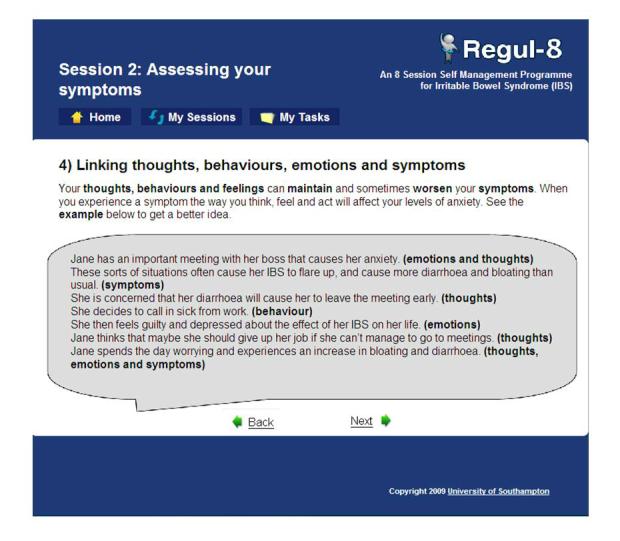
To conduct a qualitative study nested within this trial, in order to explore patients' views and experiences of using the CBT-based website to facilitate self-management of IBS.
METHODS
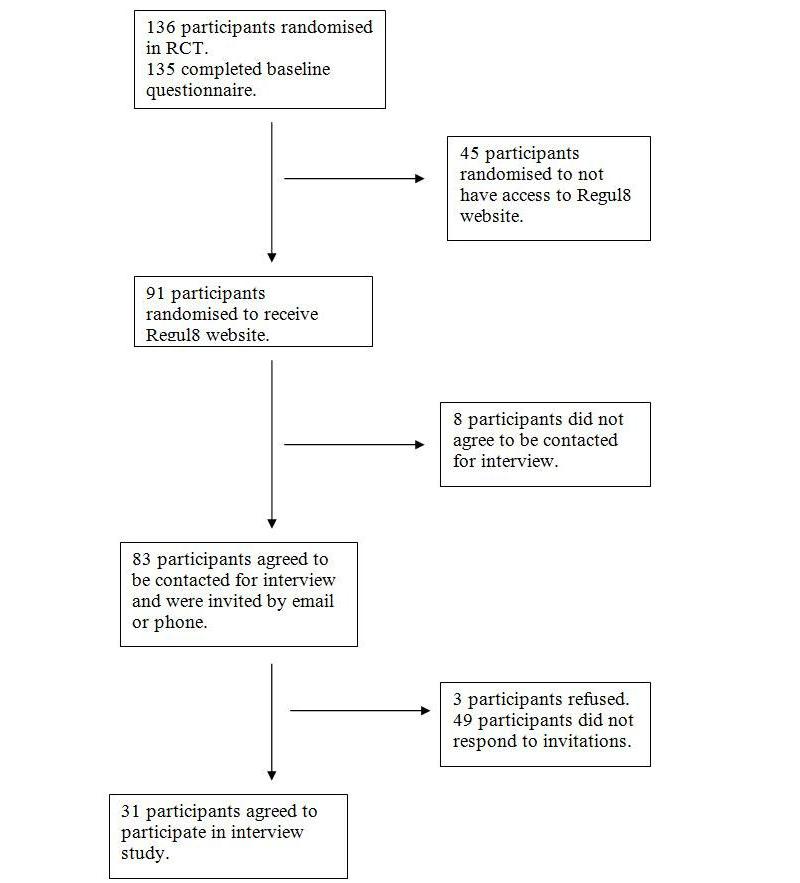
Semistructured interviews were carried out with patients who had used the website with one session of nurse support (n=16) or the website alone (n=15) while participating in the MIBS trial. An inductive thematic analysis was conducted.
RESULTS
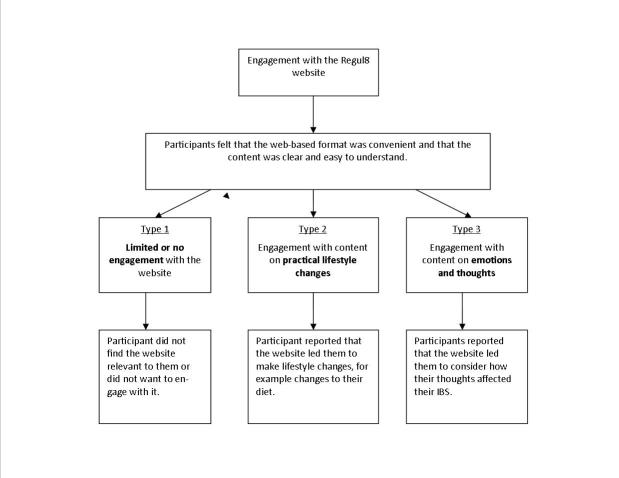
We identified three types of engagement with the CBT-based website. One group of participants, mostly in the website-only condition, had limited or no engagement with the website. One group engaged with the content and advice on practical lifestyle changes. The final group of participants engaged with the content and advice on psychological aspects related to IBS. Similarities and differences between these three groups are explored.
CONCLUSIONS
Teaching self-management techniques through a Web intervention was received positively by most of the participants. Concepts linked to cognitive aspects of CBT appeared to be harder for participants to engage with. Participants who received nurse support rated the cognitive aspects more positively, suggesting that some therapy support alongside the website should be considered. However, the Web format was preferred by some who favored anonymity as well as those who appreciated the accessibility and ease of use of this type of management. Suggestions on how to encourage engagement with Web interventions are discussed.
背景
认知行为疗法(CBT)已被证明对肠易激综合征(IBS)症状的管理具有积极作用。一项析因性试点随机安慰剂对照试验(称为MIBS)测试了一个基于CBT的自我管理网站与两种药物(甲基纤维素和美贝维林)以及一种安慰剂相比的潜在效果。结果显示,在生活质量或症状严重程度指标上没有显著差异,但网站组的赋能和参与者对缓解情况的总体评估更高。
目的
在该试验中进行一项定性研究,以探讨患者对使用基于CBT的网站促进IBS自我管理的看法和体验。
方法
对在参与MIBS试验期间使用过该网站且有一次护士支持(n = 16)或仅使用该网站(n = 15)的患者进行半结构式访谈。进行归纳性主题分析。
结果
我们确定了与基于CBT的网站的三种参与类型。一组参与者,大多是仅使用网站的情况,与网站的互动有限或没有互动。一组参与了关于实际生活方式改变的内容和建议。最后一组参与者参与了与IBS相关的心理方面的内容和建议。探讨了这三组之间的异同。
结论
大多数参与者对通过网络干预教授自我管理技术给予了积极评价。与CBT认知方面相关联的概念似乎更难为参与者所接受。接受护士支持的参与者对认知方面的评价更积极,这表明应考虑在网站之外提供一些治疗支持。然而,一些喜欢匿名的人以及那些欣赏这种管理方式的可及性和易用性的人更喜欢网络形式。讨论了如何鼓励参与网络干预的建议。
 Zotero 插件