
受自然启发的抗菌聚合物——评估它们在生物医学应用中的潜力。
Nature-inspired antimicrobial polymers--assessment of their potential for biomedical applications.
机构信息
Operative Dentistry and Periodontology, University Medical Center of the Albert-Ludwigs-Universität, Freiburg, Germany.
出版信息
PLoS One. 2013 Sep 9;8(9):e73812. doi: 10.1371/journal.pone.0073812. eCollection 2013.
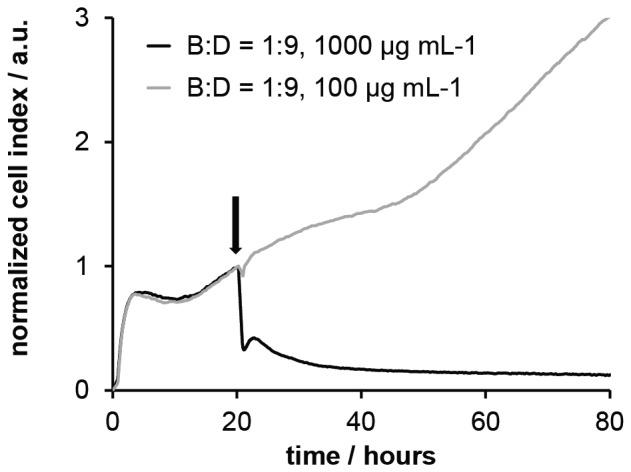
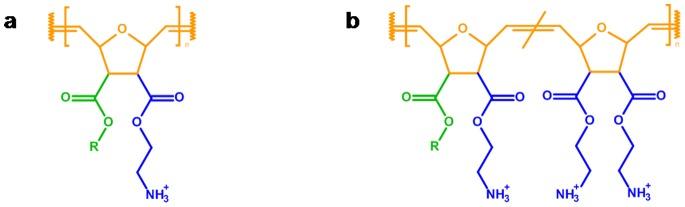
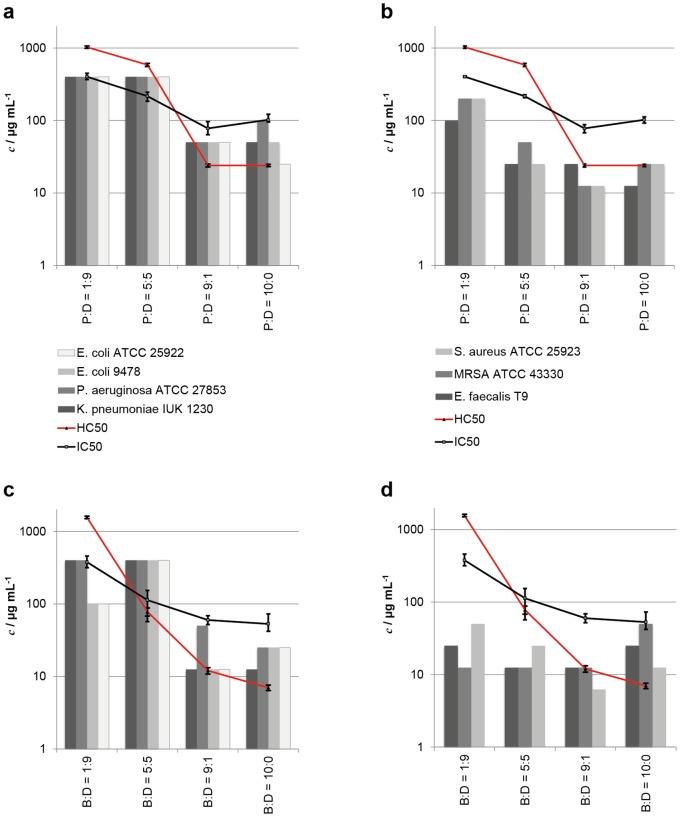
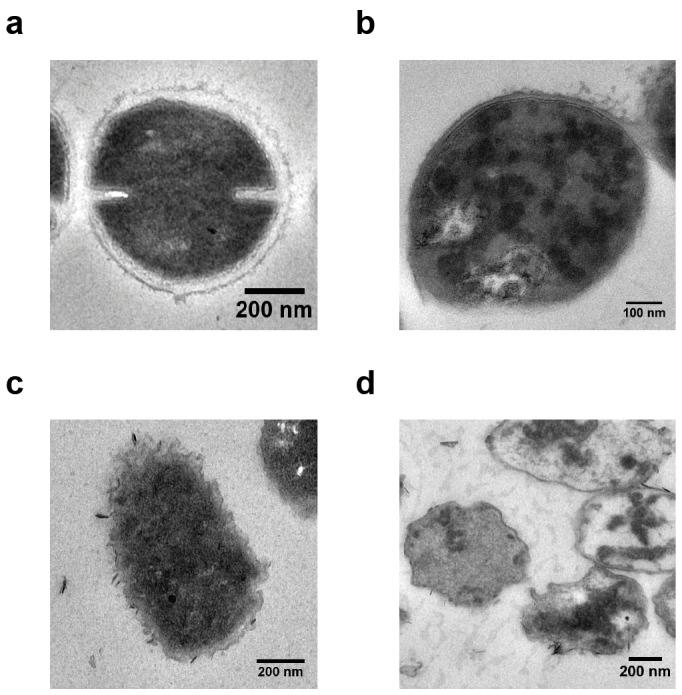
We explored the potential of poly(oxonorbornene)-based synthetic mimics of antimicrobial peptides (SMAMPs), a promising new class of antimicrobial polymers with cell-selectivity and low resistance development potential, for clinical applications. We evaluated their antimicrobial activity against a panel of seven clinical and regulatory relevant bacteria strains, and tested their toxicity with two different kinds of primary human cells. For the antimicrobial activity, we performed the minimum inhibitory concentration (MIC) assay and determined the minimum bactericidal concentration (MBC) according to the NCCLS guidelines. The results revealed specific problems that may occur when testing the antimicrobial activity of amphiphilic cationic polymers, and confirmed the working hypothesis that the more hydrophilic SMAMP polymers in our portfolio were 'doubly selective', i.e. they are not only selective for bacteria over mammalian cells, but also for Gram-positive over Gram-negative bacteria. The data also showed that we could improve the broad-band activity of one SMAMP, and in combination with the results from the cell toxicity experiments, identified this polymer as a promising candidate for further in-vitro and in-vivo testing. Transmission electron studies revealed that the cellular envelopes of both E. coli and S. aureus were severely damaged due to SMAMP action on the bacterial membrane, which strengthened the argument that SMAMPs closely resemble antimicrobial peptides. To test cell toxicity, we used the traditional hemolysis assay with human red blood cells, and the novel xCelligence assay with primary human fibroblasts. The data reported here is the first example in which a hemolysis assay is benchmarked against the xCelligence assay. It revealed that the same trends were obtained using these complementary methods. This establishes the xCelligence assay with primary human cells as a useful tool for SMAMP characterization.
我们探索了基于聚降冰片烯的合成抗菌肽模拟物(SMAMPs)的潜力,这是一类有前途的新型抗菌聚合物,具有细胞选择性和低耐药发展潜力,可用于临床应用。我们评估了它们对七种临床和监管相关细菌菌株的抗菌活性,并使用两种不同类型的原代人细胞测试了它们的毒性。对于抗菌活性,我们根据 NCCLS 指南进行了最小抑菌浓度(MIC)测定,并确定了最小杀菌浓度(MBC)。结果揭示了在测试两亲阳离子聚合物的抗菌活性时可能出现的具体问题,并证实了我们的工作假设,即在我们的产品组合中,亲水性更强的 SMAMP 聚合物是“双重选择性的”,即它们不仅对细菌相对于哺乳动物细胞具有选择性,而且对革兰氏阳性菌相对于革兰氏阴性菌具有选择性。数据还表明,我们可以提高一种 SMAMP 的广谱活性,并结合细胞毒性实验的结果,确定该聚合物是进一步进行体外和体内测试的有前途的候选物。透射电子研究表明,由于 SMAMP 对细菌膜的作用,大肠杆菌和金黄色葡萄球菌的细胞膜均严重受损,这进一步证明了 SMAMPs 与抗菌肽非常相似。为了测试细胞毒性,我们使用了传统的人红细胞溶血测定法和新型原代人成纤维细胞的 xCelligence 测定法。这里报告的数据是首次将溶血测定法与 xCelligence 测定法进行基准测试的例子。它表明,使用这些互补方法获得了相同的趋势。这确立了 xCelligence 测定法与原代人细胞作为 SMAMP 特性表征的有用工具。

 Zotero 插件