
各种食物成分对胆囊排空的影响。
Effects of various food ingredients on gall bladder emptying.
机构信息
Nottingham Digestive Diseases Centre and NIHR Nottingham Digestive Diseases Biomedical Research Unit, University of Nottingham, Nottingham, UK.
出版信息
Eur J Clin Nutr. 2013 Nov;67(11):1182-7. doi: 10.1038/ejcn.2013.168. Epub 2013 Sep 18.
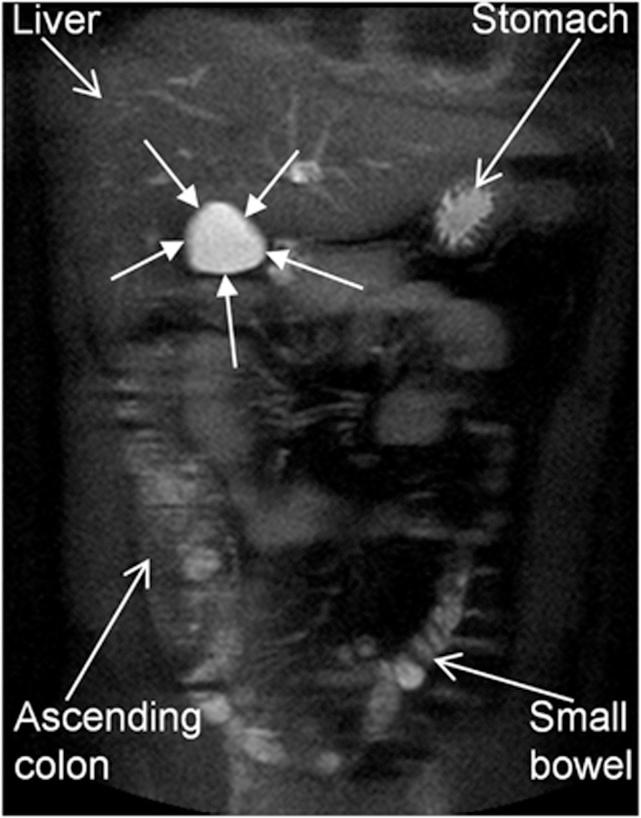
BACKGROUND/OBJECTIVES: The emptying of the gall bladder in response to feeding is pivotal for the digestion of fat, but the role of various food ingredients in contracting the gall bladder postprandially is not well understood. We hypothesized that different food ingredients, when consumed, will have a different effect on stimulating gall bladder emptying. To investigate this we designed two randomized, investigator-blind, cross-over studies in healthy subjects using magnetic resonance imaging (MRI) to measure gall bladder volumes serially and non-invasively.
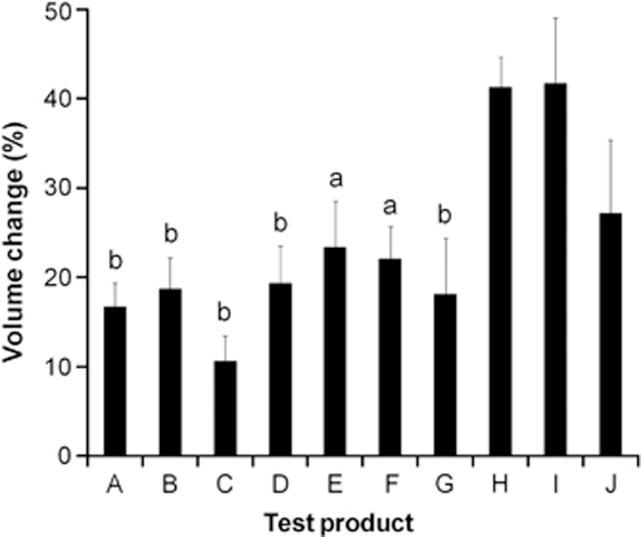
SUBJECTS/METHODS: Study 1: exploratory study evaluating the effects of 10 different food ingredients on gall bladder emptying in eight healthy subjects. The choice of ingredients varied from common items like coffee, tea and milk to actives like curcumin and potato protease inhibitor. Study 2: mechanistic study investigating the cholecystokinin (CCK) dose response to the best performer ingredient from Study 1 in 21 healthy subjects four ways.
RESULTS
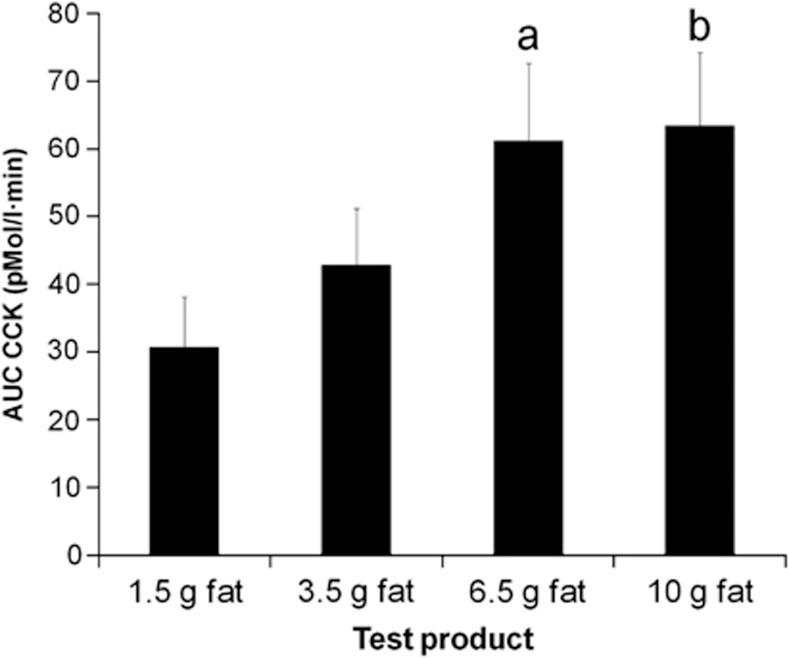
The largest gall bladder volume change in Study 1 was observed with fat, which therefore became the dose-response ingredient in Study 2, where the maximum % gall bladder volume change correlated well with CCK.
CONCLUSIONS
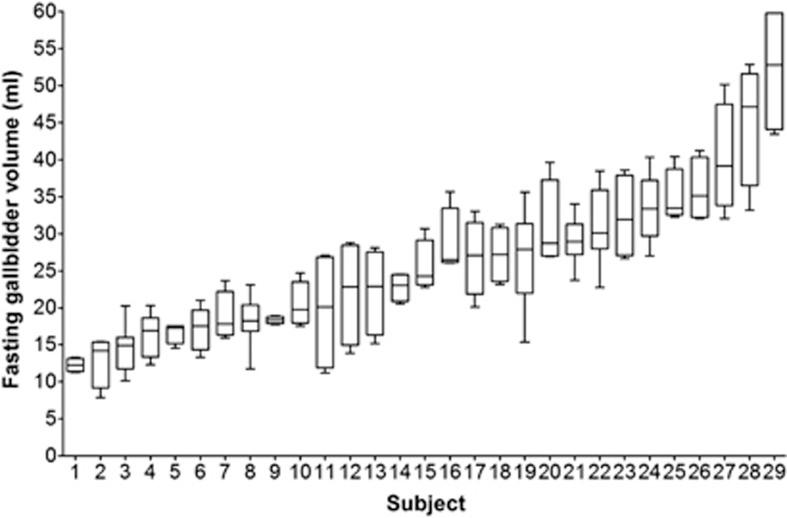
These serial test-retest studies showed that the fasted gall bladder volume varied remarkably between individuals and that individual day-to-day variability had wide coefficients of variation. Improved knowledge of how to stimulate bile release using food ingredients will be useful to improve in vitro-in vivo correlation of bioavailability testing of hydrophobic drugs. It could improve performance of cholesterol-lowering plant stanol and sterol products and possibly aid understanding of some cholesterol gallstone disease.
背景/目的:胆囊对进食的排空反应对于脂肪消化至关重要,但各种食物成分在餐后收缩胆囊的作用尚未得到很好的理解。我们假设,不同的食物成分在被摄入时,会对刺激胆囊排空产生不同的影响。为了研究这一点,我们设计了两项随机、研究者盲法、交叉研究,在健康受试者中使用磁共振成像(MRI)连续、非侵入性地测量胆囊体积。
受试者/方法:研究 1:探索性研究,评估 10 种不同食物成分对 8 名健康受试者胆囊排空的影响。选择的成分从咖啡、茶和牛奶等常见物品到姜黄素和土豆蛋白酶抑制剂等活性成分各不相同。研究 2:机制研究,用 4 种不同方式在 21 名健康受试者中研究 Study 1 中最佳成分的胆囊收缩素(CCK)剂量反应。
结果
Study 1 中胆囊体积变化最大的是脂肪,因此脂肪成为 Study 2 中的剂量反应成分,最大的胆囊体积变化百分比与 CCK 相关性良好。
结论
这些系列的测试-再测试研究表明,空腹胆囊体积在个体之间差异显著,个体日间变化的变异系数较大。更好地了解如何使用食物成分刺激胆汁释放将有助于提高疏水性药物生物利用度测试的体外-体内相关性。它可以改善降胆固醇植物甾醇和甾醇产品的性能,并可能有助于理解一些胆固醇性胆囊疾病。

 Zotero 插件