
糖尿病诱导骨髓细胞发生稳定的内在变化,这些变化有助于小鼠伤口愈合过程中的慢性炎症。
Diabetes induces stable intrinsic changes to myeloid cells that contribute to chronic inflammation during wound healing in mice.
机构信息
The Healing Foundation Centre, University of Manchester, Manchester, M13 9PT, UK.
出版信息
Dis Model Mech. 2013 Nov;6(6):1434-47. doi: 10.1242/dmm.012237. Epub 2013 Sep 18.
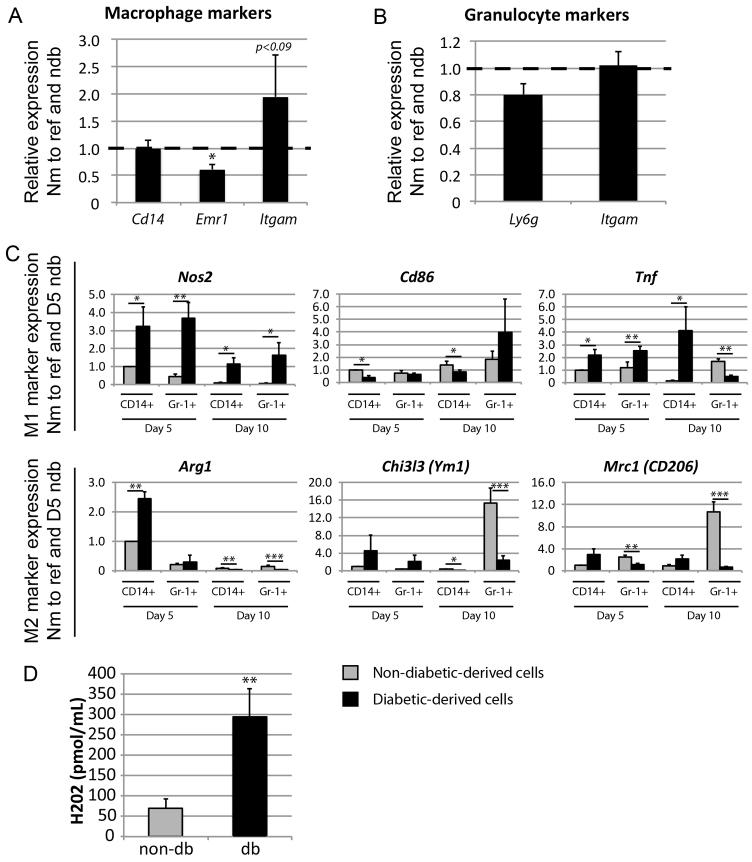
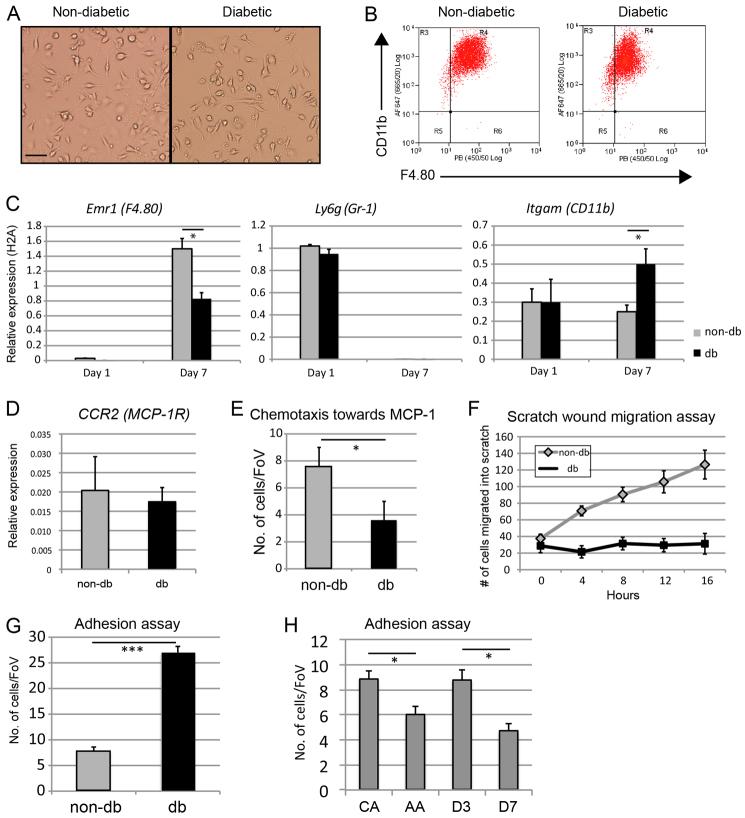
Acute inflammation in response to injury is a tightly regulated process by which subsets of leukocytes are recruited to the injured tissue and undergo behavioural changes that are essential for effective tissue repair and regeneration. The diabetic wound environment is characterised by excessive and prolonged inflammation that is linked to poor progression of healing and, in humans, the development of diabetic foot ulcers. However, the underlying mechanisms contributing to excessive inflammation remain poorly understood. Here we show in a murine model that the diabetic environment induces stable intrinsic changes in haematopoietic cells. These changes lead to a hyper-responsive phenotype to both pro-inflammatory and anti-inflammatory stimuli, producing extreme M1 and M2 polarised cells. During early wound healing, myeloid cells in diabetic mice show hyperpolarisation towards both M1 and M2 phenotypes, whereas, at late stages of healing, when non-diabetic macrophages have transitioned to an M2 phenotype, diabetic wound macrophages continue to display an M1 phenotype. Intriguingly, we show that this population predominantly consists of Gr-1(+) CD11b(+) CD14(+) cells that have been previously reported as 'inflammatory macrophages' recruited to injured tissue in the early stages of wound healing. Finally, we show that this phenomenon is directly relevant to human diabetic ulcers, for which M2 polarisation predicts healing outcome. Thus, treatments focused at targeting this inflammatory cell subset could prove beneficial for pathological tissue repair.
急性炎症反应是一种受严格调控的过程,在此过程中,白细胞亚群被募集到损伤组织,并发生行为改变,这对于有效的组织修复和再生至关重要。糖尿病创面环境的特点是过度和持续的炎症,这与愈合进展不良有关,并且在人类中,会导致糖尿病足溃疡的发生。然而,导致过度炎症的潜在机制仍知之甚少。在这里,我们在小鼠模型中表明,糖尿病环境会诱导造血细胞发生稳定的内在变化。这些变化导致对促炎和抗炎刺激物产生超敏反应表型,产生极端的 M1 和 M2 极化细胞。在早期伤口愈合过程中,糖尿病小鼠的髓样细胞向 M1 和 M2 表型两极化,而在愈合的晚期,当非糖尿病巨噬细胞向 M2 表型转化时,糖尿病创面巨噬细胞继续显示 M1 表型。有趣的是,我们表明,这群细胞主要由 Gr-1(+) CD11b(+) CD14(+) 细胞组成,这些细胞以前被报道为“炎症巨噬细胞”,在伤口愈合的早期阶段被募集到受损组织中。最后,我们表明,这种现象与人糖尿病性溃疡直接相关,其中 M2 极化预测愈合结果。因此,针对这种炎症细胞亚群的治疗方法可能对病理性组织修复有益。




 Zotero 插件