
在乙腈-水二元溶液中研究 c-甲基杯[4]间苯二酚与钛(III)配合物的电导率。
Conductance studies on complex formation between c-methylcalix[4]resorcinarene and titanium (III) in acetonitrile-H₂O binary solutions.
机构信息
Food Quality and Safety Research Department, Food Science and Technology Research Institute, ACECR Mashhad Branch, 91775-1376 Mashhad, Iran.
出版信息
Molecules. 2013 Sep 27;18(10):12041-50. doi: 10.3390/molecules181012041.
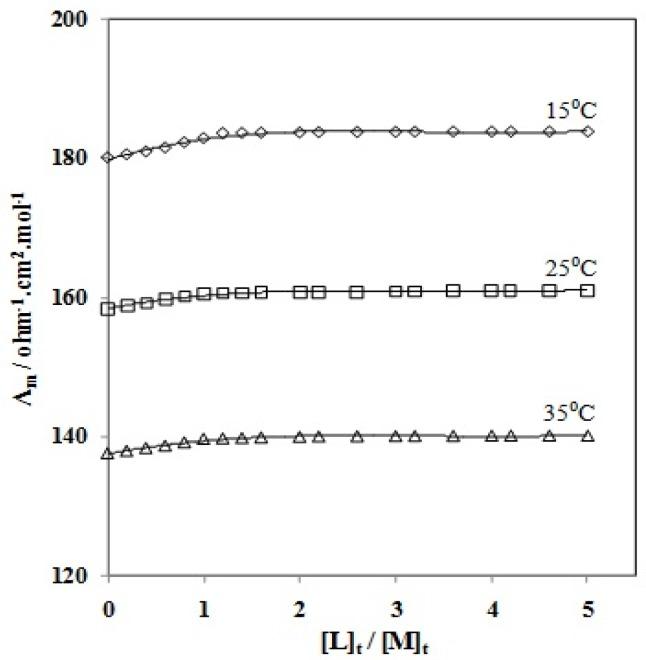
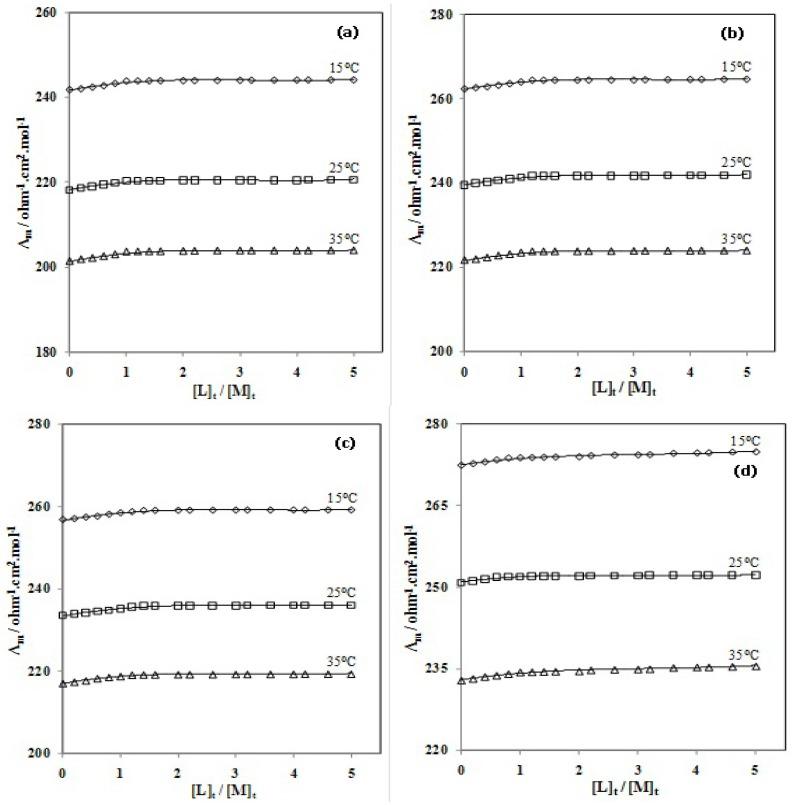
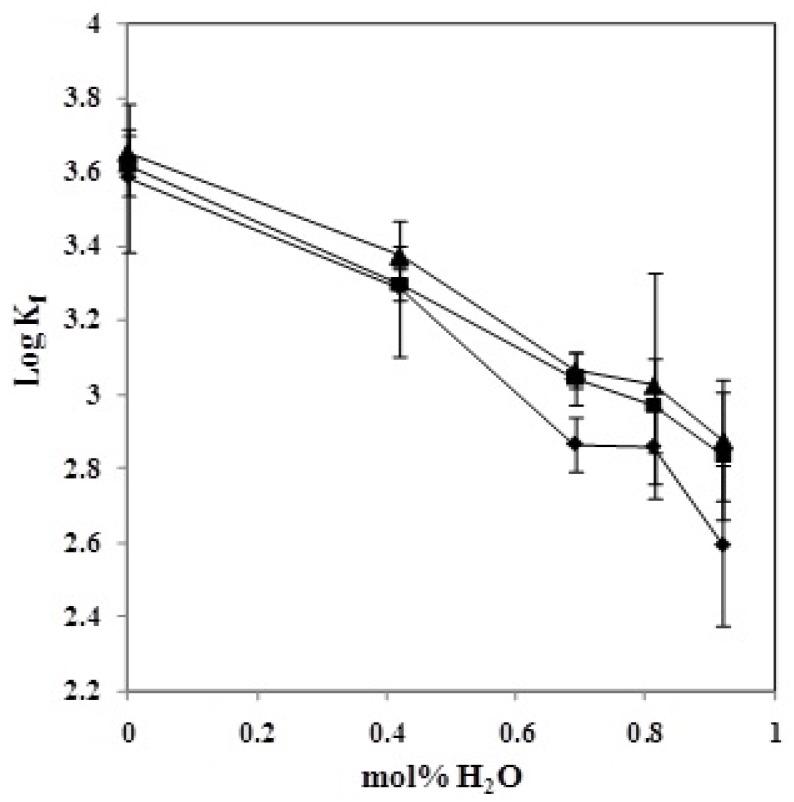
Calixresorcinarenes have proved to be unique molecules for molecular recognition via hydrogen bonding, hydrophobic and ionic interactions with suitable substrates such as cations. The study of the interactions involved in the complexation of different cations with calixresorcinarenes in solvent mixtures is important for a better understanding of the mechanism of biological transport, molecular recognition, and other analytical applications. This article summarizes different aspects of the complexes of the Ti(3+) metal cation with c-methylcalix[4]resorcinarene (CMCR) as studied by conductometry in acetonitrile (AN)-water (H₂O) binary mixtures at different temperatures. Conductance data show that the metal cation/ligand (ML) stoichiometry of the complexes in solution is 1:1 in all cases. Non-linear behaviour was observed for the variation of logKf of the complexes vs. the composition of the binary solvent mixtures. Selectivity of CMCR for the Ti(3+) cation is sensitive to solvent composition; in some cases and at certain compositions of the mixed solvent systems, the selectivity order is changed. Values of thermodynamic parameters (ΔH(c)(0), ΔS(c)(0)) for formation of the CMCR-Ti(3+) complexes in AN-H₂O binary systems were obtained from the temperature dependence of stability constants, and the results show that the thermodynamics of complexation reactions are affected by the nature and composition of the mixed solvents.
杯[4]芳烃衍生物通过氢键、疏水和离子相互作用与合适的底物(如阳离子)证明是用于分子识别的独特分子。研究不同阳离子与杯[4]芳烃衍生物在溶剂混合物中络合的相互作用对于更好地理解生物传输、分子识别和其他分析应用的机制非常重要。本文总结了在不同温度下通过电导法在乙腈(AN)-水(H₂O)二元混合物中研究 Ti(3+) 金属阳离子与 c-甲基杯[4]芳烃(CMCR)的配合物的不同方面。电导数据表明,在所有情况下,溶液中金属阳离子/配体(ML)配合物的化学计量比均为 1:1。观察到配合物的 logKf 随二元溶剂混合物组成的变化呈非线性。CMCR 对 Ti(3+) 阳离子的选择性对溶剂组成敏感;在某些情况下,并且在混合溶剂体系的某些组成下,选择性顺序发生变化。从稳定常数的温度依赖性获得了在 AN-H₂O 二元体系中形成 CMCR-Ti(3+) 配合物的热力学参数(ΔH(c)(0)、ΔS(c)(0))的值,结果表明络合反应的热力学受混合溶剂的性质和组成的影响。


 Zotero 插件