
患者对基于网络的个人健康记录系统的接受度:来自台湾的实证研究。
Patients' acceptance towards a web-based personal health record system: an empirical study in Taiwan.
机构信息
Department of Information Management, Chia Nan University of Pharmacy and Science, No. 60, Sec.1, Erh-Jen Rd., Jen-Te Dist., Tainan 717, Taiwan.
出版信息
Int J Environ Res Public Health. 2013 Oct 17;10(10):5191-208. doi: 10.3390/ijerph10105191.
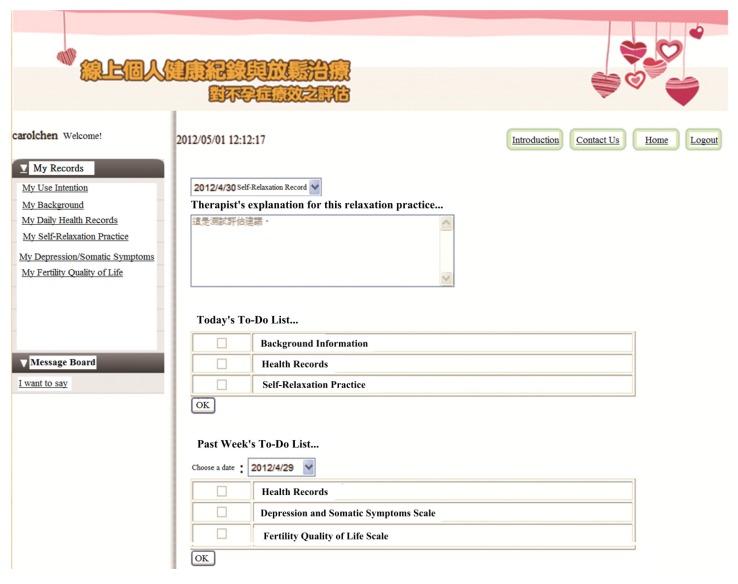
The health care sector has become increasingly interested in developing personal health record (PHR) systems as an Internet-based telehealthcare implementation to improve the quality and decrease the cost of care. However, the factors that influence patients' intention to use PHR systems remain unclear. Based on physicians' therapeutic expertise, we implemented a web-based infertile PHR system and proposed an extended Technology Acceptance Model (TAM) that integrates the physician-patient relationship (PPR) construct into TAM's original perceived ease of use (PEOU) and perceived usefulness (PU) constructs to explore which factors will influence the behavioral intentions (BI) of infertile patients to use the PHR. From ninety participants from a medical center, 50 valid responses to a self-rating questionnaire were collected, yielding a response rate of 55.56%. The partial least squares (PLS) technique was used to assess the causal relationships that were hypothesized in the extended model. The results indicate that infertile patients expressed a moderately high intention to use the PHR system. The PPR and PU of patients had significant effects on their BI to use PHR, whereas the PEOU indirectly affected the patients' BI through the PU. This investigation confirms that PPR can have a critical role in shaping patients' perceptions of the use of healthcare information technologies. Hence, we suggest that hospitals should promote the potential usefulness of PHR and improve the quality of the physician-patient relationship to increase patients' intention of using PHR.
医疗保健行业越来越有兴趣开发个人健康记录(PHR)系统,作为基于互联网的远程医疗实施,以提高医疗质量并降低医疗成本。然而,影响患者使用 PHR 系统意愿的因素尚不清楚。基于医生的治疗专业知识,我们实施了一个基于网络的不孕 PHR 系统,并提出了一个扩展的技术接受模型(TAM),将医患关系(PPR)结构纳入 TAM 的原始感知易用性(PEOU)和感知有用性(PU)结构中,以探讨哪些因素将影响不孕患者使用 PHR 的行为意图(BI)。从医疗中心的 90 名参与者中,收集了对自我评估问卷的 50 份有效回复,回复率为 55.56%。偏最小二乘(PLS)技术用于评估扩展模型中假设的因果关系。结果表明,不孕患者表示他们有使用 PHR 系统的中等高意愿。患者的 PPR 和 PU 对他们使用 PHR 的 BI 有显著影响,而 PEOU 通过 PU 间接地影响患者的 BI。这项调查证实,PPR 可以在塑造患者对医疗保健信息技术使用的看法方面发挥关键作用。因此,我们建议医院应该宣传 PHR 的潜在有用性,并提高医患关系的质量,以增加患者使用 PHR 的意愿。


 Zotero 插件