
过氧化物酶体增殖物激活受体-γ 吡格列酮可改善类风湿关节炎患者的血管功能并降低疾病活动度。
The peroxisome proliferator activated receptor-γ pioglitazone improves vascular function and decreases disease activity in patients with rheumatoid arthritis.
机构信息
Division of Rheumatology, Department of Internal Medicine, University of Michigan Medical School, Ann Arbor, MI.
出版信息
J Am Heart Assoc. 2013 Nov 19;2(6):e000441. doi: 10.1161/JAHA.113.000441.
BACKGROUND
Rheumatoid arthritis (RA) is associated with heightened mortality due to atherosclerotic cardiovascular disease (CVD). Inflammatory pathways in RA negatively affect vascular physiology and promote metabolic disturbances that contribute to CVD. We hypothesized that the peroxisome proliferator activated receptor-γ (PPAR-γ) pioglitazone could promote potent vasculoprotective and anti-inflammatory effects in RA.
METHODS AND RESULTS
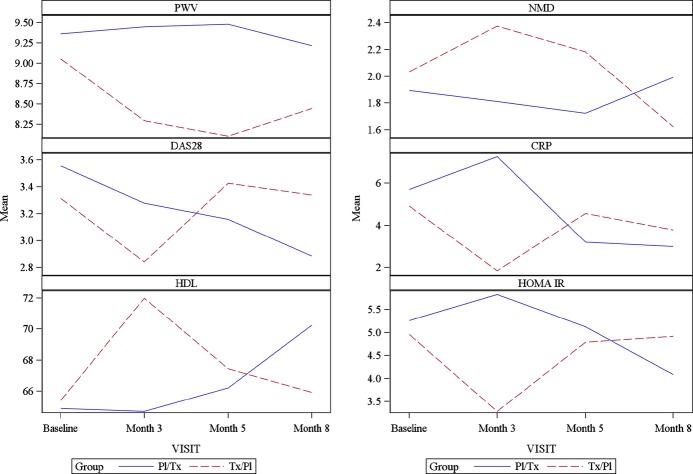
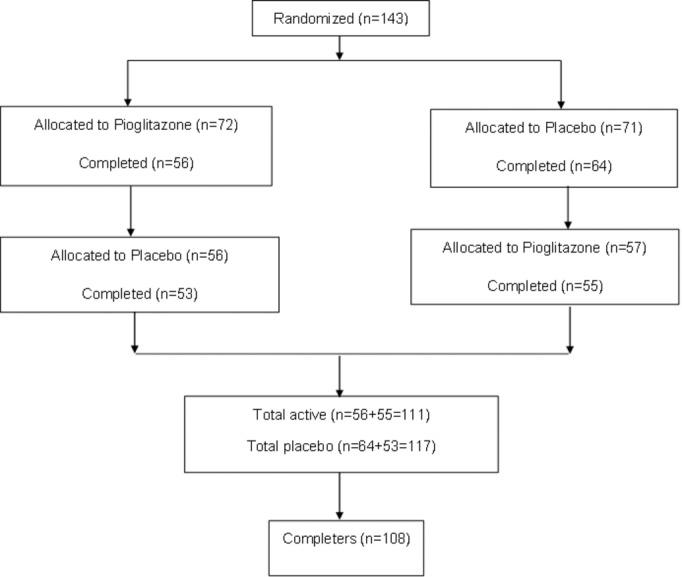
One hundred forty-three non-diabetic adult RA patients (76.2% female, age 55.2 ± 12.1 [mean ± SD]) on stable RA standard of care treatment were enrolled in a randomized, double-blind placebo controlled crossover trial of 45 mg daily pioglitazone versus placebo, with a 3-month duration/arm and a 2-month washout period. Pulse wave velocity of the aorta (PWV), brachial artery flow mediated dilatation (FMD), nitroglycerin mediated dilatation (NMD), microvascular endothelial function (reactive hyperemia index [RHI]), and circulating biomarkers of inflammation, insulin resistance, and atherosclerosis risk all were quantified. RA disease activity was assessed with the 28-Joint Count Disease Activity Score (DAS-28) C-reactive protein (CRP) and the Short Form (36) Health Survey quality of life questionnaire. When added to standard of care RA treatment, pioglitazone significantly decreased pulse wave velocity (ie, aortic stiffness) (P=0.01), while FMD and RHI remained unchanged when compared to treatment with placebo. Further, pioglitazone significantly reduced RA disease activity (P=0.02) and CRP levels (P=0.001), while improving lipid profiles. The drug was well tolerated.
CONCLUSIONS
Addition of pioglitazone to RA standard of care significantly improves aortic elasticity and decreases inflammation and disease activity with minimal safety issues. The clinical implications of these findings remain to be established.
CLINICAL TRIAL REGISTRATION URL
ClinicalTrials.gov Unique Identifier: NCT00554853.
背景
类风湿关节炎(RA)与动脉粥样硬化性心血管疾病(CVD)导致的死亡率升高有关。RA 中的炎症途径会对血管生理学产生负面影响,并促进代谢紊乱,从而导致 CVD。我们假设过氧化物酶体增殖物激活受体-γ(PPAR-γ)吡格列酮可以在 RA 中发挥强大的血管保护和抗炎作用。
方法和结果
143 名非糖尿病成年 RA 患者(76.2%为女性,年龄 55.2±12.1[平均值±标准差])在稳定的 RA 标准治疗下接受了为期 45 毫克每日吡格列酮与安慰剂的随机、双盲、安慰剂对照交叉试验,每个治疗期持续 3 个月,洗脱期为 2 个月。主动脉脉搏波速度(PWV)、肱动脉血流介导的扩张(FMD)、硝酸甘油介导的扩张(NMD)、微血管内皮功能(反应性充血指数[RHI])以及炎症、胰岛素抵抗和动脉粥样硬化风险的循环生物标志物均进行了量化。RA 疾病活动度采用 28 关节计数疾病活动评分(DAS-28)C 反应蛋白(CRP)和简短形式(36)健康调查生活质量问卷进行评估。当添加到 RA 标准治疗时,吡格列酮可显著降低脉搏波速度(即主动脉僵硬)(P=0.01),而与安慰剂相比,FMD 和 RHI 保持不变。此外,吡格列酮可显著降低 RA 疾病活动度(P=0.02)和 CRP 水平(P=0.001),同时改善血脂谱。该药物具有良好的耐受性。
结论
在 RA 标准治疗中添加吡格列酮可显著改善主动脉弹性,并降低炎症和疾病活动度,且安全性问题最小。这些发现的临床意义仍有待确定。
临床试验注册网址
ClinicalTrials.gov 唯一标识符:NCT00554853。
 Zotero 插件