
非甾体抗炎药与上、下胃肠道黏膜损伤。
Nonsteroidal anti-inflammatory drugs and upper and lower gastrointestinal mucosal damage.
出版信息
Arthritis Res Ther. 2013;15 Suppl 3(Suppl 3):S3. doi: 10.1186/ar4175. Epub 2013 Jul 24.
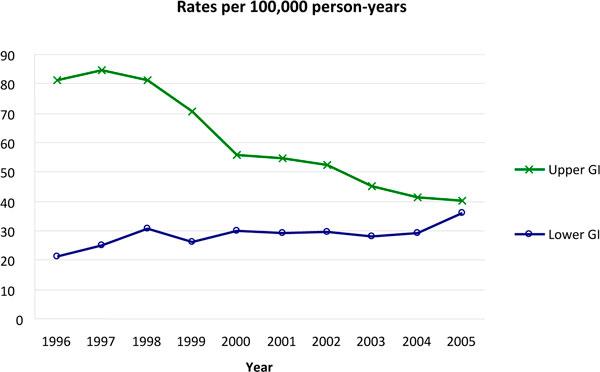
NSAIDs are among the most commonly used drugs worldwide and their beneficial therapeutic properties are thoroughly accepted. However, they are also associated with gastrointestinal (GI) adverse events. NSAIDs can damage the whole GI tract including a wide spectrum of lesions. About 1 to 2% of NSAID users experienced a serious GI complication during treatment. The relative risk of upper GI complications among NSAID users depends on the presence of different risk factors, including older age (>65 years), history of complicated peptic ulcer, and concomitant aspirin or anticoagulant use, in addition to the type and dose of NSAID. Some authors recently reported a decreasing trend in hospitalizations due to upper GI complications and a significant increase in those from the lower GI tract, causing the rates of these two types of GI complications to converge. NSAID-induced enteropathy has gained much attention in the last few years and an increasing number of reports have been published on this issue. Current evidence suggests that NSAIDs increase the risk of lower GI bleeding and perforation to a similar extent as that seen in the upper GI tract. Selective cyclooxygenase-2 inhibitors have the same beneficial effects as nonselective NSAIDs but with less GI toxicity in the upper GI tract and probably in the lower GI tract. Overall, mortality due to these complications has also decreased, but the in-hospital case fatality for upper and lower GI complication events has remained constant despite the new therapeutic and prevention strategies.
非甾体抗炎药(NSAIDs)是全球应用最广泛的药物之一,其有益的治疗特性已被广泛认可。然而,它们也与胃肠道(GI)不良事件有关。NSAIDs 可损伤整个胃肠道,包括广泛的病变。约有 1%至 2%的 NSAID 使用者在治疗过程中出现严重的胃肠道并发症。NSAID 使用者上胃肠道并发症的相对风险取决于不同的危险因素的存在,包括年龄较大(>65 岁)、有复杂的消化性溃疡病史、同时使用阿司匹林或抗凝剂,以及 NSAID 的类型和剂量。一些作者最近报告称,由于上胃肠道并发症导致的住院治疗呈下降趋势,而下胃肠道并发症的显著增加导致这两种类型的胃肠道并发症的发生率趋同。近年来,NSAID 诱导的肠病引起了广泛关注,关于这个问题的报告数量也在不断增加。目前的证据表明,NSAIDs 增加下胃肠道出血和穿孔的风险与上胃肠道相似。选择性环氧化酶-2 抑制剂具有与非选择性 NSAIDs 相同的有益效果,但在上胃肠道和可能在下胃肠道的胃肠道毒性较小。总体而言,这些并发症导致的死亡率也有所下降,但尽管采用了新的治疗和预防策略,上胃肠道和下胃肠道并发症的住院病死率仍保持不变。
 Zotero 插件