
IL-22 促进哮喘气道上皮细胞中 TGF-β1 介导的上皮间质转化。
IL-22 contributes to TGF-β1-mediated epithelial-mesenchymal transition in asthmatic bronchial epithelial cells.
机构信息
Meakins-Christie Laboratories, McGill University, 3626 St, Urbain Street, Montréal, QC H2X 2P2, Canada.
出版信息
Respir Res. 2013 Nov 1;14(1):118. doi: 10.1186/1465-9921-14-118.
BACKGROUND
Allergic asthma is characterized by airway inflammation in response to antigen exposure, leading to airway remodeling and lung dysfunction. Epithelial-mesenchymal transition (EMT) may play a role in airway remodeling through the acquisition of a mesenchymal phenotype in airway epithelial cells. TGF-β1 is known to promote EMT; however, other cytokines expressed in severe asthma with extensive remodeling, such as IL-22, may also contribute to this process. In this study, we evaluated the contribution of IL-22 to EMT in primary bronchial epithelial cells from healthy and asthmatic subjects.
METHODS
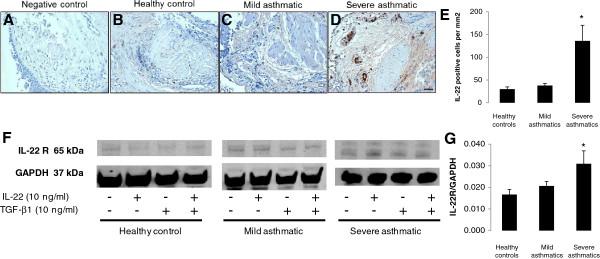
Primary bronchial epithelial cells were isolated from healthy subjects, mild asthmatics and severe asthmatics (n=5 patients per group). The mRNA and protein expression of epithelial and mesenchymal cell markers and EMT-associated transcription factors was evaluated following stimulation with TGF-β1, IL-22 and TGF-β1+IL-22.
RESULTS
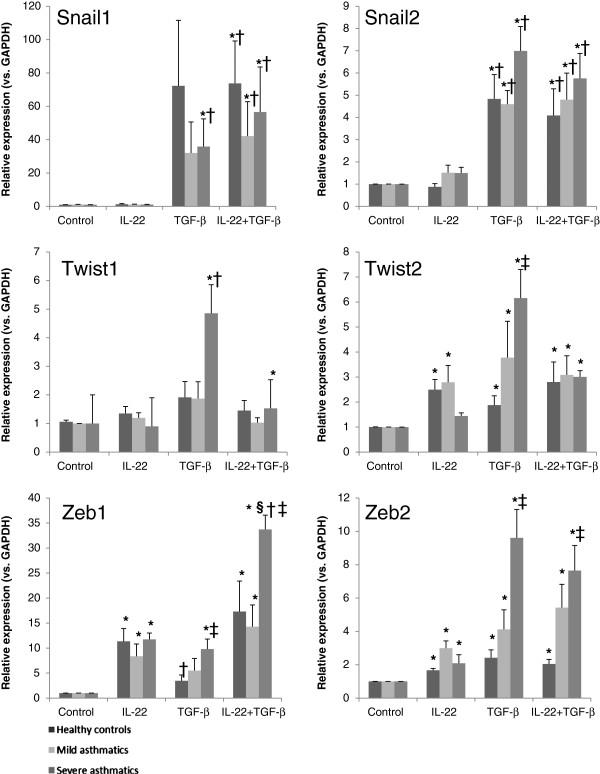
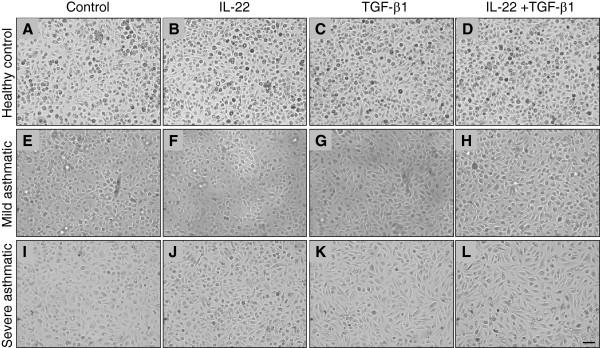
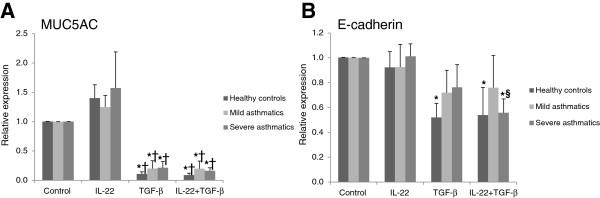
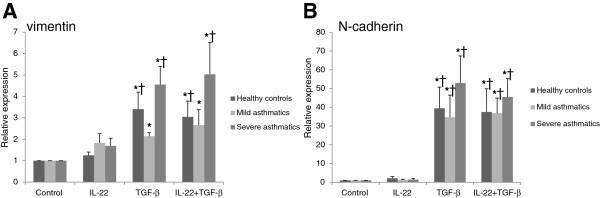
Primary bronchial epithelial cells stimulated with TGF-β1 underwent EMT, demonstrated by decreased expression of epithelial markers (E-cadherin and MUC5AC) and increased expression of mesenchymal markers (N-cadherin and vimentin) and EMT-associated transcription factors. IL-22 alone had no effect on epithelial or mesenchymal gene expression. However, IL-22+TGF-β1 promoted the expression of some EMT transcription factors (Snail1 and Zeb1) and led to a more profound cadherin shift, but only in cells obtained from severe asthmatics.
CONCLUSION
The impact of IL-22 on airway epithelial cells depends on the cytokine milieu and the clinical phenotype of the patient. Further studies are required to determine the molecular mechanism of IL-22 and TGF-β1 cooperativity in driving EMT in primary human bronchial epithelial cells.
背景
过敏性哮喘的特征是在抗原暴露后发生气道炎症,导致气道重塑和肺功能障碍。上皮-间充质转化(EMT)可能通过气道上皮细胞获得间充质表型在气道重塑中发挥作用。TGF-β1 已知可促进 EMT;然而,在广泛重塑的严重哮喘中表达的其他细胞因子,如 IL-22,也可能促成这一过程。在这项研究中,我们评估了 IL-22 对健康和哮喘患者原代支气管上皮细胞 EMT 的贡献。
方法
从健康受试者、轻度哮喘患者和重度哮喘患者(每组 5 例患者)中分离原代支气管上皮细胞。在 TGF-β1、IL-22 和 TGF-β1+IL-22 刺激后,评估上皮和间充质细胞标志物以及 EMT 相关转录因子的 mRNA 和蛋白表达。
结果
用 TGF-β1 刺激的原代支气管上皮细胞发生 EMT,表现为上皮标志物(E-钙黏蛋白和 MUC5AC)的表达减少和间充质标志物(N-钙黏蛋白和波形蛋白)和 EMT 相关转录因子的表达增加。IL-22 单独对上皮或间充质基因表达没有影响。然而,IL-22+TGF-β1 促进了一些 EMT 转录因子(Snail1 和 Zeb1)的表达,并导致更明显的钙黏蛋白转移,但仅在来自重度哮喘患者的细胞中。
结论
IL-22 对气道上皮细胞的影响取决于细胞因子环境和患者的临床表型。需要进一步研究以确定 IL-22 和 TGF-β1 协同作用在驱动原代人支气管上皮细胞 EMT 中的分子机制。


 Zotero 插件