
糖尿病控制与并发症试验/糖尿病干预与并发症流行病学研究30年心血管结局最新情况
Update on cardiovascular outcomes at 30 years of the diabetes control and complications trial/epidemiology of diabetes interventions and complications study.
作者信息
Lachin John M, Orchard Trevor J, Nathan David M
机构信息
Corresponding author: John M. Lachin,
出版信息
Diabetes Care. 2014;37(1):39-43. doi: 10.2337/dc13-2116.
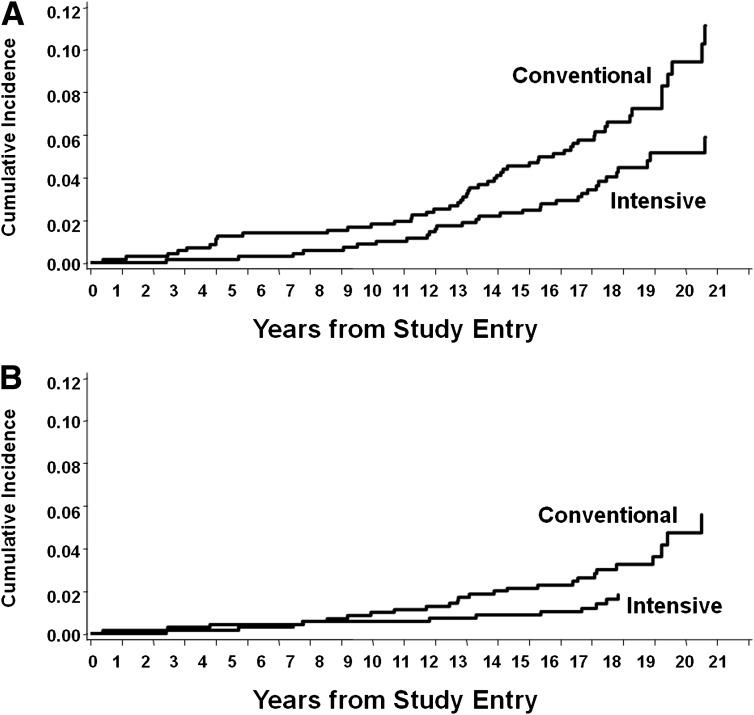
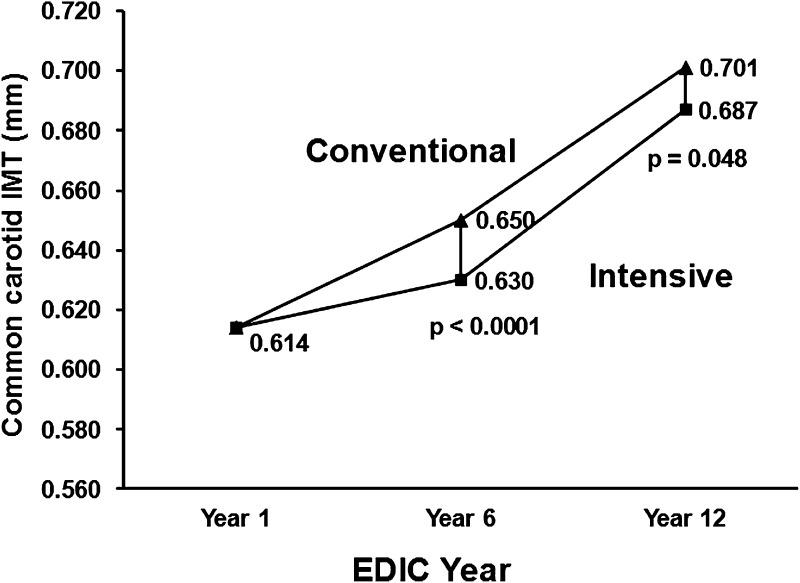
OBJECTIVE To describe the beneficial long-term effects of an average of 6.5 years of intensive diabetes therapy (INT) in type 1 diabetes on measures of atherosclerosis, cardiac structure and function, and clinical cardiovascular events observed in the Diabetes Control and Complications Trial (DCCT) and the Epidemiology of Diabetes Interventions and Complications (EDIC) study. RESEARCH DESIGN AND METHODS The DCCT was a randomized clinical trial of 1,441 participants assigned to receive INT or conventional therapy (CON). It was conducted between 1983-1993 with an average follow-up of 6.5 years. EDIC (1994-present) is an observational follow-up of the DCCT cohort. Cardiovascular events have been recorded throughout. During EDIC common carotid intima-media thickness (IMT) was measured with ultrasound, coronary artery calcification with computed tomography, and cardiac structure and function with cardiac magnetic resonance imaging. RESULTS DCCT INT and lower levels of HbA1c during DCCT/EDIC were associated with thinner carotid IMT, less coronary calcification, and a lower incidence of clinical cardiovascular events including myocardial infarction, stroke, and cardiac death. While there were no significant differences in cardiac structure and function between the former INT and CON groups, they were significantly associated with higher HbA1c during DCCT/EDIC. CONCLUSIONS DCCT INT and the attendant 6.5 years of lower HbA1c had long-term salutary effects on the development and progression of atherosclerosis and cardiovascular disease during the subsequent follow-up during EDIC.
目的
描述1型糖尿病强化治疗(INT)平均6.5年对动脉粥样硬化、心脏结构和功能的测量指标以及在糖尿病控制与并发症试验(DCCT)和糖尿病干预与并发症流行病学(EDIC)研究中观察到的临床心血管事件的长期有益影响。研究设计与方法:DCCT是一项随机临床试验,1441名参与者被随机分配接受强化治疗或常规治疗(CON)。该试验于1983年至1993年进行,平均随访6.5年。EDIC(1994年至今)是DCCT队列的观察性随访研究。自始至终都记录心血管事件。在EDIC研究期间,用超声测量颈总动脉内膜中层厚度(IMT),用计算机断层扫描测量冠状动脉钙化情况,用心脏磁共振成像测量心脏结构和功能。结果:DCCT强化治疗组以及DCCT/EDIC期间较低的糖化血红蛋白(HbA1c)水平与较薄的颈动脉IMT、较少的冠状动脉钙化以及包括心肌梗死、中风和心源性死亡在内的临床心血管事件较低发生率相关。虽然既往强化治疗组和常规治疗组在心脏结构和功能方面无显著差异,但它们与DCCT/EDIC期间较高的HbA1c显著相关。结论:DCCT强化治疗以及随之而来的6.5年较低HbA1c水平在EDIC后续随访期间对动脉粥样硬化和心血管疾病的发生发展具有长期有益影响。
 Zotero 插件