
ω-3 脂肪酸介导的代谢组学分析对 LDLR-/- 小鼠西式饮食诱导的非酒精性脂肪性肝炎的抑制作用。
A metabolomic analysis of omega-3 fatty acid-mediated attenuation of western diet-induced nonalcoholic steatohepatitis in LDLR-/- mice.
机构信息
The Nutrition Program, School of Biological and Population Health Sciences, Oregon State University, Corvallis, Oregon, United States of America ; The Linus Pauling Institute, Oregon State University, Corvallis, Oregon, United States of America.
Department of Animal and Rangeland Sciences, Oregon State University, Corvallis, Oregon, United States of America ; The Linus Pauling Institute, Oregon State University, Corvallis, Oregon, United States of America.
出版信息
PLoS One. 2013 Dec 17;8(12):e83756. doi: 10.1371/journal.pone.0083756. eCollection 2013.
BACKGROUND
Nonalcoholic steatohepatitis (NASH) is a progressive form of nonalcoholic fatty liver disease and a risk factor for cirrhosis, hepatocellular carcinoma and liver failure. Previously, we reported that dietary docosahexaenoic acid (DHA, 22:6,n-3) was more effective than eicosapentaenoic acid (EPA, 20:5,n-3) at reversing western diet (WD) induced NASH in LDLR(-/-) mice.
METHODS
Using livers from our previous study, we carried out a global non-targeted metabolomic approach to quantify diet-induced changes in hepatic metabolism.
RESULTS
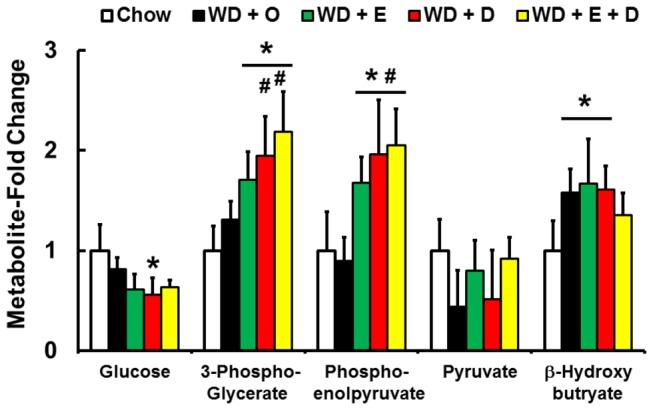
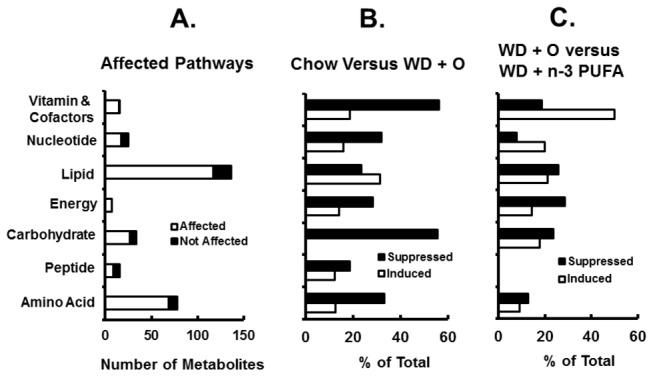
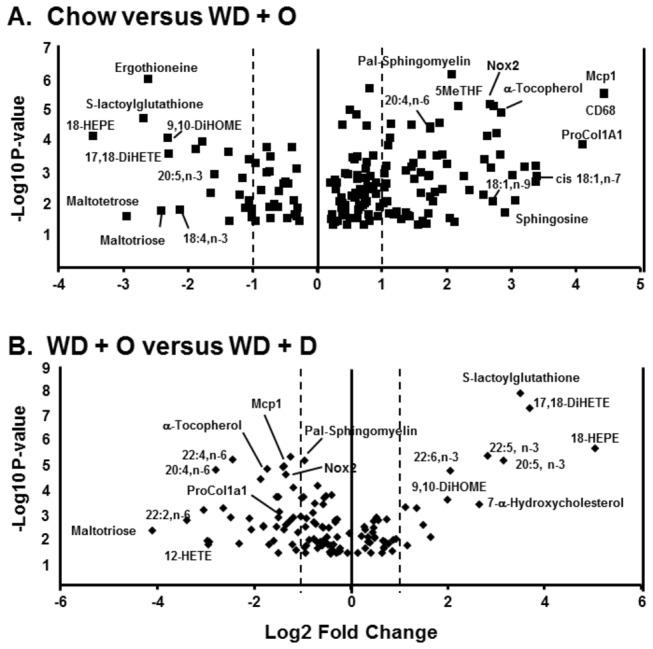
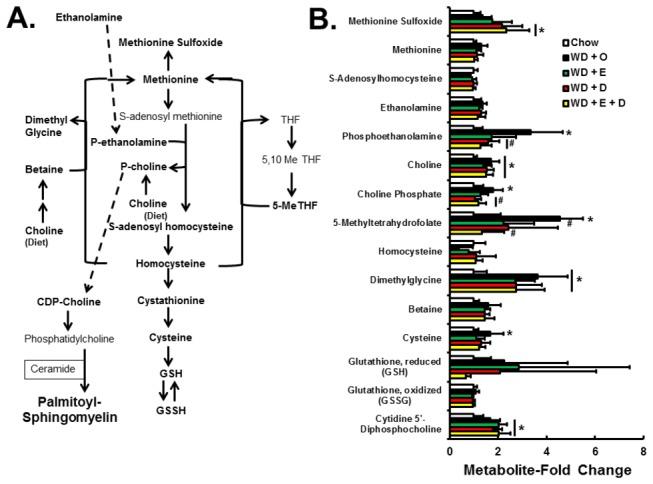
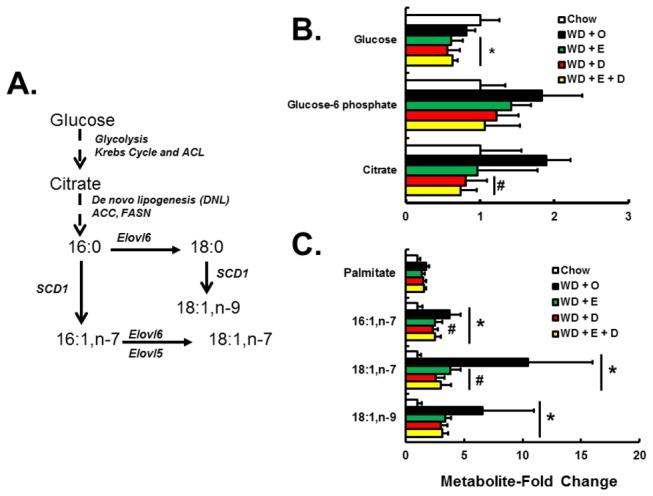
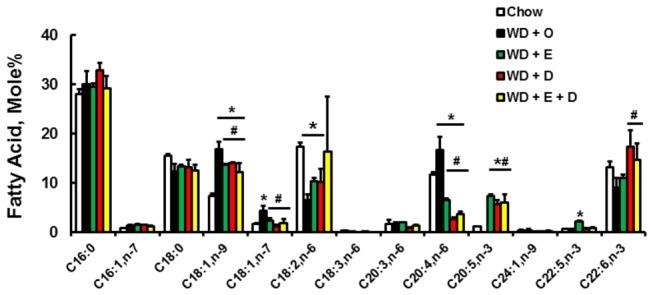
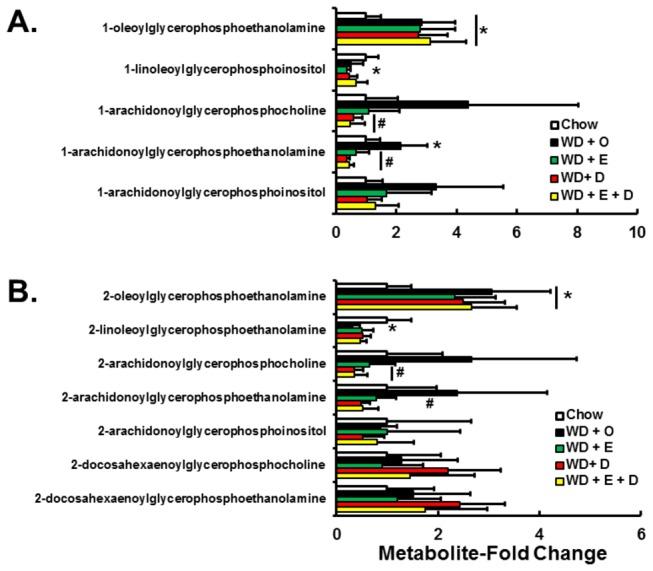
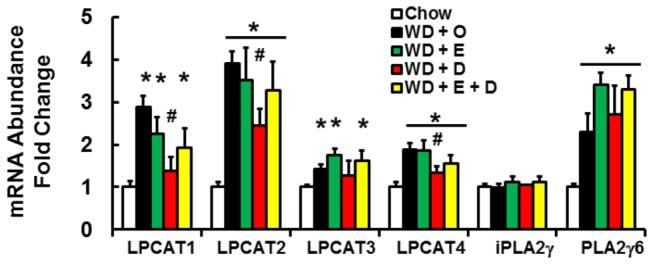
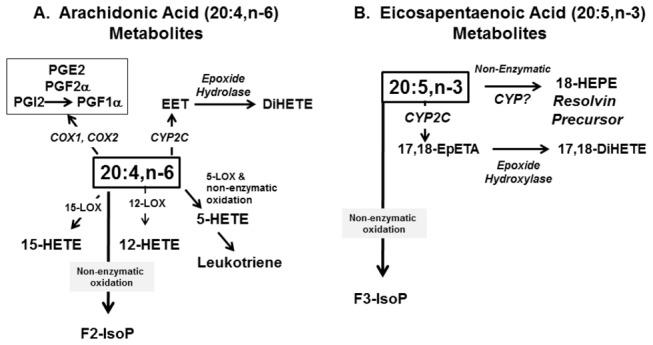
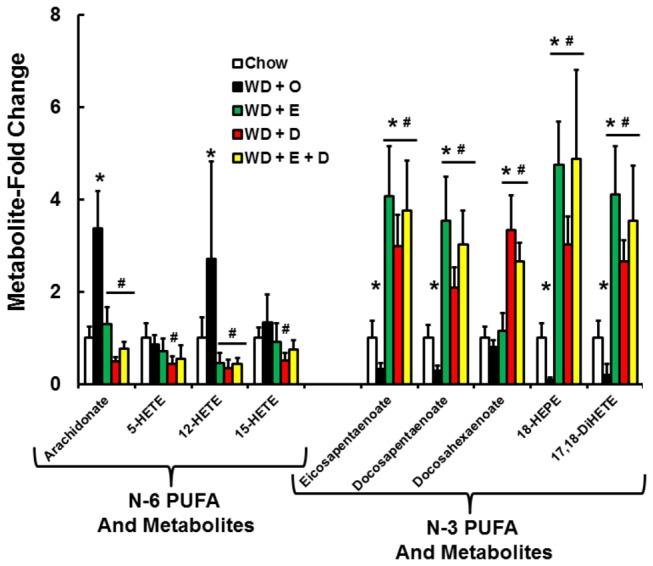
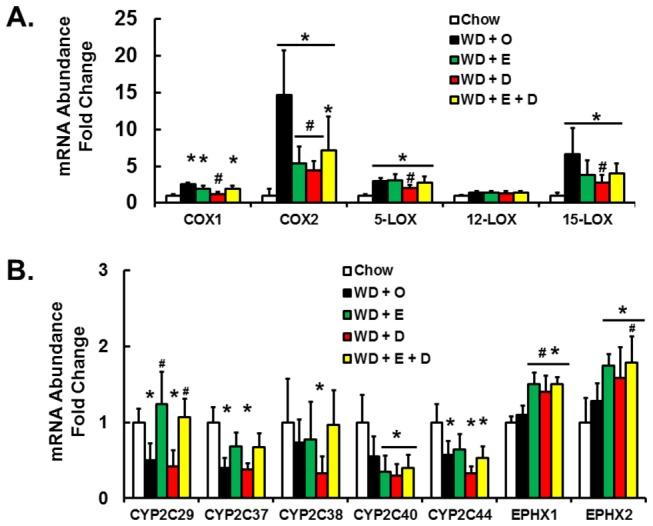
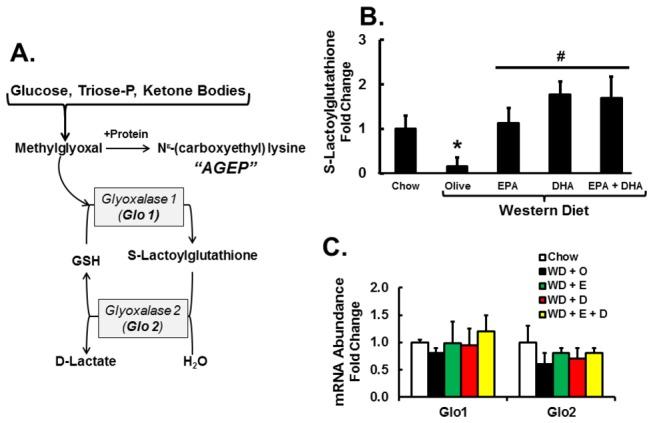
Livers from WD + olive oil (WD + O)-fed mice displayed histological and gene expression features consistent with NASH. The metabolomic analysis of 320 metabolites established that the WD and n-3 polyunsaturated fatty acid (PUFA) supplementation had broad effects on all major metabolic pathways. Livers from WD + O-fed mice were enriched in saturated (SFA) and monounsaturated fatty acids (MUFA), palmitoyl-sphingomyelin, cholesterol, n-6 PUFA, n-6 PUFA-containing phosphoglycerolipids, n-6 PUFA-derived oxidized lipids (12-HETE) and depleted of C20-22 n-3 PUFA-containing phosphoglycerolipids, C20-22 n-3 PUFA-derived oxidized lipids (18-HEPE, 17,18-DiHETE) and S-lactoylglutathione, a methylglyoxal detoxification product. WD + DHA was more effective than WD + EPA at attenuating WD + O-induced changes in NASH gene expression markers, n-6 PUFA and oxidized lipids, citrate and S-lactosyl glutathione. Diet-induced changes in hepatic MUFA and sphingolipid content were associated with changes in expression of enzymes involved in MUFA and sphingolipid synthesis. Changes in hepatic oxidized fatty acids and S-lactoylglutathione, however, correlated with hepatic n-3 and n-6 C20-22 PUFA content. Hepatic C20-22 n-3 PUFA content was inversely associated with hepatic α-tocopherol and ascorbate content and positively associated with urinary F2- and F3-isoprostanes, revealing diet effects on whole body oxidative stress.
CONCLUSION
DHA regulation of hepatic SFA, MUFA, PUFA, sphingomyelin, PUFA-derived oxidized lipids and S-lactoylglutathione may explain the protective effects of DHA against WD-induced NASH in LDLR(-/-) mice.
背景
非酒精性脂肪性肝炎(NASH)是一种进行性非酒精性脂肪性肝病,也是肝硬化、肝细胞癌和肝衰竭的一个危险因素。此前,我们报道了饮食中海鱼油(DHA,22:6,n-3)比二十碳五烯酸(EPA,20:5,n-3)更能逆转 LDLR(-/-)小鼠的西式饮食(WD)诱导的 NASH。
方法
利用我们之前研究中的肝脏,我们进行了一个全局非靶向代谢组学方法来定量肝内代谢的饮食诱导变化。
结果
WD+橄榄油(WD+O)喂养的小鼠肝脏显示出与 NASH 一致的组织学和基因表达特征。对 320 种代谢物的代谢组学分析表明,WD 和 n-3 多不饱和脂肪酸(PUFA)的补充对所有主要代谢途径都有广泛的影响。WD+O 喂养的小鼠肝脏富含饱和脂肪酸(SFA)和单不饱和脂肪酸(MUFA)、棕榈酰神经鞘氨醇、胆固醇、n-6 PUFA、n-6 PUFA 含磷甘油酯、n-6 PUFA 衍生的氧化脂质(12-HETE)和 C20-22 n-3 PUFA 含磷甘油酯、C20-22 n-3 PUFA 衍生的氧化脂质(18-HEPE、17、18-二 HETE)和 S-乳酰谷胱甘肽(一种甲基乙二醛解毒产物)含量减少。WD+DHA 比 WD+EPA 更能减轻 WD+O 诱导的 NASH 基因表达标志物、n-6 PUFA 和氧化脂质、柠檬酸和 S-乳酰谷胱甘肽的变化。肝 MUFA 和神经鞘脂含量的饮食诱导变化与参与 MUFA 和神经鞘脂合成的酶的表达变化有关。然而,肝氧化脂肪酸和 S-乳酰谷胱甘肽的变化与肝 n-3 和 n-6 C20-22 PUFA 含量相关。肝 C20-22 n-3 PUFA 含量与肝 α-生育酚和抗坏血酸含量呈负相关,与尿 F2-和 F3-异前列腺素呈正相关,揭示了饮食对全身氧化应激的影响。
结论
DHA 对肝 SFA、MUFA、PUFA、神经鞘氨醇、PUFA 衍生的氧化脂质和 S-乳酰谷胱甘肽的调节可能解释了 DHA 对 LDLR(-/-)小鼠 WD 诱导的 NASH 的保护作用。






 Zotero 插件