
减少阿拉斯加原住民儿童的口腔健康差距:口腔健康干预措施的系统评价及减少含糖饮料摄入量的多层次策略案例研究。
Reducing Alaska Native paediatric oral health disparities: a systematic review of oral health interventions and a case study on multilevel strategies to reduce sugar-sweetened beverage intake.
作者信息
Chi Donald L
机构信息
University of Washington, School of Dentistry, Department of Oral Health Sciences, Seattle, Washington, USA.
出版信息
Int J Circumpolar Health. 2013 Aug 5;72:21066. doi: 10.3402/ijch.v72i0.21066. eCollection 2013.
BACKGROUND
Tooth decay is the most common paediatric disease and there is a serious paediatric tooth decay epidemic in Alaska Native communities. When untreated, tooth decay can lead to pain, infection, systemic health problems, hospitalisations and in rare cases death, as well as school absenteeism, poor grades and low quality-of-life. The extent to which population-based oral health interventions have been conducted in Alaska Native paediatric populations is unknown.
OBJECTIVE
To conduct a systematic review of oral health interventions aimed at Alaska Native children below age 18 and to present a case study and conceptual model on multilevel intervention strategies aimed at reducing sugar-sweetened beverage (SSB) intake among Alaska Native children.
DESIGN
Based on the Preferred Reporting Items for Systematic reviews and Meta-Analyses (PRISMA) Statement, the terms "Alaska Native", "children" and "oral health" were used to search Medline, Embase, Web of Science, GoogleScholar and health foundation websites (1970-2012) for relevant clinical trials and evaluation studies.
RESULTS
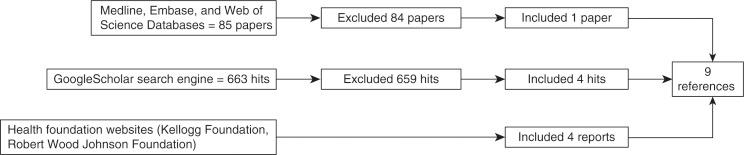
Eighty-five studies were found in Medline, Embase and Web of Science databases and there were 663 hits in GoogleScholar. A total of 9 publications were included in the qualitative review. These publications describe 3 interventions that focused on: reducing paediatric tooth decay by educating families and communities; providing dental chemotherapeutics to pregnant women; and training mid-level dental care providers. While these approaches have the potential to improve the oral health of Alaska Native children, there are unique challenges regarding intervention acceptability, reach and sustainability. A case study and conceptual model are presented on multilevel strategies to reduce SSB intake among Alaska Native children.
CONCLUSIONS
Few oral health interventions have been tested within Alaska Native communities. Community-centred multilevel interventions are promising approaches to improve the oral and systemic health of Alaska Native children. Future investigators should evaluate the feasibility of implementing multilevel interventions and policies within Alaska Native communities as a way to reduce children's health disparities.
背景
龋齿是最常见的儿科疾病,阿拉斯加原住民社区存在严重的儿科龋齿流行问题。若不加以治疗,龋齿会导致疼痛、感染、全身健康问题、住院,在极少数情况下还会导致死亡,此外还会导致缺课、成绩不佳和生活质量低下。目前尚不清楚在阿拉斯加原住民儿科人群中开展基于人群的口腔健康干预措施的程度。
目的
对针对18岁以下阿拉斯加原住民儿童的口腔健康干预措施进行系统评价,并就旨在减少阿拉斯加原住民儿童含糖饮料(SSB)摄入量的多层次干预策略进行案例研究并提出概念模型。
设计
根据系统评价和Meta分析的首选报告项目(PRISMA)声明,使用“阿拉斯加原住民”“儿童”和“口腔健康”等术语在Medline、Embase、科学网、谷歌学术和健康基金会网站(1970 - 2012年)上搜索相关临床试验和评估研究。
结果
在Medline、Embase和科学网数据库中发现了85项研究,在谷歌学术上有663条搜索结果。定性评价共纳入9篇出版物。这些出版物描述了3种干预措施,重点分别为:通过对家庭和社区进行教育来减少儿科龋齿;为孕妇提供牙科化疗药物;培训中级牙科护理人员。虽然这些方法有可能改善阿拉斯加原住民儿童的口腔健康,但在干预措施的可接受性、覆盖面和可持续性方面存在独特挑战。本文还就减少阿拉斯加原住民儿童SSB摄入量的多层次策略进行了案例研究并提出了概念模型。
结论
在阿拉斯加原住民社区内,很少有口腔健康干预措施得到测试。以社区为中心的多层次干预措施是改善阿拉斯加原住民儿童口腔和全身健康的有前景的方法。未来的研究人员应评估在阿拉斯加原住民社区实施多层次干预措施和政策以减少儿童健康差距的可行性。


 Zotero 插件