
对一种多功能酯酶的生化研究,该酯酶对多芳烃酯的催化活性最高。
Biochemical studies on a versatile esterase that is most catalytically active with polyaromatic esters.
机构信息
Department of Applied Biocatalysis, Consejo Superior de Investigaciones Científicas (CSIC), Institute of Catalysis, Marie Curie 2, 28049, Madrid, Spain.
出版信息
Microb Biotechnol. 2014 Mar;7(2):184-91. doi: 10.1111/1751-7915.12107. Epub 2014 Jan 13.
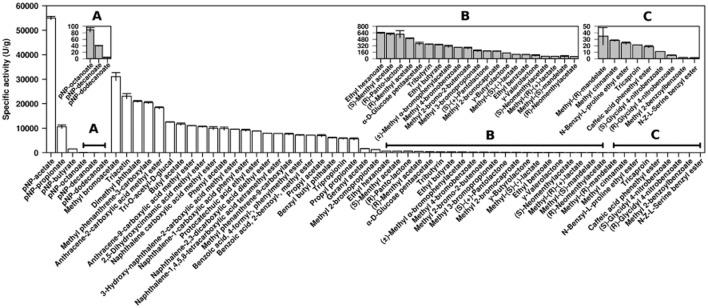
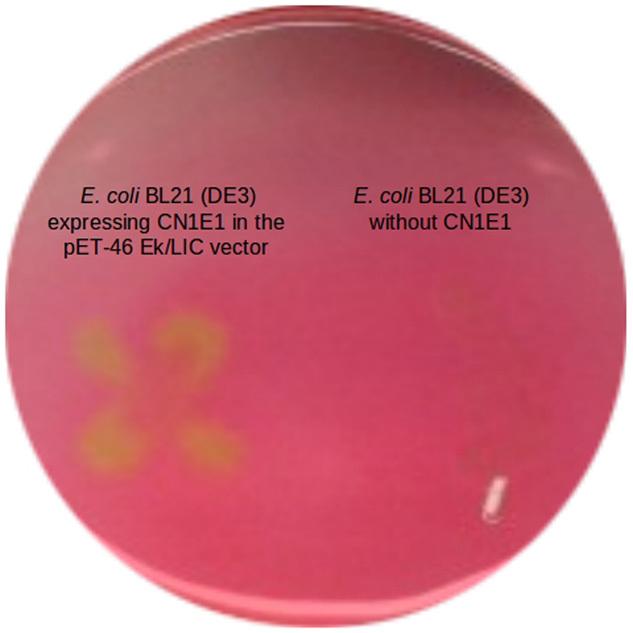
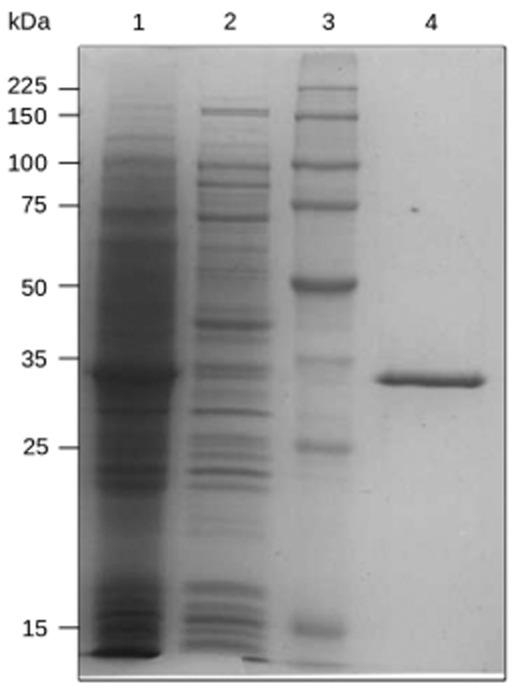
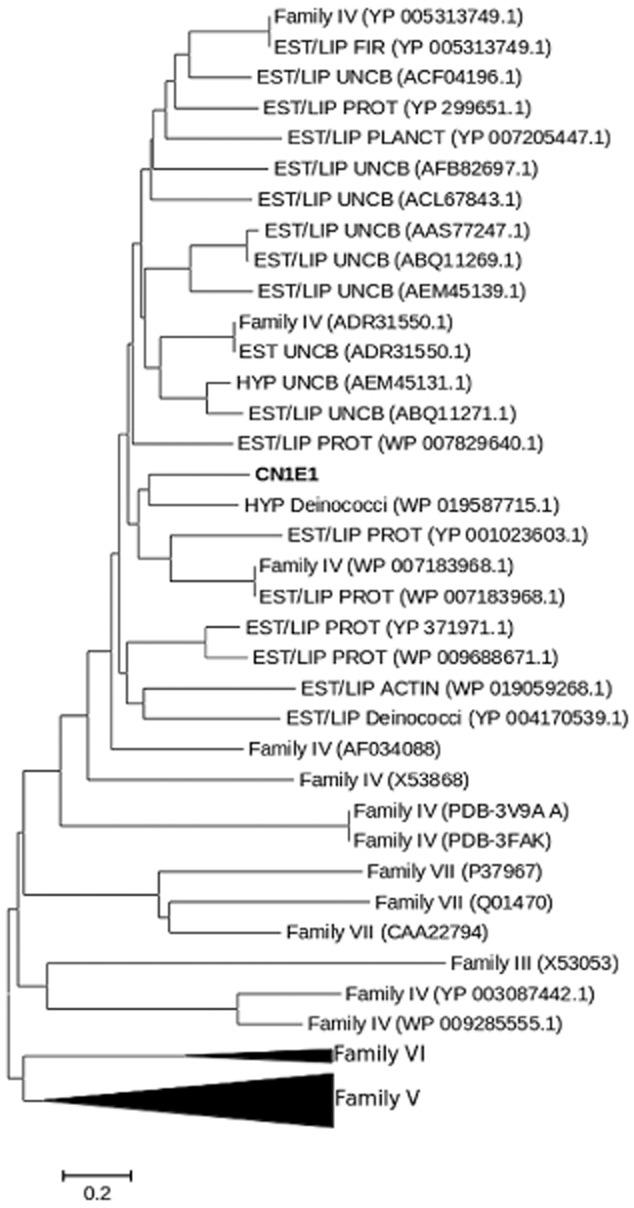
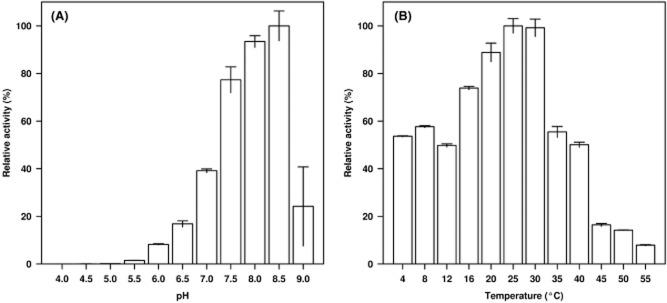
Herein, we applied a community genomic approach using a naphthalene-enriched community (CN1) to isolate a versatile esterase (CN1E1) from the α/β-hydrolase family. The protein shares low-to-medium identity (≤ 57%) with known esterase/lipase-like proteins. The enzyme is most active at 25-30°C and pH 8.5; it retains approximately 55% of its activity at 4°C and less than 8% at ≥ 55°C, which indicates that it is a cold-adapted enzyme. CN1E1 has a distinct substrate preference compared with other α/β-hydrolases because it is catalytically most active for hydrolysing polyaromatic hydrocarbon (phenanthrene, anthracene, naphthalene, benzoyl, protocatechuate and phthalate) esters (7200-21 000 units g(-1) protein at 40°C and pH 8.0). The enzyme also accepts 44 structurally different common esters with different levels of enantio-selectivity (1.0-55 000 units g(-1) protein), including (±)-menthyl-acetate, (±)-neomenthyl acetate, (±)-pantolactone, (±)-methyl-mandelate, (±)-methyl-lactate and (±)-glycidyl 4-nitrobenzoate (in that order). The results provide the first biochemical evidence suggesting that such broad-spectrum esterases may be an ecological advantage for bacteria that mineralize recalcitrant pollutants (including oil refinery products, plasticizers and pesticides) as carbon sources under pollution pressure. They also offer a new tool for the stereo-assembly (i.e. through ester bonds) of multi-aromatic molecules with benzene rings that are useful for biology, chemistry and materials sciences for cases in which enzyme methods are not yet available.
在此,我们应用萘富集群落(CN1)的群落基因组方法,从α/β-水解酶家族中分离出一种多功能酯酶(CN1E1)。该蛋白与已知的酯酶/脂肪酶样蛋白的同源性低至中等(≤57%)。该酶在 25-30°C 和 pH 8.5 时最活跃;在 4°C 时保留约 55%的活性,在≥55°C 时保留不到 8%的活性,这表明它是一种耐冷酶。与其他 α/β-水解酶相比,CN1E1 具有明显的底物偏好,因为它对水解多环芳烃(菲、蒽、萘、苯甲酰、原儿茶酸和邻苯二甲酸酯)酯(40°C 和 pH 8.0 时,7200-21000 单位 g(-1) 蛋白)具有催化活性。该酶还接受 44 种结构不同的常见酯,具有不同程度的对映选择性(1.0-55000 单位 g(-1) 蛋白),包括(±)-薄荷基-乙酸酯、(±)-新薄荷基乙酸酯、(±)-泛内酯、(±)-甲基扁桃酸酯、(±)-甲基-乳酸酯和(±)-缩水甘油 4-硝基苯甲酸酯(顺序为)。这些结果提供了第一个生化证据,表明此类广谱酯酶可能是能够矿化难降解污染物(包括炼油厂产品、增塑剂和杀虫剂)作为碳源的细菌在污染压力下的生态优势。它们还为多芳烃分子(包括苯环)的立体组装(即通过酯键)提供了一种新工具,对于酶方法尚不可用的生物学、化学和材料科学领域非常有用。
 Zotero 插件