
葡萄膜黑色素瘤中 GNAQ、GNA11、BAP1、SF3B1、EIF1AX 和 TERT 的突变频率:在单个葡萄膜黑色素瘤病例中检测到 TERT 基因启动子的激活突变。
Mutation frequencies of GNAQ, GNA11, BAP1, SF3B1, EIF1AX and TERT in uveal melanoma: detection of an activating mutation in the TERT gene promoter in a single case of uveal melanoma.
机构信息
Molecular Diagnostics, IRCCS AOU San Martino - IST Istituto Nazionale per la Ricerca sul Cancro, Genova, Italy.
Integrated Molecular Pathology, IRCCS AOU San Martino - IST Istituto Nazionale per la Ricerca sul Cancro, Genova, Italy.
出版信息
Br J Cancer. 2014 Feb 18;110(4):1058-65. doi: 10.1038/bjc.2013.804. Epub 2014 Jan 14.
BACKGROUND
Uveal melanoma is the most frequent primary tumour of the eye. It is molecularly clearly distinct from cutaneous melanoma and shows a different pattern of driver mutations. The influence of sunlight ultraviolet (UV) exposure on the aetiology of uveal melanoma is a matter of debate. The recent identification of driver mutations in the promoter of the telomerase reverse transcriptase (TERT) gene with UV-induced cytidine-to-thymidine transitions in cutaneous melanoma prompted us to investigate whether these mutations also occur in uveal melanoma.
METHODS
We analysed 50 cases of uveal melanoma obtained from enucleation surgery for mutations in the genes GNAQ, GNA11, BAP1, SF3B1, EIFAX1 and TERT, measured gene expression using microarrays and analysed gene copy numbers by SNP arrays.
RESULTS
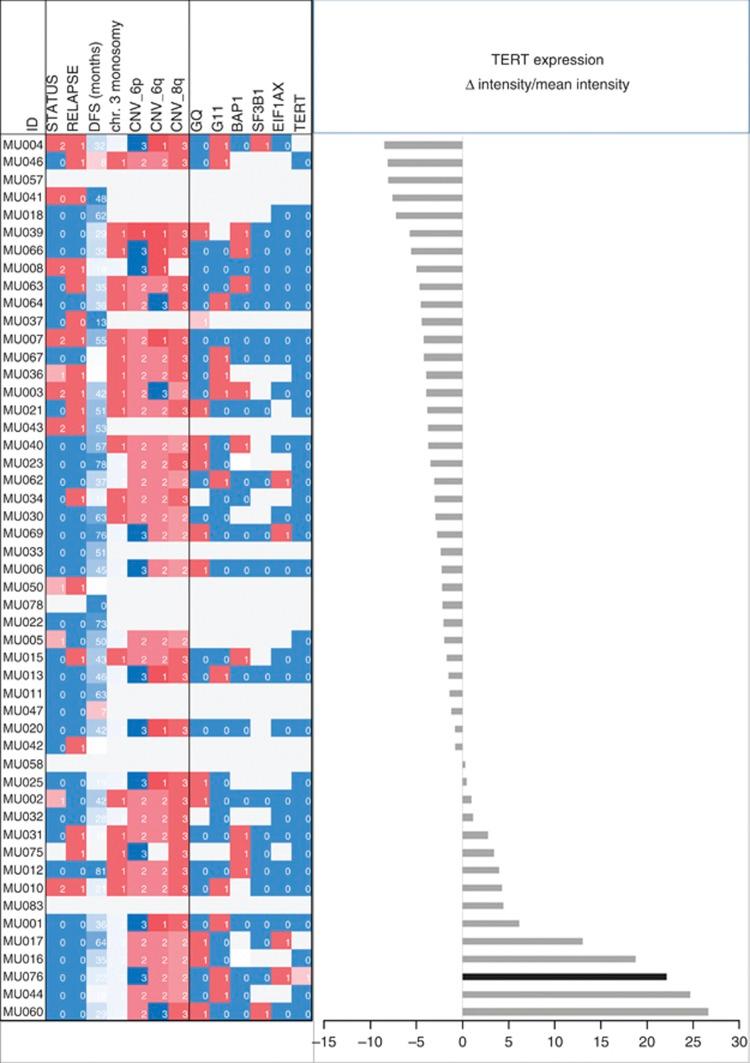
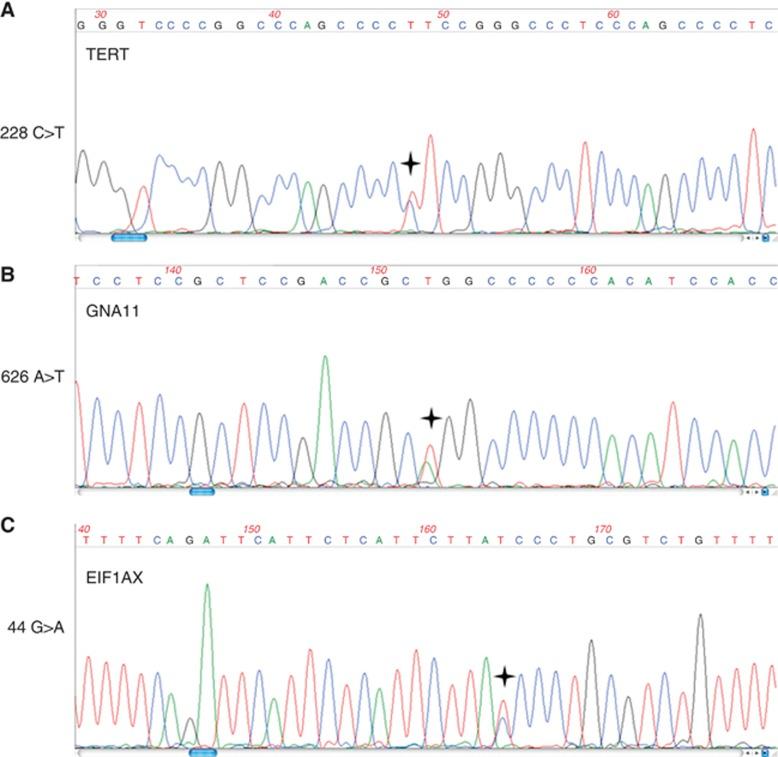
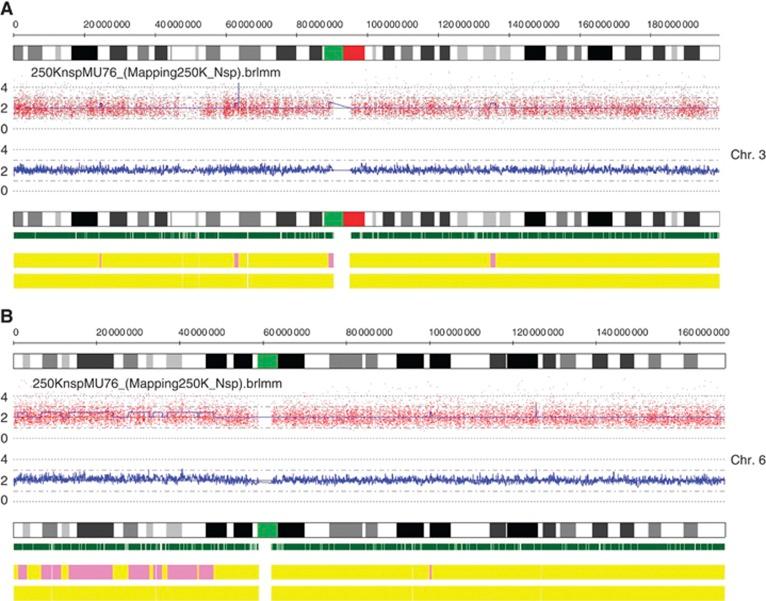
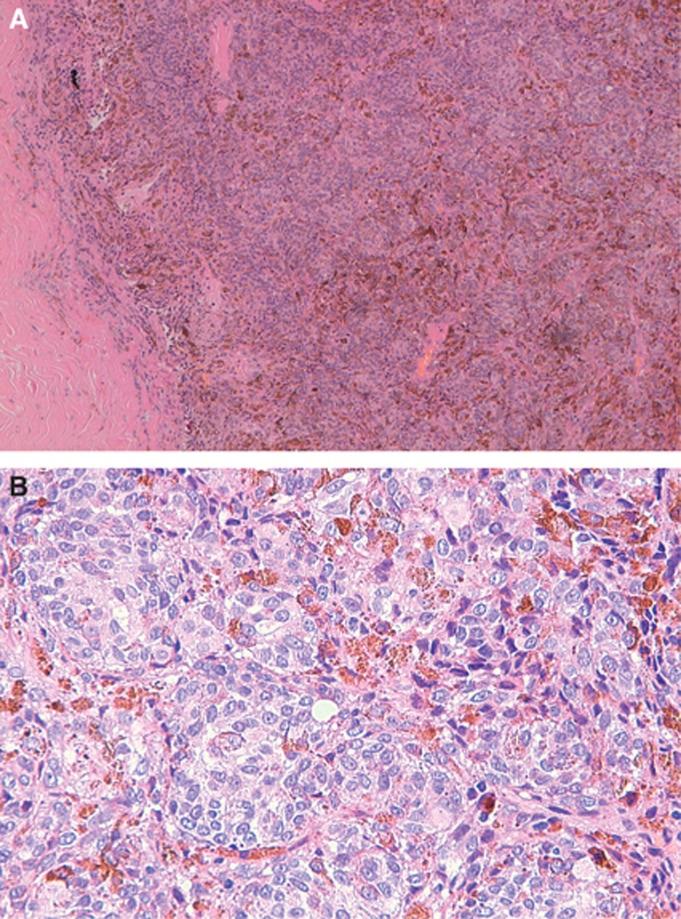
We detected a TERT mutation in only one case of a 57-year-old white male patient with clinical and histopathological features typical for uveal melanoma. The tumour showed mutations in GNA11 and EIF1AX that are typical for uveal melanoma and absent from cutaneous melanoma. No mutations were detected in GNAQ, BAP1 and SF3B1 that are frequently mutated in uveal melanoma. Both copies of chromosome 3 were retained. Several tumours among which the one carrying the TERT promoter mutation showed elevated TERT expression. Consistent with previous reports, GNAQ is inversely associated with chromosome 3 monosomy and metastasis. BAP1 mutations are significantly associated with chromosome 3 monosomy but not with relapse.
CONCLUSION
These data indicate that TERT mutations are rare in uveal melanoma. No conclusion can be drawn on their potential influence on tumour progression.
背景
葡萄膜黑色素瘤是眼部最常见的原发性肿瘤。它在分子水平上明显不同于皮肤黑色素瘤,并且具有不同的驱动突变模式。阳光紫外线 (UV) 暴露对葡萄膜黑色素瘤病因的影响存在争议。最近在皮肤黑色素瘤中发现端粒酶逆转录酶 (TERT) 基因启动子中的驱动突变与 UV 诱导的胞嘧啶向胸腺嘧啶转换有关,这促使我们研究这些突变是否也发生在葡萄膜黑色素瘤中。
方法
我们分析了 50 例来自眼球摘除手术的葡萄膜黑色素瘤病例,这些病例发生了 GNAQ、GNA11、BAP1、SF3B1、EIFAX1 和 TERT 基因的突变,使用微阵列测量基因表达,并通过 SNP 阵列分析基因拷贝数。
结果
我们仅在一例 57 岁白人男性患者的肿瘤中检测到 TERT 突变,该患者具有典型的葡萄膜黑色素瘤临床和组织病理学特征。该肿瘤显示出 GNA11 和 EIF1AX 的突变,这些突变是葡萄膜黑色素瘤的典型特征,而不存在于皮肤黑色素瘤中。在 GNAQ、BAP1 和 SF3B1 中未检测到经常发生突变的突变,这些突变在葡萄膜黑色素瘤中经常发生突变。两条 3 号染色体均保留。其中包括携带 TERT 启动子突变的肿瘤在内的多个肿瘤显示 TERT 表达升高。与之前的报道一致,GNAQ 与 3 号染色体单体缺失和转移呈负相关。BAP1 突变与 3 号染色体单体缺失显著相关,但与复发无关。
结论
这些数据表明 TERT 突变在葡萄膜黑色素瘤中很少见。不能得出关于它们对肿瘤进展潜在影响的结论。
 Zotero 插件