
脯氨酰-tRNA 合成酶编辑结构域中严格保守的赖氨酸有助于错误氨酰化的 tRNA(Pro)的结合和定位。
Strictly conserved lysine of prolyl-tRNA Synthetase editing domain facilitates binding and positioning of misacylated tRNA(Pro.).
机构信息
Department of Chemistry, University of Wisconsin-Eau Claire , Eau Claire, Wisconsin, 54702, United States.
出版信息
Biochemistry. 2014 Feb 18;53(6):1059-68. doi: 10.1021/bi401279r. Epub 2014 Feb 3.
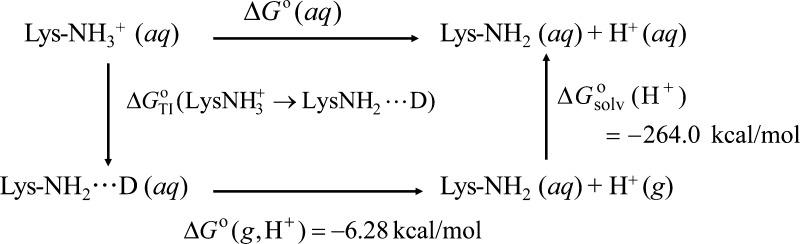
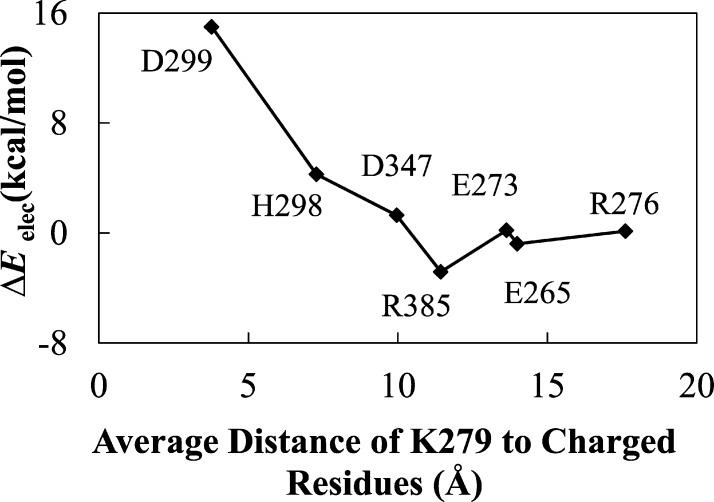
To ensure high fidelity in translation, many aminoacyl-tRNA synthetases, enzymes responsible for attaching specific amino acids to cognate tRNAs, require proof-reading mechanisms. Most bacterial prolyl-tRNA synthetases (ProRSs) misactivate alanine and employ a post-transfer editing mechanism to hydrolyze Ala-tRNA(Pro). This reaction occurs in a second catalytic site (INS) that is distinct from the synthetic active site. The 2'-OH of misacylated tRNA(Pro) and several conserved residues in the Escherichia coli ProRS INS domain are directly involved in Ala-tRNA(Pro) deacylation. Although mutation of the strictly conserved lysine 279 (K279) results in nearly complete loss of post-transfer editing activity, this residue does not directly participate in Ala-tRNA(Pro) hydrolysis. We hypothesized that the role of K279 is to bind the phosphate backbone of the acceptor stem of misacylated tRNA(Pro) and position it in the editing active site. To test this hypothesis, we carried out pKa, charge neutralization, and free-energy of binding calculations. Site-directed mutagenesis and kinetic studies were performed to verify the computational results. The calculations revealed a considerably higher pKa of K279 compared to an isolated lysine and showed that the protonated state of K279 is stabilized by the neighboring acidic residue. However, substitution of this acidic residue with a positively charged residue leads to a significant increase in Ala-tRNA(Pro) hydrolysis, suggesting that enhancement in positive charge density in the vicinity of K279 favors tRNA binding. A charge-swapping experiment and free energy of binding calculations support the conclusion that the positive charge at position 279 is absolutely necessary for tRNA binding in the editing active site.
为确保翻译的高度保真度,许多负责将特定氨基酸连接到相应 tRNA 的氨酰-tRNA 合成酶需要校对机制。大多数细菌脯氨酰-tRNA 合成酶(ProRS)错误激活丙氨酸,并采用转移后编辑机制水解 Ala-tRNA(Pro)。该反应发生在与合成活性位点不同的第二个催化位点(INS)中。错酰化的 tRNA(Pro)的 2'-OH 和大肠杆菌 ProRS INS 结构域中的几个保守残基直接参与 Ala-tRNA(Pro)脱酰基作用。尽管严格保守的赖氨酸 279(K279)的突变导致转移后编辑活性几乎完全丧失,但该残基不直接参与 Ala-tRNA(Pro)水解。我们假设 K279 的作用是结合错酰化 tRNA(Pro)的受体茎的磷酸骨架并将其定位在编辑活性位点中。为了验证这一假设,我们进行了 pKa、电荷中和和结合自由能的计算。进行了定点突变和动力学研究以验证计算结果。计算结果表明,与孤立的赖氨酸相比,K279 的 pKa 要高得多,并且表明 K279 的质子化状态受到相邻酸性残基的稳定。然而,用带正电荷的残基取代该酸性残基会导致 Ala-tRNA(Pro)水解显著增加,这表明 K279 附近的正电荷密度增加有利于 tRNA 结合。电荷交换实验和结合自由能计算支持这样的结论,即位置 279 处的正电荷对于编辑活性位点中的 tRNA 结合是绝对必要的。





 Zotero 插件