
细胞外基质密度调节出芽血管生成中新生血管的生长速率和分支。
Extracellular matrix density regulates the rate of neovessel growth and branching in sprouting angiogenesis.
作者信息
Edgar Lowell T, Underwood Clayton J, Guilkey James E, Hoying James B, Weiss Jeffrey A
机构信息
Department of Bioengineering, University of Utah, Salt Lake City, Utah, United States of America ; Scientific Computing and Imaging Institute, University of Utah, Salt Lake City, Utah, United States of America.
Department of Bioengineering, University of Utah, Salt Lake City, Utah, United States of America ; Medical Products Division, W.L. Gore and Associates, Inc., Flagstaff, Arizona, United States of America.
出版信息
PLoS One. 2014 Jan 22;9(1):e85178. doi: 10.1371/journal.pone.0085178. eCollection 2014.
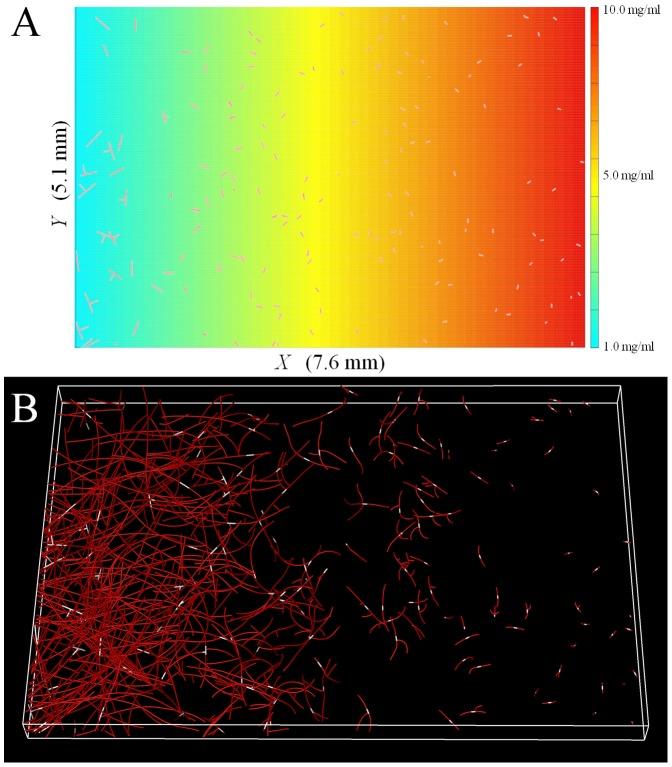
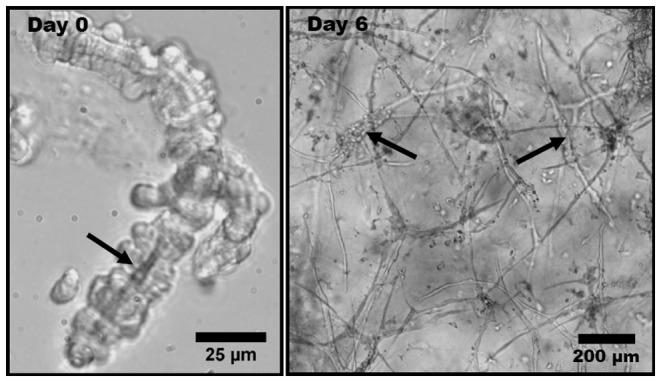
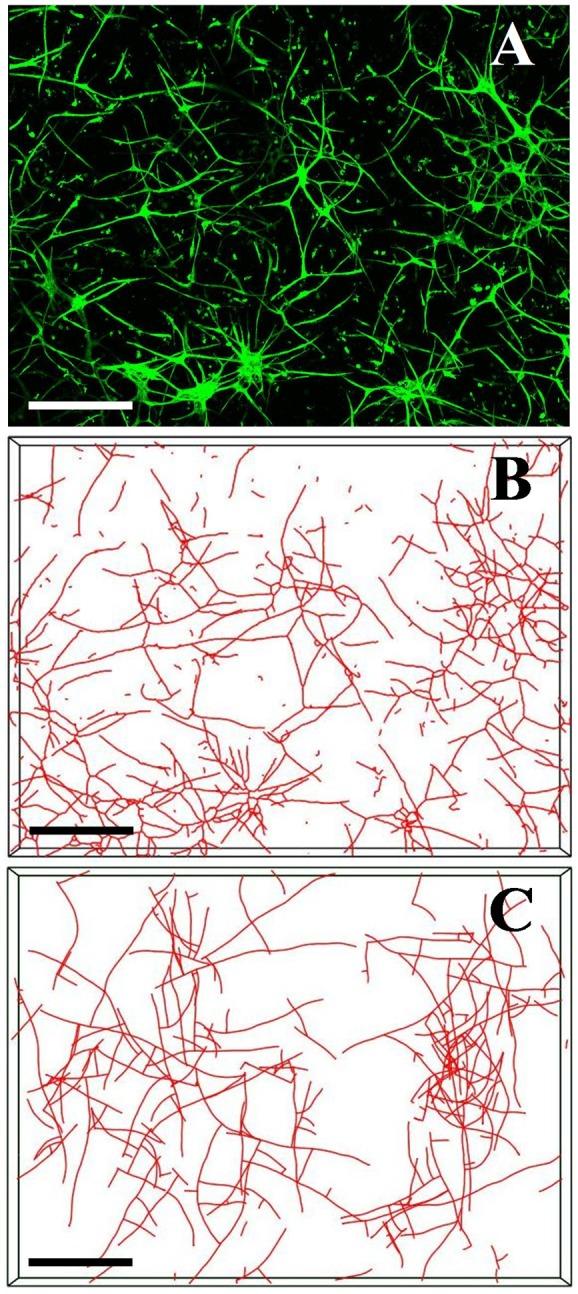
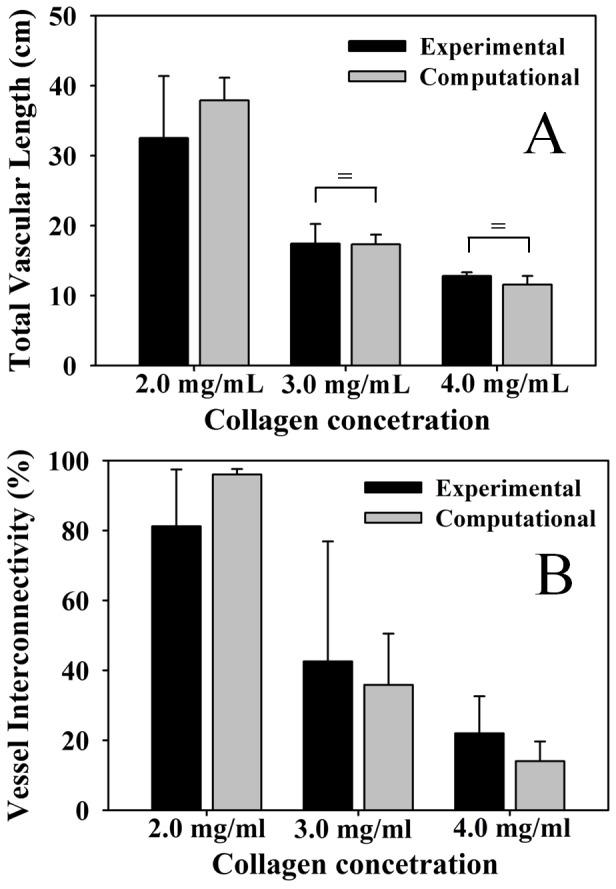
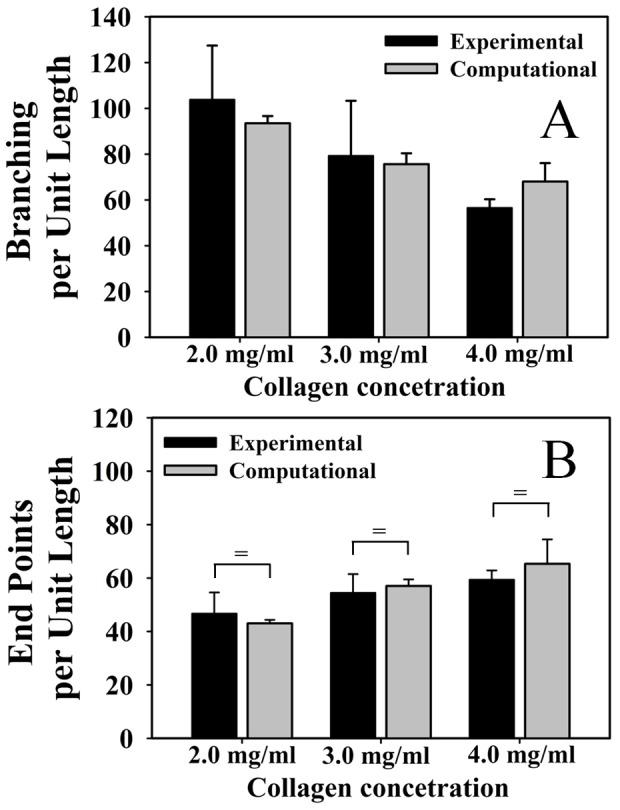
Angiogenesis is regulated by the local microenvironment, including the mechanical interactions between neovessel sprouts and the extracellular matrix (ECM). However, the mechanisms controlling the relationship of mechanical and biophysical properties of the ECM to neovessel growth during sprouting angiogenesis are just beginning to be understood. In this research, we characterized the relationship between matrix density and microvascular topology in an in vitro 3D organ culture model of sprouting angiogenesis. We used these results to design and calibrate a computational growth model to demonstrate how changes in individual neovessel behavior produce the changes in vascular topology that were observed experimentally. Vascularized gels with higher collagen densities produced neovasculatures with shorter vessel lengths, less branch points, and reduced network interconnectivity. The computational model was able to predict these experimental results by scaling the rates of neovessel growth and branching according to local matrix density. As a final demonstration of utility of the modeling framework, we used our growth model to predict several scenarios of practical interest that could not be investigated experimentally using the organ culture model. Increasing the density of the ECM significantly reduced angiogenesis and network formation within a 3D organ culture model of angiogenesis. Increasing the density of the matrix increases the stiffness of the ECM, changing how neovessels are able to deform and remodel their surroundings. The computational framework outlined in this study was capable of predicting this observed experimental behavior by adjusting neovessel growth rate and branching probability according to local ECM density, demonstrating that altering the stiffness of the ECM via increasing matrix density affects neovessel behavior, thereby regulated vascular topology during angiogenesis.
血管生成受局部微环境调控,包括新生血管芽与细胞外基质(ECM)之间的机械相互作用。然而,在萌芽期血管生成过程中,控制ECM的机械和生物物理特性与新生血管生长之间关系的机制才刚刚开始被了解。在本研究中,我们在萌芽期血管生成的体外三维器官培养模型中,对基质密度与微血管拓扑结构之间的关系进行了表征。我们利用这些结果设计并校准了一个计算生长模型,以证明单个新生血管行为的变化是如何产生实验中观察到的血管拓扑结构变化的。具有较高胶原蛋白密度的血管化凝胶产生的新生血管系统,其血管长度较短、分支点较少且网络互连性降低。该计算模型能够通过根据局部基质密度缩放新生血管生长和分支速率来预测这些实验结果。作为建模框架实用性的最终证明,我们使用我们构建的生长模型预测了几种实际感兴趣的情况,而这些情况无法使用器官培养模型进行实验研究。在血管生成的三维器官培养模型中,增加ECM的密度会显著减少血管生成和网络形成。增加基质密度会增加ECM的硬度,改变新生血管变形和重塑其周围环境的方式。本研究中概述的计算框架能够通过根据局部ECM密度调整新生血管生长速率和分支概率来预测这种观察到的实验行为,这表明通过增加基质密度来改变ECM的硬度会影响新生血管行为,从而在血管生成过程中调节血管拓扑结构。


 Zotero 插件