
在缺乏威斯科特-奥尔德里奇综合征蛋白的情况下,中枢神经系统自身免疫的发展会受到损害。
Development of central nervous system autoimmunity is impaired in the absence of Wiskott-Aldrich syndrome protein.
作者信息
Bosticardo Marita, Musio Silvia, Fontana Elena, Angiari Stefano, Draghici Elena, Constantin Gabriela, Poliani Pietro L, Pedotti Rosetta, Villa Anna
机构信息
TIGET, San Raffaele Scientific Institute, Milan, Italy.
Foundation IRCCS Neurological Institute "C.Besta", Neuroimmunology and Neuromuscular Disorders Unit, Milan, Italy.
出版信息
PLoS One. 2014 Jan 23;9(1):e86942. doi: 10.1371/journal.pone.0086942. eCollection 2014.
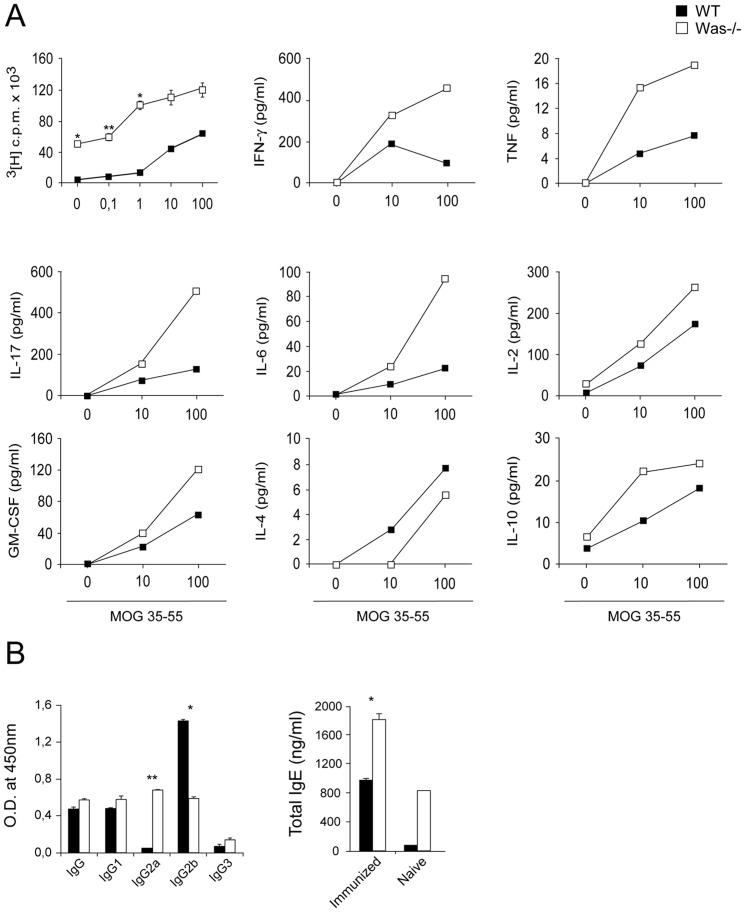
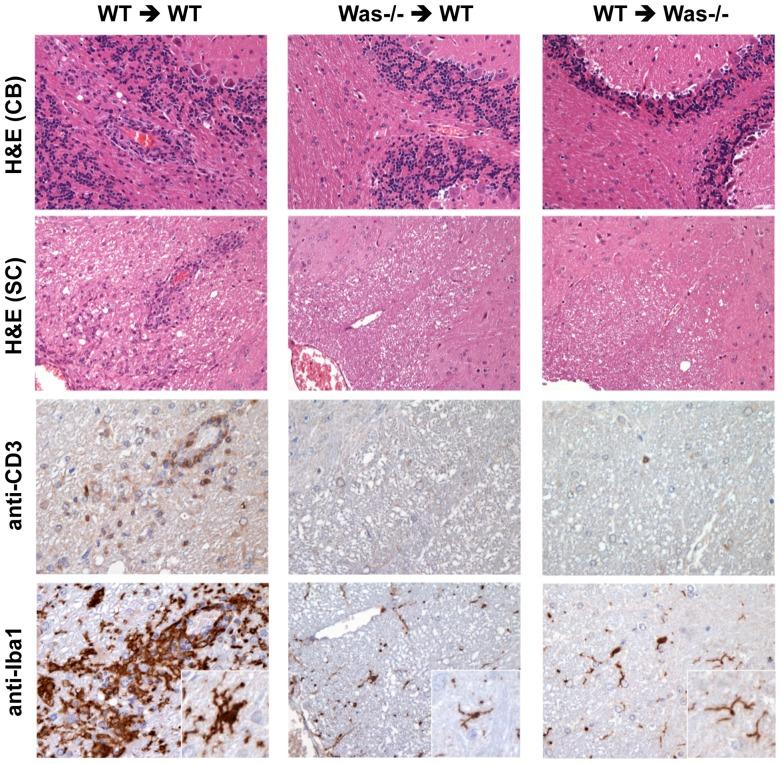
Wiskott-Aldrich Syndrome protein (WASP) is a key regulator of the actin cytoskeleton in hematopoietic cells. Defective expression of WASP leads to multiple abnormalities in different hematopoietic cells. Despite severe impairment of T cell function, WAS patients exhibit a high prevalence of autoimmune disorders. We attempted to induce EAE, an animal model of organ-specific autoimmunity affecting the CNS that mimics human MS, in Was(-/-) mice. We describe here that Was(-/-) mice are markedly resistant against EAE, showing lower incidence and milder score, reduced CNS inflammation and demyelination as compared to WT mice. Microglia was only poorly activated in Was(-/-) mice. Antigen-induced T-cell proliferation, Th-1 and -17 cytokine production and integrin-dependent adhesion were increased in Was(-/-) mice. However, adoptive transfer of MOG-activated T cells from Was(-/-) mice in WT mice failed to induce EAE. Was(-/-) mice were resistant against EAE also when induced by adoptive transfer of MOG-activated T cells from WT mice. Was(+/-) heterozygous mice developed an intermediate clinical phenotype between WT and Was(-/-) mice, and they displayed a mixed population of WASP-positive and -negative T cells in the periphery but not in their CNS parenchyma, where the large majority of inflammatory cells expressed WASP. In conclusion, in absence of WASP, T-cell responses against a CNS autoantigen are increased, but the ability of autoreactive T cells to induce CNS autoimmunity is impaired, most probably because of an inefficient T-cell transmigration into the CNS and defective CNS resident microglial function.
威斯科特-奥尔德里奇综合征蛋白(WASP)是造血细胞中肌动蛋白细胞骨架的关键调节因子。WASP表达缺陷会导致不同造血细胞出现多种异常。尽管T细胞功能严重受损,但威斯科特-奥尔德里奇综合征(WAS)患者自身免疫性疾病的患病率却很高。我们试图在Was(-/-)小鼠中诱导实验性自身免疫性脑脊髓炎(EAE),这是一种影响中枢神经系统的器官特异性自身免疫动物模型,可模拟人类多发性硬化症(MS)。我们在此描述,Was(-/-)小鼠对EAE具有显著抗性,与野生型(WT)小鼠相比,其发病率更低、评分更轻,中枢神经系统炎症和脱髓鞘程度减轻。小胶质细胞在Was(-/-)小鼠中仅被微弱激活。抗原诱导的T细胞增殖、Th-1和Th-17细胞因子产生以及整合素依赖性黏附在Was(-/-)小鼠中增加。然而,将Was(-/-)小鼠中经髓鞘少突胶质细胞糖蛋白(MOG)激活的T细胞过继转移到WT小鼠中未能诱导出EAE。当通过过继转移WT小鼠中经MOG激活的T细胞诱导时,Was(-/-)小鼠对EAE也具有抗性。Was(+/-)杂合小鼠表现出介于WT和Was(-/-)小鼠之间的中间临床表型,它们在外周血中显示出WASP阳性和阴性T细胞的混合群体,但在中枢神经系统实质中并非如此,在中枢神经系统实质中,绝大多数炎性细胞表达WASP。总之,在缺乏WASP的情况下,针对中枢神经系统自身抗原的T细胞反应增强,但自身反应性T细胞诱导中枢神经系统自身免疫的能力受损,这很可能是由于T细胞向中枢神经系统的迁移效率低下以及中枢神经系统驻留小胶质细胞功能缺陷所致。



 Zotero 插件