
吸烟对非裔美国女性外周血单个核细胞 DNA 甲基化的影响。
The effect of smoking on DNA methylation of peripheral blood mononuclear cells from African American women.
机构信息
Department of Psychiatry, University of Iowa, Rm 2-126 MEB, 500 Newton Road, Iowa City, IA 52242, USA.
出版信息
BMC Genomics. 2014 Feb 22;15:151. doi: 10.1186/1471-2164-15-151.
BACKGROUND
Regular smoking is associated with a wide variety of syndromes with prominent inflammatory components such as cancer, obesity and type 2 diabetes. Heavy regular smoking is also associated with changes in the DNA methylation of peripheral mononuclear cells. However, in younger smokers, inflammatory epigenetic findings are largely absent which suggests the inflammatory response(s) to smoking may be dose dependent. To help understand whether peripheral mononuclear cells have a role in mediating these responses in older smokers with higher cumulative smoke exposure, we examined genome-wide DNA methylation in a group of well characterized adult African American subjects informative for smoking, as well as serum C-reactive protein (CRP) and interleukin-6 receptor (IL6R) levels. In addition, complementary bioinformatic analyses were conducted to delineate possible pathways affected by long-term smoking.
RESULTS
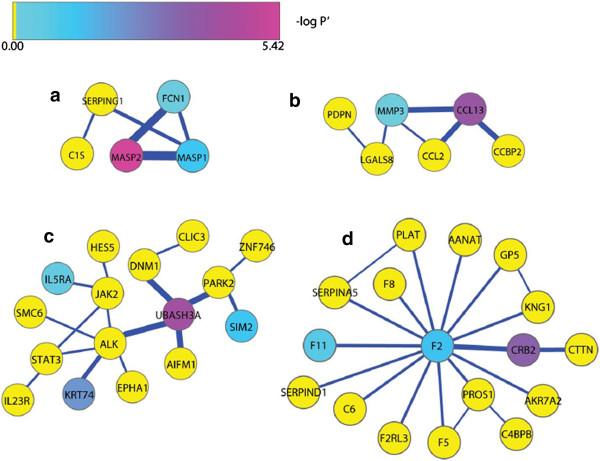
Genome-wide DNA methylation analysis with respect to smoking status yielded 910 significant loci after Benjamini-Hochberg correction. In particular, two loci from the AHRR gene (cg05575921 and cg23576855) and one locus from the GPR15 gene (cg19859270) were identified as highly significantly differentially methylated between smokers and non-smokers. The bioinformatic analyses showed that long-term chronic smoking is associated with altered promoter DNA methylation of genes coding for proteins mapping to critical sub-networks moderating inflammation, immune function, and coagulation.
CONCLUSIONS
We conclude that chronic regular smoking is associated with changes in peripheral mononuclear cell methylation signature which perturb inflammatory and immune function pathways and may contribute to increased vulnerability for complex illnesses with inflammatory components.
背景
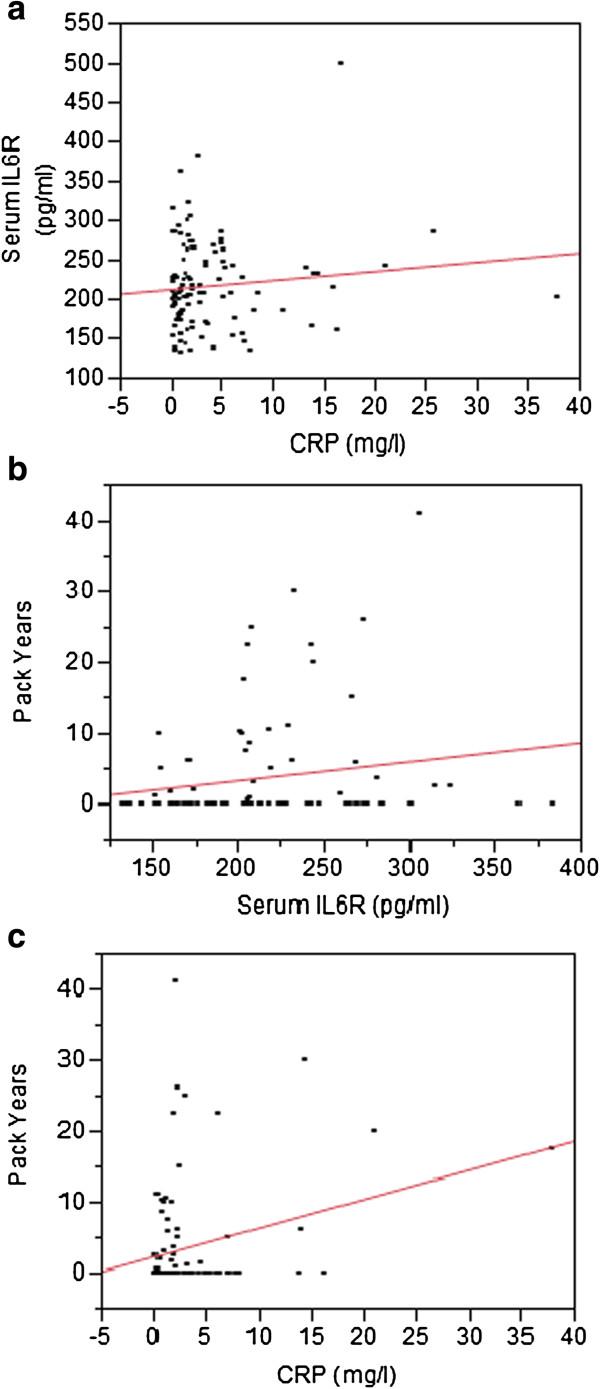
有规律地吸烟与多种综合征有关,这些综合征具有明显的炎症成分,如癌症、肥胖症和 2 型糖尿病。大量有规律地吸烟还与外周血单核细胞的 DNA 甲基化改变有关。然而,在年轻的吸烟者中,炎症性表观遗传学发现基本上是不存在的,这表明吸烟引起的炎症反应可能是剂量依赖性的。为了帮助理解在具有更高累积吸烟暴露量的老年吸烟者中,外周血单核细胞是否在调节这些反应中起作用,我们在一组特征明确的成年非裔美国受试者中,检查了与吸烟相关的全基因组 DNA 甲基化,以及血清 C 反应蛋白(CRP)和白细胞介素 6 受体(IL6R)水平。此外,还进行了补充的生物信息学分析,以描绘受长期吸烟影响的可能途径。
结果
根据吸烟状况进行的全基因组 DNA 甲基化分析,在 Benjamini-Hochberg 校正后产生了 910 个显著的位点。特别是,AHRR 基因中的两个位点(cg05575921 和 cg23576855)和 GPR15 基因中的一个位点(cg19859270)在吸烟者和非吸烟者之间被确定为高度显著差异甲基化。生物信息学分析表明,长期慢性吸烟与调节炎症、免疫功能和凝血的关键子网络中编码蛋白质的基因启动子 DNA 甲基化改变有关。
结论
我们得出结论,慢性有规律的吸烟与外周血单核细胞甲基化特征的变化有关,这些变化扰乱了炎症和免疫功能途径,并可能导致具有炎症成分的复杂疾病的易感性增加。

 Zotero 插件