
在急性病毒感染期间,Blimp-1 通过正向转录电路抑制 CD8 T 细胞表达 PD-1。
Blimp-1 represses CD8 T cell expression of PD-1 using a feed-forward transcriptional circuit during acute viral infection.
机构信息
Department of Microbiology and Immunology and Emory Vaccine Center, Emory University School of Medicine, Atlanta, GA 30322.
出版信息
J Exp Med. 2014 Mar 10;211(3):515-27. doi: 10.1084/jem.20130208. Epub 2014 Mar 3.
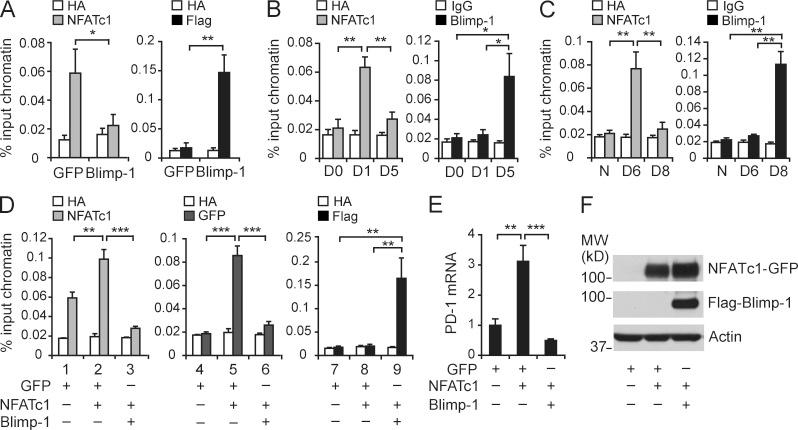
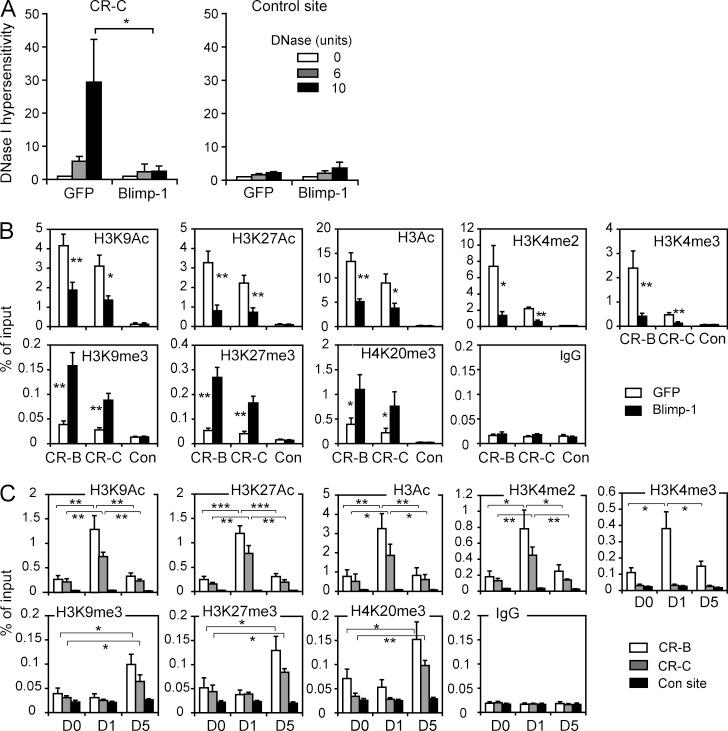
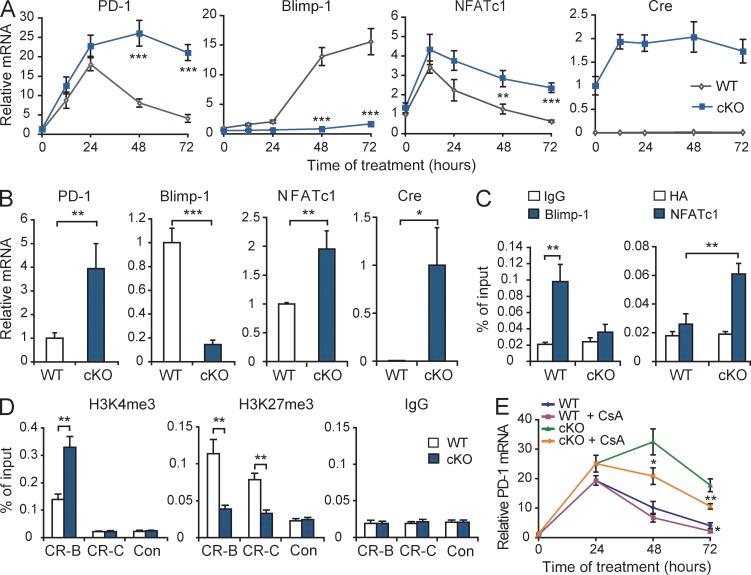
Programmed cell death 1 (PD-1) is an inhibitory immune receptor that regulates T cell function, yet the molecular events that control its expression are largely unknown. We show here that B lymphocyte-induced maturation protein 1 (Blimp-1)-deficient CD8 T cells fail to repress PD-1 during the early stages of CD8 T cell differentiation after acute infection with lymphocytic choriomeningitis virus (LCMV) strain Armstrong. Blimp-1 represses PD-1 through a feed-forward repressive circuit by regulating PD-1 directly and by repressing NFATc1 expression, an activator of PD-1 expression. Blimp-1 binding induces a repressive chromatin structure at the PD-1 locus, leading to the eviction of NFATc1 from its site. These data place Blimp-1 at an important phase of the CD8 T cell effector response and provide a molecular mechanism for its repression of PD-1.
程序性细胞死亡蛋白 1(PD-1)是一种抑制性免疫受体,调节 T 细胞功能,但控制其表达的分子事件在很大程度上尚不清楚。我们在这里表明,在急性淋巴细胞脉络丛脑膜炎病毒(LCMV)Armstrong 株感染后,B 细胞诱导成熟蛋白 1(Blimp-1)缺陷的 CD8 T 细胞在 CD8 T 细胞分化的早期阶段无法抑制 PD-1。Blimp-1 通过直接调节 PD-1和抑制 NFATc1 表达(PD-1 表达的激活剂)来抑制 PD-1,从而通过正反馈抑制回路抑制 PD-1。Blimp-1 结合诱导 PD-1 基因座上的抑制性染色质结构,导致 NFATc1 从其位点上迁出。这些数据将 Blimp-1 置于 CD8 T 细胞效应反应的重要阶段,并为其抑制 PD-1 提供了分子机制。



 Zotero 插件