
百里香和迷迭香精油对生牛肉中单核细胞增生李斯特菌的控制作用
Essential oils of thyme and Rosemary in the control of Listeria monocytogenes in raw beef.
作者信息
de Oliveira Maíra Maciel Mattos, Brugnera Danilo Florisvaldo, Piccoli Roberta Hilsdorf
机构信息
Instituto Federal de Educação, Ciência e Tecnologia do Espírito Santo, Campus Venda Nova do Imigrante, Venda Nova do Imigrante, ES, Brazil.
Universidade Federal de Mato Grosso, Faculdade de Nutrição, Cuiabá, MT, Brazil.
出版信息
Braz J Microbiol. 2014 Mar 10;44(4):1181-8. doi: 10.1590/s1517-83822013000400022. eCollection 2013 Dec.
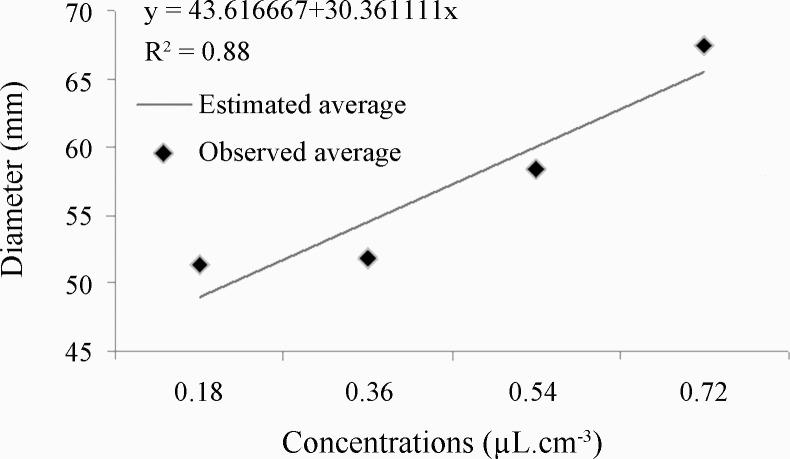
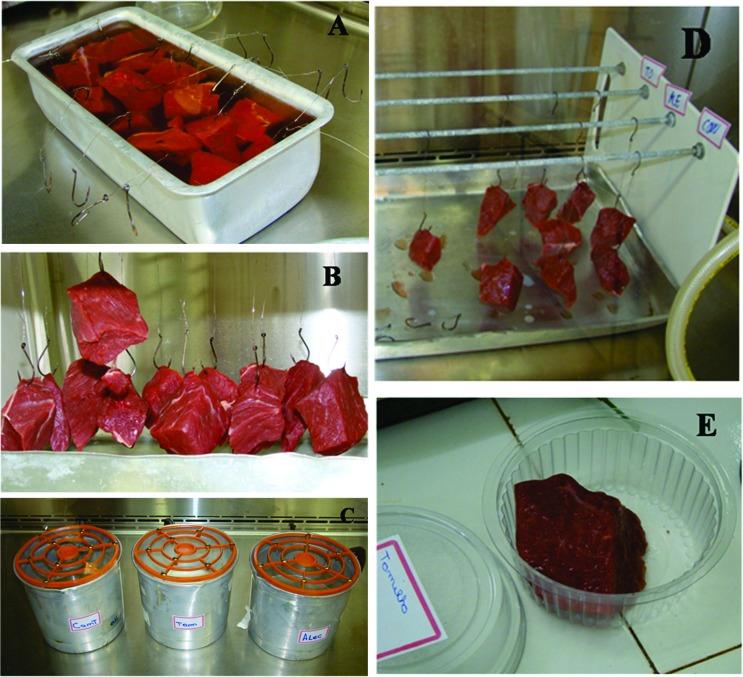
This study was developed in order to evaluate two alternatives for the control of Listeria monocytogenes in raw bovine meat pieces, both based on the use of Thymus vulgaris and Rosmarinus officinalis essential oils (EOs). The antilisterial activity of different concentrations of the EOs was tested in vitro using agar dilution and disk volatilization techniques. In addition, L. monocytogenes was inoculated in meat pieces, which were submerged in edible gelatin coatings containing 2% (v/v) EOs or submitted to the vapor of EOs (0.74 μL.cm(-3)). L. monocytogenes was quantified after one, 48 and 96 hours of storage (7 °C). In the in vitro tests, the EO of T. vulgaris presented higher activity. The two options used (edible gelatin coating and vapor activity), in spite of exercising effects with differentiated behaviors, presented antibacterial activity against L. monocytogenes inoculated in raw bovine meat (p < 0.05). Greatest antibacterial activity were obtained in the experiment that used edible coatings containing EOs, at 48 hours of storage reductions in bacterial counts between 1.09 and 1.25 Log CFU.g(-1) were obtained. In the vapor effect experiment, the EO of T. vulgaris caused the highest reduction in the population of bacteria inoculated in raw bovine meat (p < 0.05), 0.40 Log CFU.g(-1) at 96 hours of storage. This study supplied important information regarding new and promising natural alternatives, based on the concept of active packaging, for the control of L. monocytogenes in the meat industry.
本研究旨在评估两种控制生牛肉片中单核细胞增生李斯特菌的方法,这两种方法均基于使用百里香和迷迭香精油(EOs)。采用琼脂稀释法和纸片挥发法在体外测试了不同浓度EOs的抗李斯特菌活性。此外,将单核细胞增生李斯特菌接种到肉片上,将肉片浸入含有2%(v/v)EOs的可食用明胶涂层中,或置于EOs蒸汽(0.74 μL.cm(-3))环境中。在储存1小时、48小时和96小时(7℃)后对单核细胞增生李斯特菌进行定量。在体外试验中,百里香EO表现出更高的活性。所采用的两种方法(可食用明胶涂层和蒸汽活性)尽管表现出不同的作用方式,但对接种在生牛肉片中的单核细胞增生李斯特菌均具有抗菌活性(p < 0.05)。在使用含有EOs的可食用涂层的实验中获得了最大的抗菌活性,在储存48小时时,细菌计数减少了1.09至1.25 Log CFU.g(-1)。在蒸汽作用实验中,百里香EO对生牛肉片中接种的细菌数量减少最多(p < 0.05),在储存96小时时减少了0.40 Log CFU.g(-1)。本研究提供了关于基于活性包装概念的新型且有前景的天然替代方法的重要信息,用于肉类行业中单核细胞增生李斯特菌的控制。
 Zotero 插件