
3D 胶原蛋白 I 培养中的亚马逊利什曼原虫前鞭毛体:研究细胞外基质和宿主细胞相互作用的体外生理环境。
Leishmania amazonensis promastigotes in 3D Collagen I culture: an in vitro physiological environment for the study of extracellular matrix and host cell interactions.
机构信息
Instituto de Biofisica Carlos Chagas Filho, Universidade Federal do Rio de Janeiro , Rio de Janeiro , Brazil ; Institut Pasteur , Paris , France.
Instituto de Biofisica Carlos Chagas Filho, Universidade Federal do Rio de Janeiro , Rio de Janeiro , Brazil ; Núcleo Multidisciplinar de Pesquisa UFRJ-Xerém (NUMPEX-BIO), Polo Avançado de Xerém, Universidade Federal do Rio de Janeiro , Brazil ; Instituto Nacional de Ciência e Tecnologia de Biologia Estrutural e Bioimagem , Brazil ; Instituto Nacional de Metrologia, Qualidade e Tecnologia , Inmetro , Brazil.
出版信息
PeerJ. 2014 Apr 3;2:e317. doi: 10.7717/peerj.317. eCollection 2014.
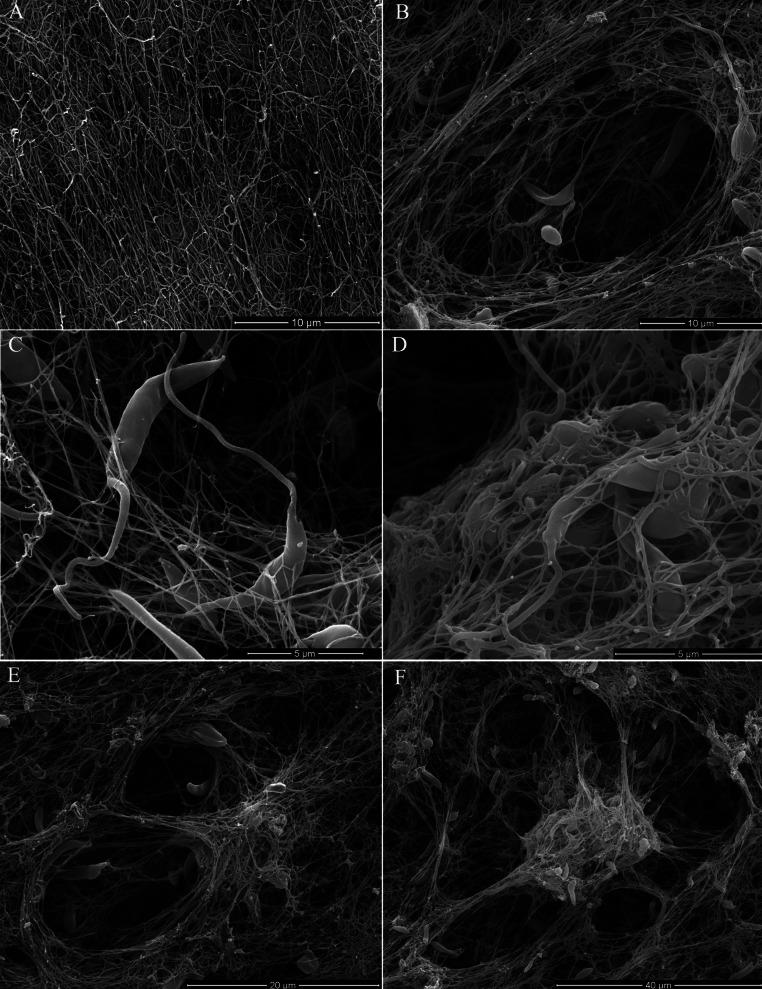
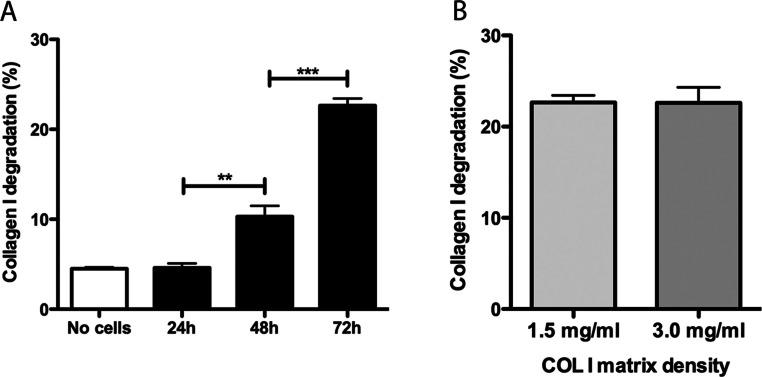
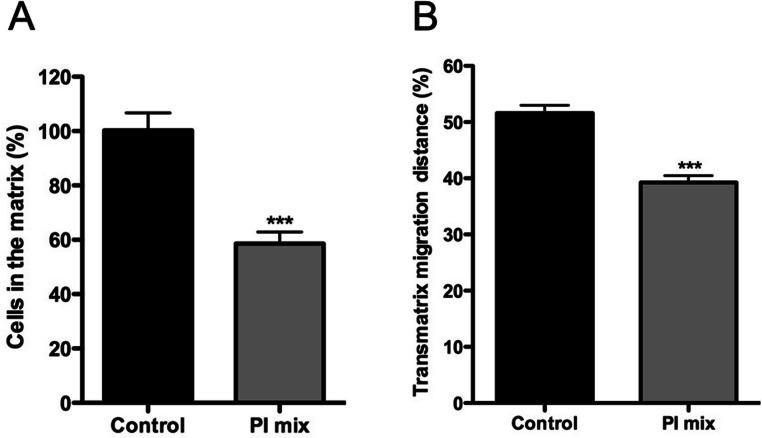
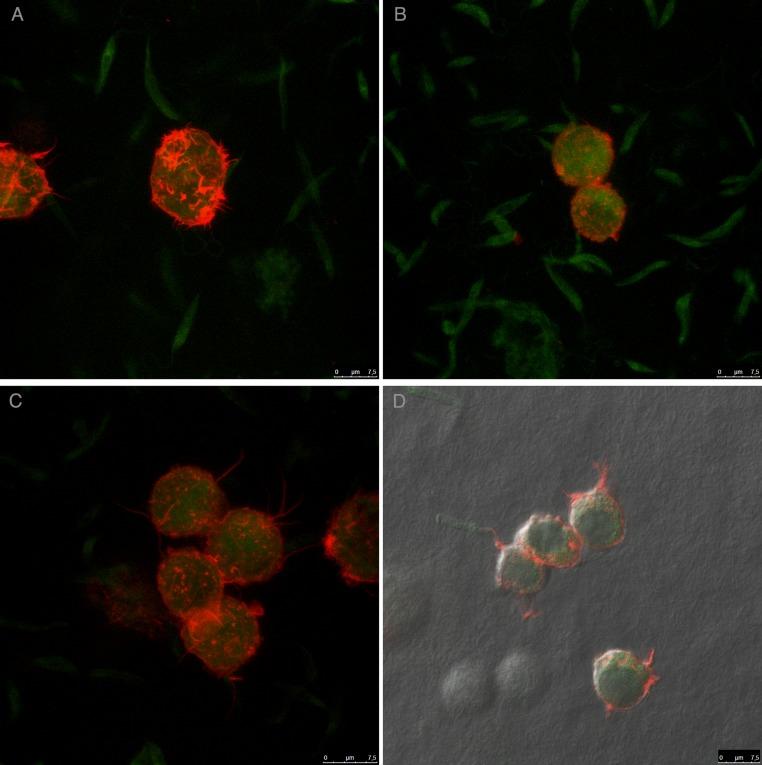
Leishmania amazonensis is the causative agent of American cutaneous leishmaniasis, an important neglected tropical disease. Once Leishmania amazonensis is inoculated into the human host, promastigotes are exposed to the extracellular matrix (ECM) of the dermis. However, little is known about the interaction between the ECM and Leishmania promastigotes. In this study we established L. amazonensis promastigote culture in a three-dimensional (3D) environment mainly composed of Collagen I (COL I). This 3D culture recreates in vitro some aspects of the human host infection site, enabling the study of the interaction mechanisms of L. amazonensis with the host ECM. Promastigotes exhibited "freeze and run" migration in the 3D COL I matrix, which is completely different from the conventional in vitro swimming mode of migration. Moreover, L. amazonensis promastigotes were able to invade, migrate inside, and remodel the 3D COL I matrix. Promastigote trans-matrix invasion and the freeze and run migration mode were also observed when macrophages were present in the matrix. At least two classes of proteases, metallo- and cysteine proteases, are involved in the 3D COL I matrix degradation caused by Leishmania. Treatment with a mixture of protease inhibitors significantly reduced promastigote invasion and migration through this matrix. Together our results demonstrate that L. amazonensis promastigotes release proteases and actively remodel their 3D environment, facilitating their migration. This raises the possibility that promastigotes actively interact with their 3D environment during the search for their cellular "home"-macrophages. Supporting this hypothesis, promastigotes migrated faster than macrophages in a novel 3D co-culture model.
亚马逊利什曼原虫是美洲皮肤利什曼病的病原体,这是一种重要的被忽视的热带病。一旦亚马逊利什曼原虫被接种到人体宿主中,前鞭毛体就会暴露于真皮的细胞外基质 (ECM) 中。然而,人们对 ECM 与利什曼原虫前鞭毛体之间的相互作用知之甚少。在这项研究中,我们建立了主要由 I 型胶原蛋白 (COL I) 组成的三维 (3D) 环境中的亚马逊利什曼原虫前鞭毛体培养物。这种 3D 培养物在体外再现了宿主感染部位的某些方面,使研究利什曼原虫与宿主 ECM 的相互作用机制成为可能。前鞭毛体在 3D COL I 基质中表现出“冻结-游走”的迁移,这与传统的体外游动迁移模式完全不同。此外,亚马逊利什曼原虫前鞭毛体能侵入、在 3D COL I 基质内迁移并重塑基质。当基质中有巨噬细胞存在时,也观察到前鞭毛体穿过基质的侵袭和“冻结-游走”迁移模式。至少有两类蛋白酶,金属蛋白酶和半胱氨酸蛋白酶,参与了利什曼原虫引起的 3D COL I 基质降解。用蛋白酶抑制剂混合物处理可显著减少前鞭毛体穿过这种基质的侵袭和迁移。总之,我们的结果表明,亚马逊利什曼原虫前鞭毛体释放蛋白酶并积极重塑其 3D 环境,从而促进其迁移。这提出了这样一种可能性,即在寻找其细胞“家园”-巨噬细胞的过程中,前鞭毛体可能会主动与它们的 3D 环境相互作用。支持这一假说,在前鞭毛体和巨噬细胞的新型 3D 共培养模型中,前鞭毛体的迁移速度快于巨噬细胞。




 Zotero 插件