
吲哚胺2,3-双加氧酶介导人类肿瘤细胞对奥拉帕尼、γ射线和顺铂的非免疫性耐药。
Indoleamine 2,3-dioxygenase mediates immune-independent human tumor cell resistance to olaparib, gamma radiation, and cisplatin.
作者信息
Maleki Vareki Saman, Rytelewski Mateusz, Figueredo Rene, Chen Di, Ferguson Peter J, Vincent Mark, Min Weiping, Zheng Xiufen, Koropatnick James
机构信息
Department of Microbiology and Immunology, Western University, London, Ontario, Canada.
出版信息
Oncotarget. 2014 May 15;5(9):2778-91. doi: 10.18632/oncotarget.1916.
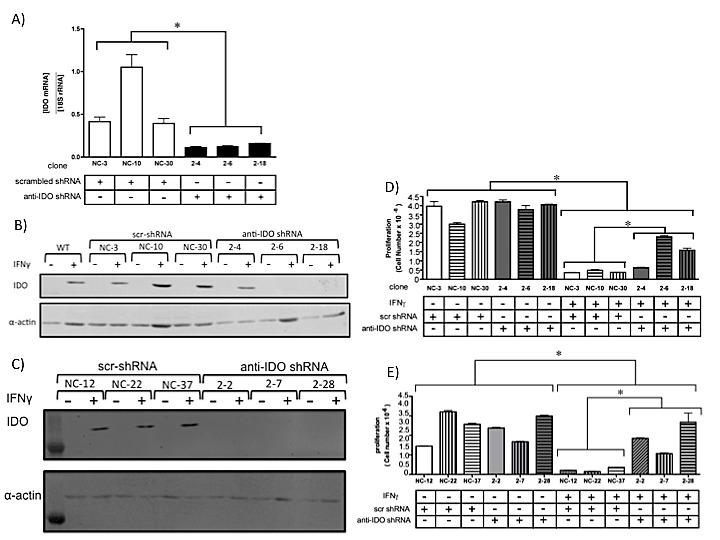
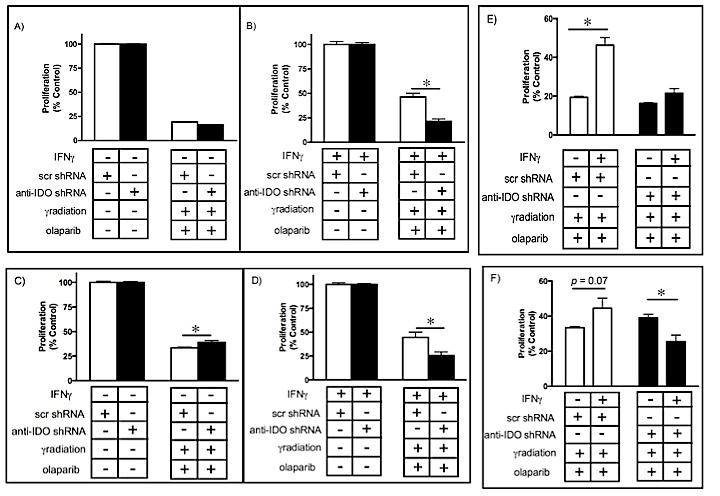
Indoleamine 2,3-dioxygenase-1 (IDO) is an immunosuppressive molecule expressed by most human tumors. IDO levels correlate with poor prognosis in cancer patients and IDO inhibitors are under investigation to enhance endogenous anticancer immunosurveillance. Little is known of immune-independent functions of IDO relevant to cancer therapy. We show, for the first time, that IDO mediates human tumor cell resistance to a PARP inhibitor (olaparib), gamma radiation, cisplatin, and combined treatment with olaparib and radiation, in the absence of immune cells. Antisense-mediated reduction of IDO, alone and (in a synthetic lethal approach) in combination with antisense to the DNA repair protein BRCA2 sensitizes human lung cancer cells to olaparib and cisplatin. Antisense reduction of IDO decreased NAD+ in human tumor cells. NAD+ is essential for PARP activity and these data suggest that IDO mediates treatment resistance independent of immunity and at least partially due to a previously unrecognized role for IDO in DNA repair. Furthermore, IDO levels correlated with accumulation of tumor cells in G1 and depletion of cells in G2/M of the cell cycle, suggesting that IDO effects on cell cycle may also modulate sensitivity to radiation and chemotherapeutic agents. IDO is a potentially valuable therapeutic target in cancer treatment, independent of immune function and in combination with other therapies.
吲哚胺2,3-双加氧酶-1(IDO)是一种由大多数人类肿瘤表达的免疫抑制分子。IDO水平与癌症患者的不良预后相关,目前正在研究IDO抑制剂以增强内源性抗癌免疫监视。关于IDO与癌症治疗相关的非免疫功能知之甚少。我们首次表明,在没有免疫细胞的情况下,IDO介导人类肿瘤细胞对PARP抑制剂(奥拉帕利)、γ射线、顺铂以及奥拉帕利与放疗联合治疗的抗性。反义介导的IDO减少,单独以及(采用合成致死方法)与DNA修复蛋白BRCA2的反义联合使用,可使人类肺癌细胞对奥拉帕利和顺铂敏感。IDO的反义减少降低了人类肿瘤细胞中的NAD+。NAD+对PARP活性至关重要,这些数据表明IDO介导的治疗抗性与免疫无关,至少部分是由于IDO在DNA修复中以前未被认识的作用。此外,IDO水平与细胞周期中G1期肿瘤细胞的积累以及G2/M期细胞的消耗相关,这表明IDO对细胞周期的影响也可能调节对放疗和化疗药物的敏感性。IDO是癌症治疗中一个潜在有价值的治疗靶点,与免疫功能无关,并且可与其他疗法联合使用。




 Zotero 插件