
钙调蛋白激酶II与谷氨酸受体2B亚基的结合受到大分子拥挤试剂的不同影响。
CaMKII binding to GluN2B is differentially affected by macromolecular crowding reagents.
作者信息
Goodell Dayton J, Eliseeva Tatiana A, Coultrap Steven J, Bayer K Ulrich
机构信息
Department of Pharmacology and Neuroscience Program, University of Colorado Denver, School of Medicine, Aurora, Colorado, United States of America.
出版信息
PLoS One. 2014 May 5;9(5):e96522. doi: 10.1371/journal.pone.0096522. eCollection 2014.
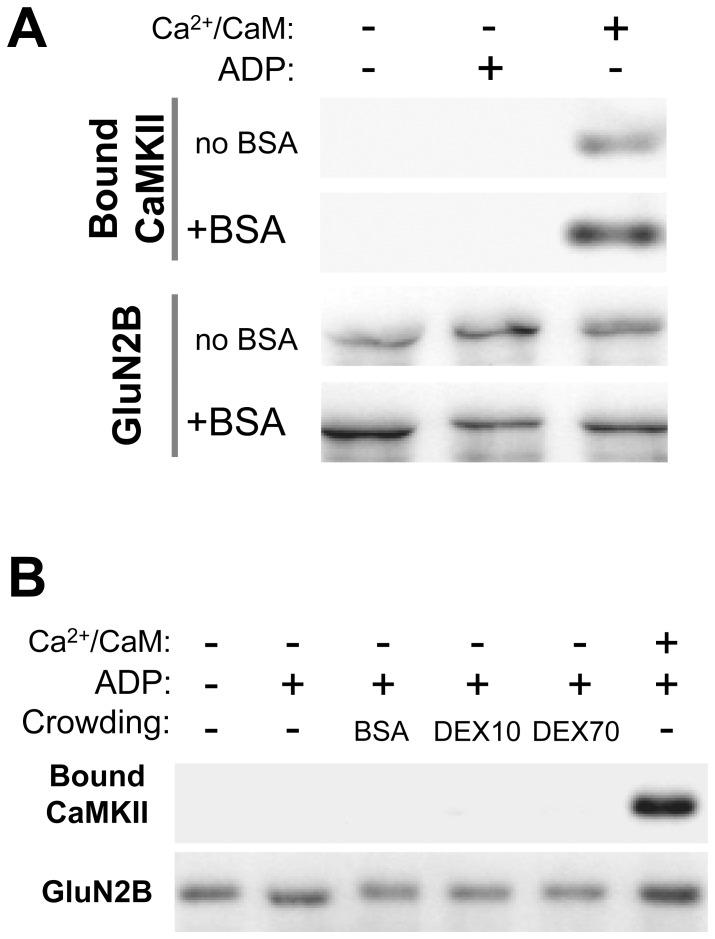
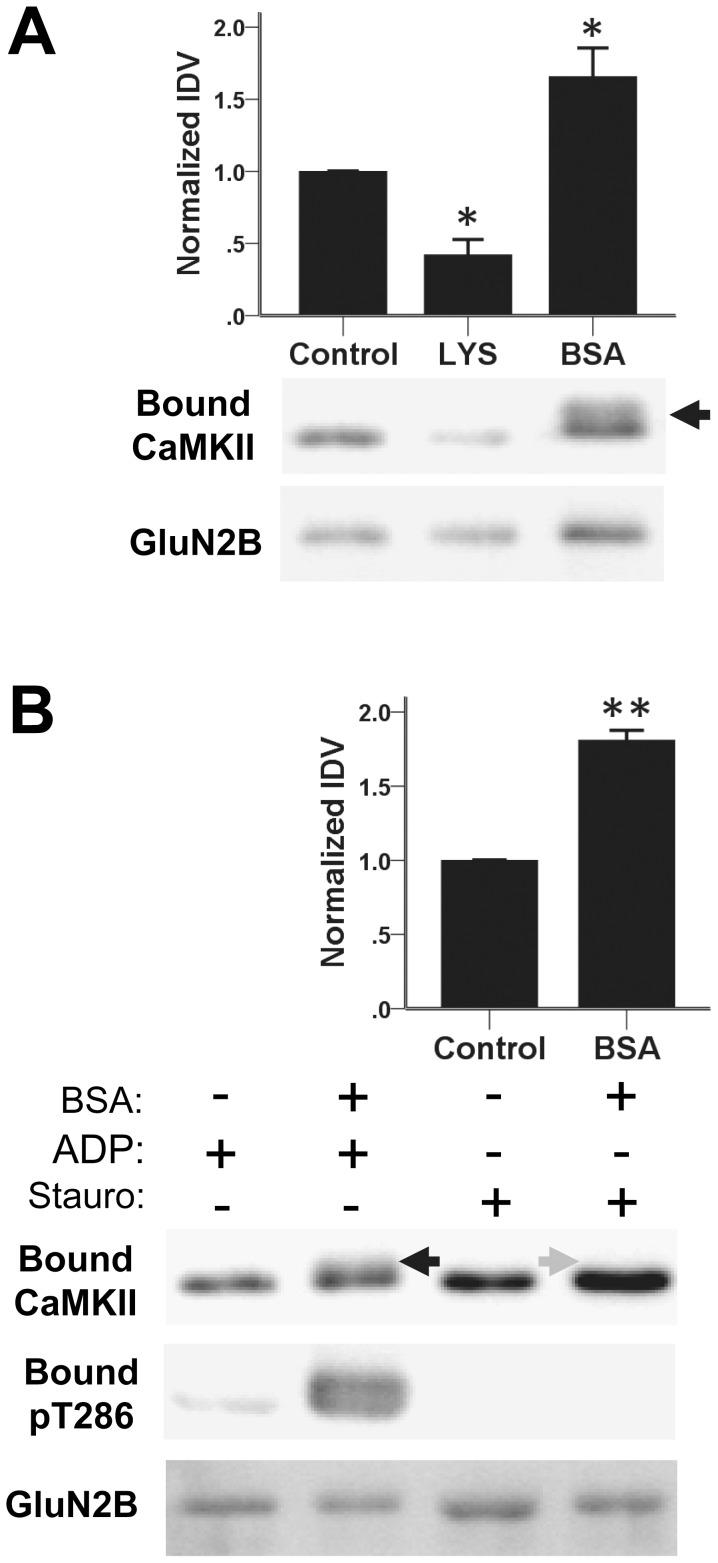
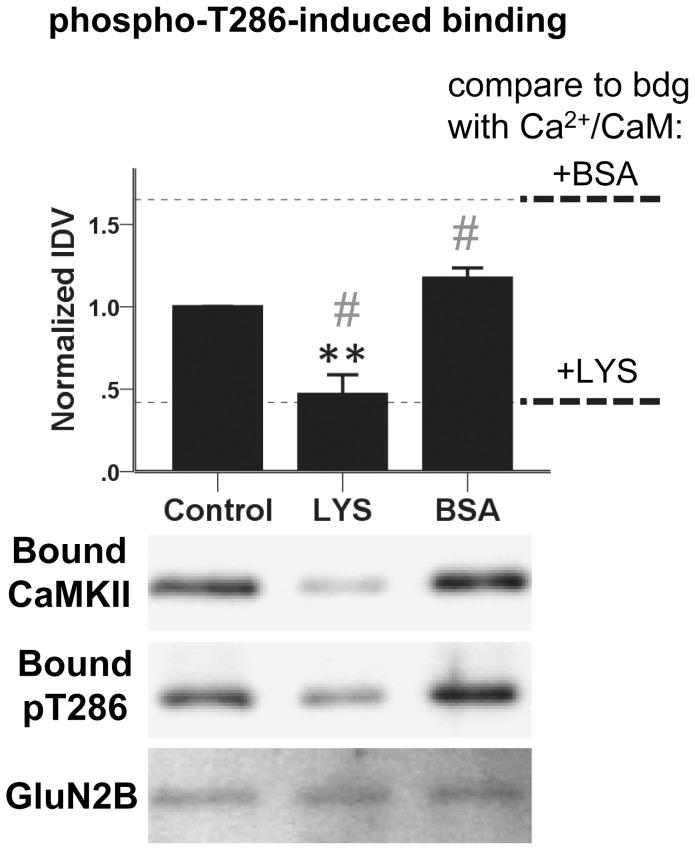
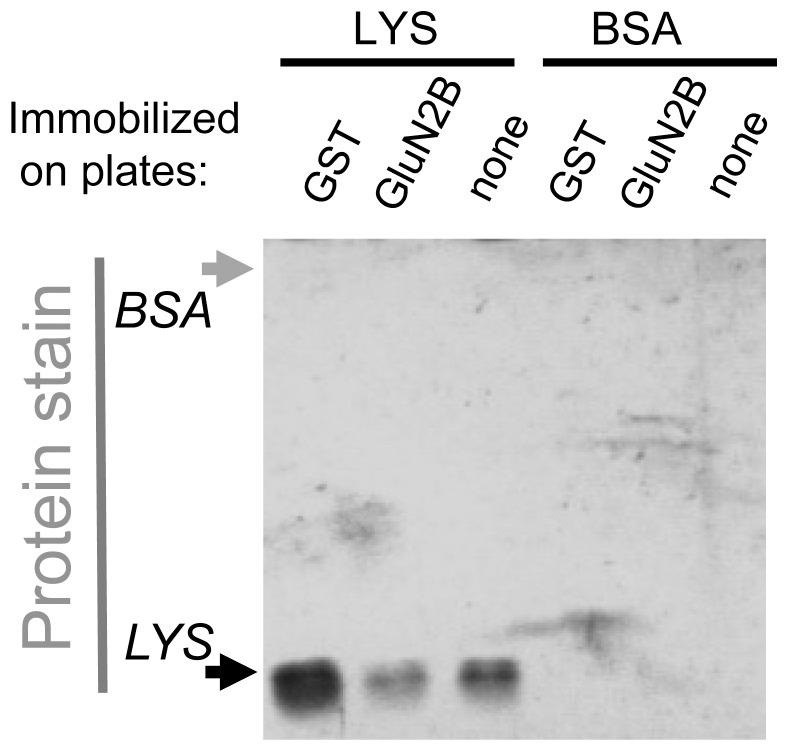
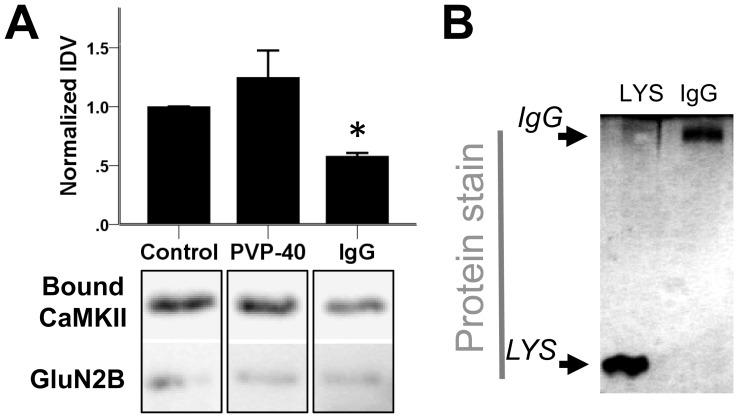
Binding of the Ca2+/calmodulin(CaM)-dependent protein kinase II (CaMKII) to the NMDA-type glutamate receptor (NMDAR) subunit GluN2B controls long-term potentiation (LTP), a form of synaptic plasticity thought to underlie learning and memory. Regulation of this interaction is well-studied biochemically, but not under conditions that mimic the macromolecular crowding found within cells. Notably, previous molecular crowding experiments with lysozyme indicated an effect on the CaMKII holoenzyme conformation. Here, we found that the effect of molecular crowding on Ca2+/CaM-induced CaMKII binding to immobilized GluN2B in vitro depended on the specific crowding reagent. While binding was reduced by lysozyme, it was enhanced by BSA. The ATP content in the BSA preparation caused CaMKII autophosphorylation at T286 during the binding reaction; however, enhanced binding was also observed when autophosphorylation was blocked. Importantly, the positive regulation by nucleotide and BSA (as well as other macromolecular crowding reagents) did not alleviate the requirement for CaMKII stimulation to induce GluN2B binding. The differential effect of lysozyme (14 kDa) and BSA (66 kDa) was not due to size difference, as both dextran-10 and dextran-70 enhanced binding. By contrast, crowding with immunoglobulin G (IgG) reduced binding. Notably, lysozyme and IgG but not BSA directly bound to Ca2+/CaM in an overlay assay, suggesting a competition of lysozyme and IgG with the Ca2+/CaM-stimulus that induces CaMKII/GluN2B binding. However, lysozyme negatively regulated binding even when it was instead induced by CaMKII T286 phosphorylation. Alternative modes of competition would be with CaMKII or GluN2B, and the negative effects of lysozyme and IgG indeed also correlated with specific or non-specific binding to the immobilized GluN2B. Thus, the effect of any specific crowding reagent can differ, depending on its additional direct effects on CaMKII/GluN2B binding. However, the results of this study also indicate that, in principle, macromolecular crowding enhances CaMKII binding to GluN2B.
钙离子/钙调蛋白(CaM)依赖性蛋白激酶II(CaMKII)与N-甲基-D-天冬氨酸(NMDA)型谷氨酸受体(NMDAR)亚基GluN2B的结合控制着长时程增强(LTP),这是一种被认为是学习和记忆基础的突触可塑性形式。这种相互作用的调节在生物化学方面已得到充分研究,但并非在模拟细胞内大分子拥挤的条件下进行。值得注意的是,先前对溶菌酶进行的分子拥挤实验表明其对CaMKII全酶构象有影响。在此,我们发现体外分子拥挤对Ca2+/CaM诱导的CaMKII与固定化GluN2B结合的影响取决于特定的拥挤试剂。虽然溶菌酶会降低结合,但牛血清白蛋白(BSA)会增强结合。BSA制剂中的ATP含量在结合反应过程中导致CaMKII在T286位点自磷酸化;然而,当自磷酸化被阻断时也观察到结合增强。重要的是,核苷酸和BSA(以及其他大分子拥挤试剂)的正向调节并未减轻诱导GluN2B结合对CaMKII刺激的需求。溶菌酶(14 kDa)和BSA(66 kDa)的不同作用并非由于大小差异,因为葡聚糖-10和葡聚糖-70都增强了结合。相比之下,用免疫球蛋白G(IgG)进行拥挤会降低结合。值得注意的是,在覆盖分析中,溶菌酶和IgG而非BSA直接与Ca2+/CaM结合,这表明溶菌酶和IgG与诱导CaMKII/GluN2B结合的Ca2+/CaM刺激存在竞争。然而,即使溶菌酶是由CaMKII T286磷酸化诱导的,它也会对结合产生负向调节。其他竞争模式可能是与CaMKII或GluN2B竞争,溶菌酶和IgG的负面影响确实也与它们与固定化GluN2B的特异性或非特异性结合相关。因此,任何特定拥挤试剂的作用可能不同,这取决于其对CaMKII/GluN2B结合的额外直接影响。然而这项研究的结果也表明,原则上大分子拥挤会增强CaMKII与GluN2B的结合。


 Zotero 插件