
缺乏应激反应的小鼠可免受缺血性肾损伤。
Mice with an absent stress response are protected against ischemic renal injury.
作者信息
Sreedharan Rajasree, Chen Shaoying, Miller Melody, Haribhai Dipica, Williams Calvin B, Van Why Scott K
机构信息
Division of Nephrology, Department of Pediatrics, Medical College of Wisconsin, Wauwatosa, Wisconsin, USA.
Division of Rheumatology, Department of Pediatrics, Medical College of Wisconsin, Wauwatosa, Wisconsin, USA.
出版信息
Kidney Int. 2014 Sep;86(3):515-24. doi: 10.1038/ki.2014.73. Epub 2014 May 7.
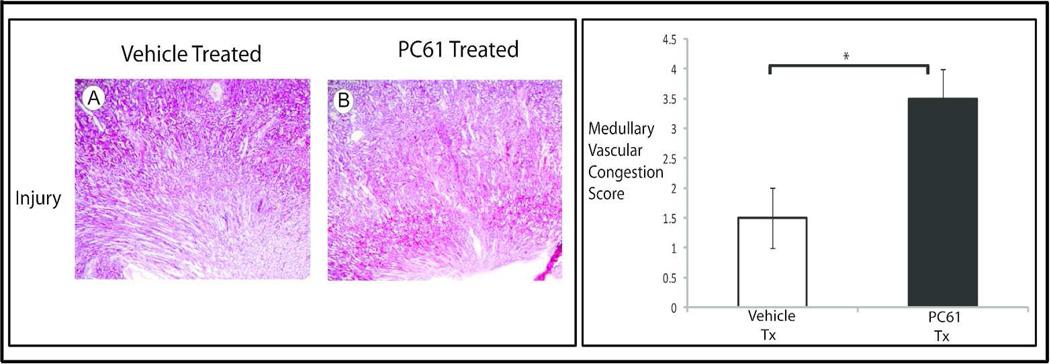
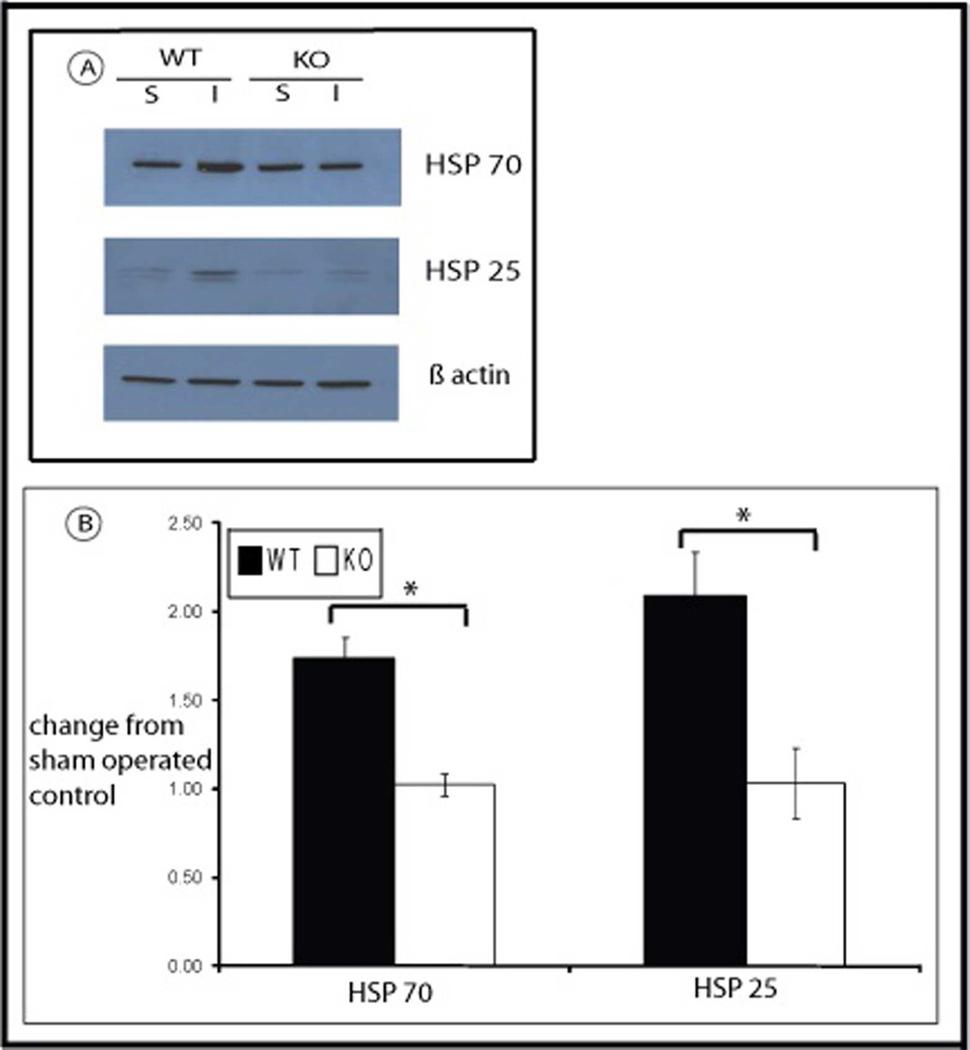
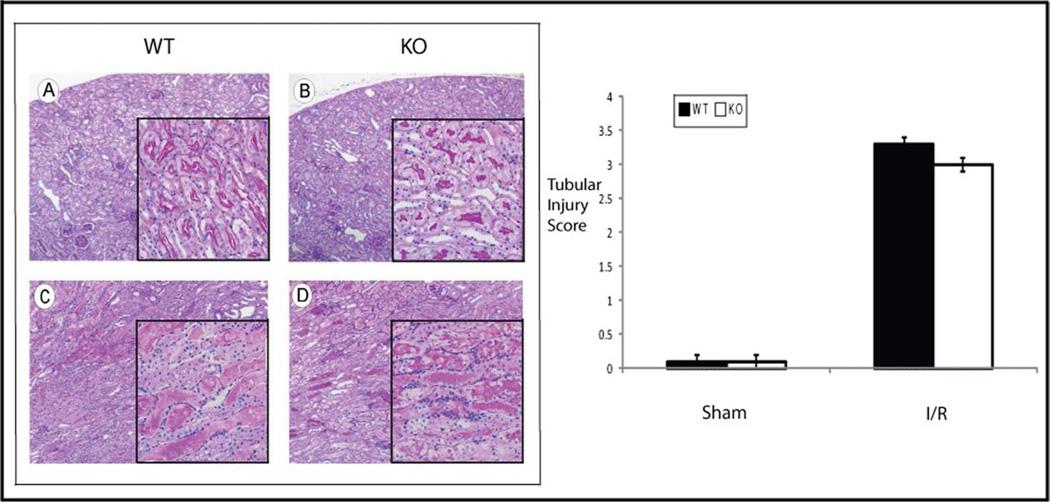
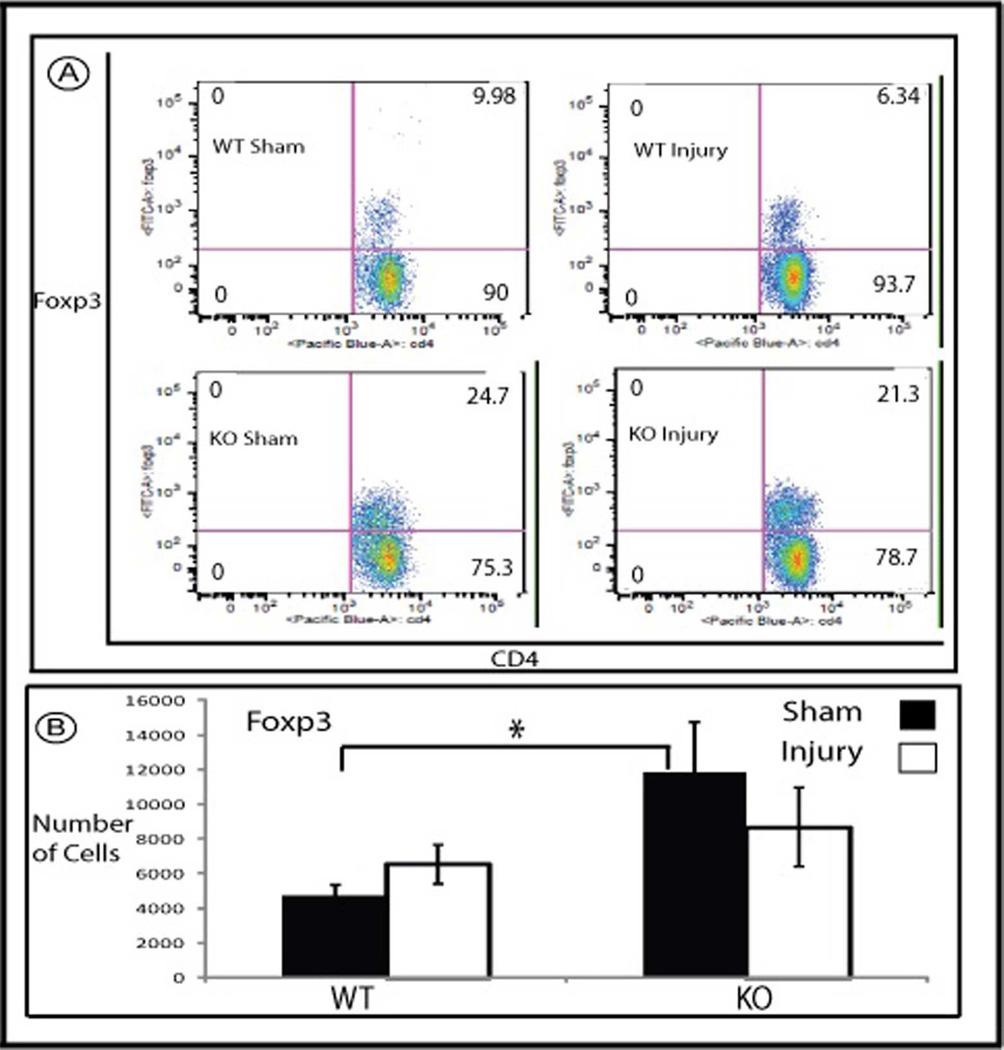
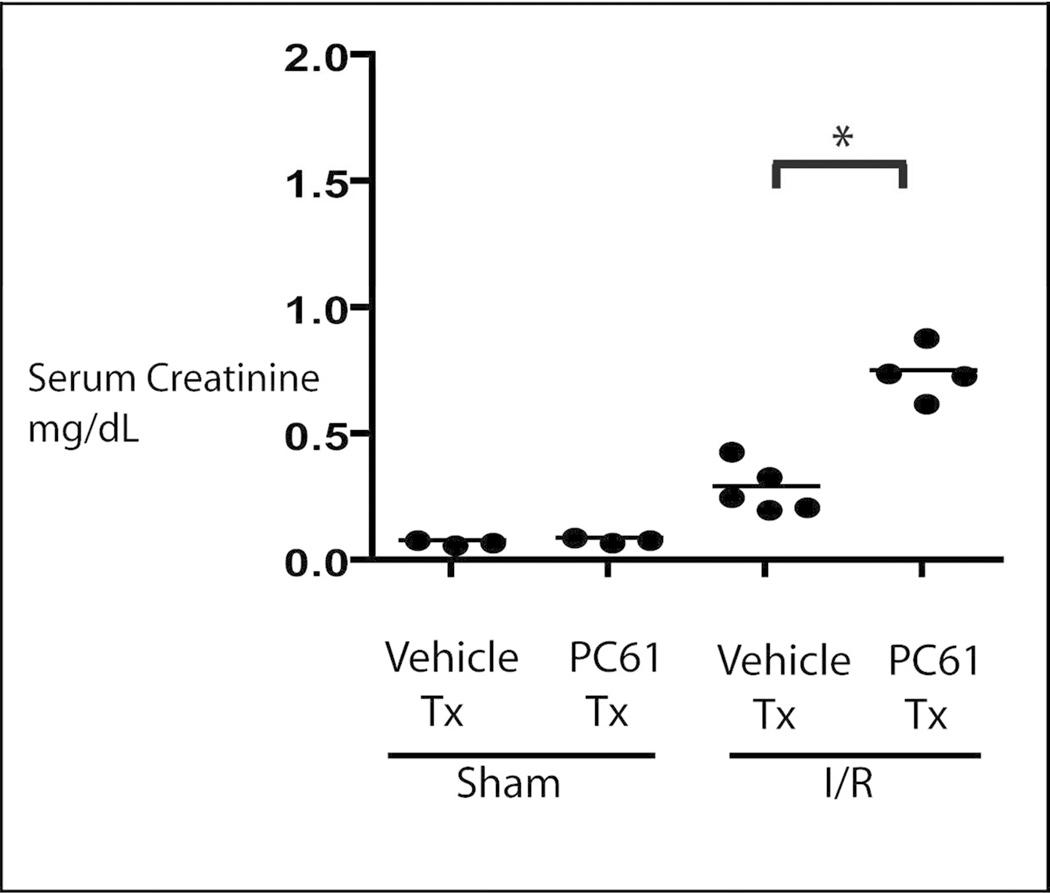
Inducible heat shock proteins (HSPs), regulated by heat shock factor-1 (HSF-1), protect against renal cell injury in vitro. To determine whether HSPs ameliorate ischemic renal injury in vivo, HSF-1 functional knockout mice (HSF-KO) were compared with wild-type mice following bilateral ischemic renal injury. Following injury, the kidneys of wild-type mice had the expected induction of HSP70 and HSP25; a response absent in the kidneys of HSF-KO mice. Baseline serum creatinine was equivalent between strains. Serum creatinine at 24 h reflow in HSF-KO mice was significantly lower than that in the wild type. Histology showed similar tubule injury in both strains after ischemic renal injury but increased medullary vascular congestion in wild-type compared with HSF-KO mice. Flow cytometry of mononuclear cells isolated from kidneys showed no difference between strains in the number of CD4(+) and CD8(+) T cells in sham-operated animals. At 1 h of reflow, CD4(+) and CD8(+) cells were doubled in the kidneys of wild-type but not HSF-KO mice. Foxp3(+) T-regulatory cells were significantly more abundant in the kidneys of sham-operated HSF-KO than wild-type mice. Suppression of CD25(+)Foxp3(+) cells in HSF-KO kidneys with the anti-CD25 antibody PC61 reversed the protection against ischemic renal injury. Thus, HSF-KO mice are protected from ischemic renal injury by a mechanism that depends on an increase in the T-regulatory cells in the kidney associated with altered T-cell infiltration early in reflow. Hence, stress response activation may contribute to early injury by facilitating T-cell infiltration into ischemic kidney.
由热休克因子-1(HSF-1)调控的可诱导热休克蛋白(HSPs)在体外可保护肾细胞免受损伤。为了确定HSPs在体内是否能改善缺血性肾损伤,在双侧缺血性肾损伤后,将HSF-1功能敲除小鼠(HSF-KO)与野生型小鼠进行了比较。损伤后,野生型小鼠的肾脏出现了预期的HSP70和HSP25诱导;而HSF-KO小鼠的肾脏则没有这种反应。两品系小鼠的基线血清肌酐水平相当。HSF-KO小鼠在再灌注24小时时的血清肌酐显著低于野生型小鼠。组织学检查显示,缺血性肾损伤后两品系小鼠的肾小管损伤相似,但与HSF-KO小鼠相比,野生型小鼠的髓质血管充血增加。对从肾脏分离的单核细胞进行流式细胞术分析显示,在假手术动物中,两品系小鼠的CD4(+)和CD8(+) T细胞数量没有差异。在再灌注1小时时,野生型小鼠肾脏中的CD4(+)和CD8(+)细胞数量翻倍,而HSF-KO小鼠则没有。在假手术的HSF-KO小鼠肾脏中,Foxp3(+)调节性T细胞比野生型小鼠明显更丰富。用抗CD25抗体PC61抑制HSF-KO小鼠肾脏中的CD25(+)Foxp3(+)细胞可逆转对缺血性肾损伤的保护作用。因此,HSF-KO小鼠通过一种机制免受缺血性肾损伤,该机制依赖于肾脏中调节性T细胞的增加以及再灌注早期T细胞浸润的改变。因此,应激反应激活可能通过促进T细胞浸润到缺血性肾脏中而导致早期损伤。



 Zotero 插件