
肥胖症内分泌学:医学实践原则
Bariatric endocrinology: principles of medical practice.
作者信息
Gonzalez-Campoy J Michael, Richardson Bruce, Richardson Conor, Gonzalez-Cameron David, Ebrahim Ayesha, Strobel Pamela, Martinez Tiphani, Blaha Beth, Ransom Maria, Quinonez-Weislow Jessica, Pierson Andrea, Gonzalez Ahumada Miguel
机构信息
Minnesota Center for Obesity, Metabolism and Endocrinology (MNCOME), 1185 Town Centre Drive, Suite 220, Eagan, MN 55123, USA.
出版信息
Int J Endocrinol. 2014;2014:917813. doi: 10.1155/2014/917813. Epub 2014 May 12.
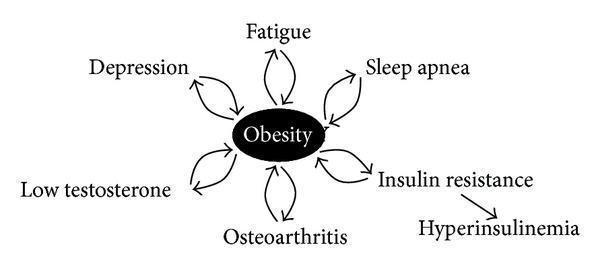
Obesity, is a chronic, biological, preventable, and treatable disease. The accumulation of fat mass causes physical changes (adiposity), metabolic and hormonal changes due to adipose tissue dysfunction (adiposopathy), and psychological changes. Bariatric endocrinology was conceived from the need to address the neuro-endocrinological derangements that are associated with adiposopathy, and from the need to broaden the scope of the management of its complications. In addition to the well-established metabolic complications of overweight and obesity, adiposopathy leads to hyperinsulinemia, hyperleptinemia, hypoadiponectinemia, dysregulation of gut peptides including GLP-1 and ghrelin, the development of an inflammatory milieu, and the strong risk of vascular disease. Therapy for adiposopathy hinges on effectively lowering the ratio of orexigenic to anorexigenic signals reaching the the hypothalamus and other relevant brain regions, favoring a lower caloric intake. Adiposopathy, overweight and obesity should be treated indefinitely with the specific aims to reduce fat mass for the adiposity complications, and to normalize adipose tissue function for the adiposopathic complications. This paper defines the principles of medical practice in bariatric endocrinology-the treatment of overweight and obesity as means to treat adiposopathy and its accompanying metabolic and hormonal derangements.
肥胖是一种慢性、生理性、可预防且可治疗的疾病。脂肪量的积累会导致身体变化(肥胖症)、由于脂肪组织功能障碍引起的代谢和激素变化(脂肪病)以及心理变化。肥胖症内分泌学源于应对与脂肪病相关的神经内分泌紊乱的需求,以及扩大其并发症管理范围的需求。除了超重和肥胖常见的代谢并发症外,脂肪病还会导致高胰岛素血症、高瘦素血症、低脂联素血症、包括胰高血糖素样肽 -1 和胃饥饿素在内的肠道肽失调、炎症环境的形成以及血管疾病的高风险。脂肪病的治疗关键在于有效降低到达下丘脑和其他相关脑区的促食欲信号与抑食欲信号的比例,从而有利于减少热量摄入。对于脂肪病、超重和肥胖应进行长期治疗,具体目标是针对肥胖并发症减少脂肪量,针对脂肪病并发症使脂肪组织功能正常化。本文阐述了肥胖症内分泌学的医学实践原则——将超重和肥胖的治疗作为治疗脂肪病及其伴随的代谢和激素紊乱的手段。

 Zotero 插件