
普通菜豆参考基因组及双重驯化的全基因组分析
A reference genome for common bean and genome-wide analysis of dual domestications.
作者信息
Schmutz Jeremy, McClean Phillip E, Mamidi Sujan, Wu G Albert, Cannon Steven B, Grimwood Jane, Jenkins Jerry, Shu Shengqiang, Song Qijian, Chavarro Carolina, Torres-Torres Mirayda, Geffroy Valerie, Moghaddam Samira Mafi, Gao Dongying, Abernathy Brian, Barry Kerrie, Blair Matthew, Brick Mark A, Chovatia Mansi, Gepts Paul, Goodstein David M, Gonzales Michael, Hellsten Uffe, Hyten David L, Jia Gaofeng, Kelly James D, Kudrna Dave, Lee Rian, Richard Manon M S, Miklas Phillip N, Osorno Juan M, Rodrigues Josiane, Thareau Vincent, Urrea Carlos A, Wang Mei, Yu Yeisoo, Zhang Ming, Wing Rod A, Cregan Perry B, Rokhsar Daniel S, Jackson Scott A
机构信息
1] US Department of Energy Joint Genome Institute, Walnut Creek, California, USA. [2] HudsonAlpha Institute for Biotechnology, Huntsville, Alabama, USA. [3].
1] Department of Plant Sciences, North Dakota State University, Fargo, North Dakota, USA. [2].
出版信息
Nat Genet. 2014 Jul;46(7):707-13. doi: 10.1038/ng.3008. Epub 2014 Jun 8.
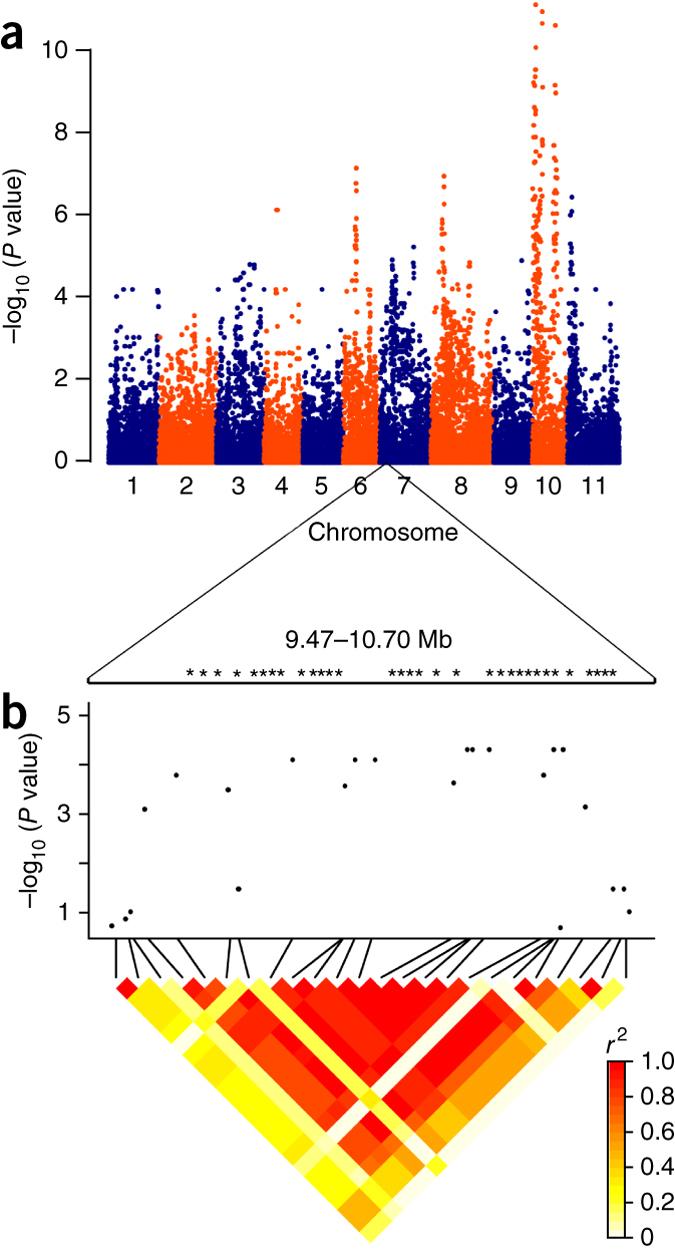
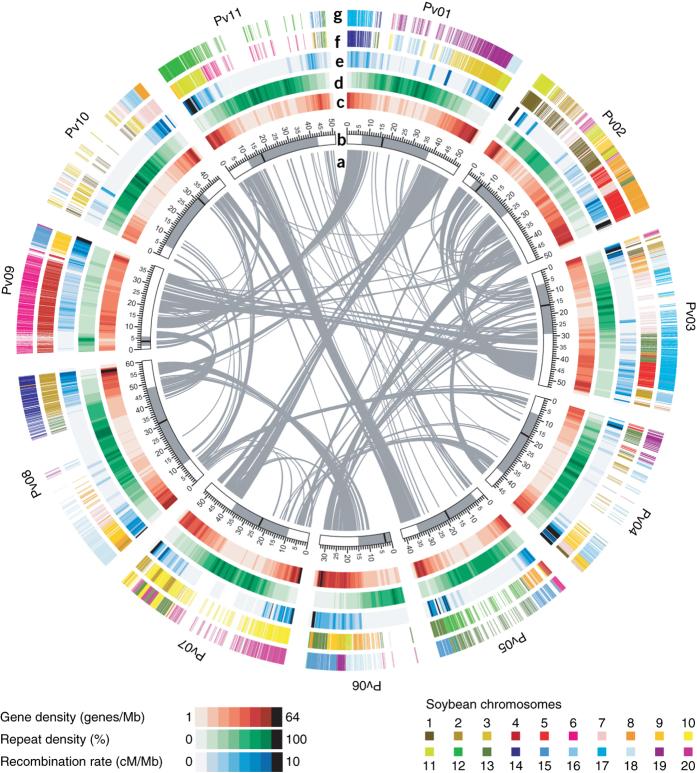
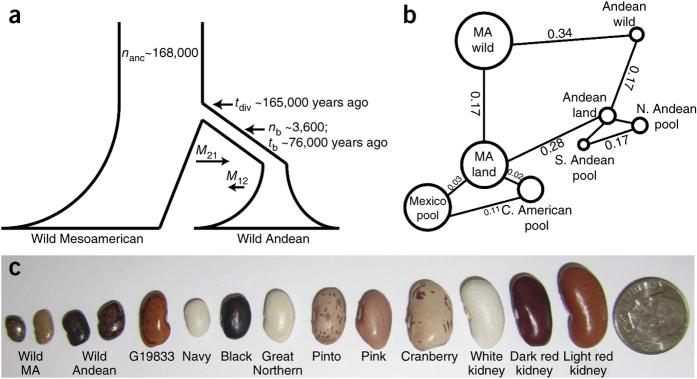
Common bean (Phaseolus vulgaris L.) is the most important grain legume for human consumption and has a role in sustainable agriculture owing to its ability to fix atmospheric nitrogen. We assembled 473 Mb of the 587-Mb genome and genetically anchored 98% of this sequence in 11 chromosome-scale pseudomolecules. We compared the genome for the common bean against the soybean genome to find changes in soybean resulting from polyploidy. Using resequencing of 60 wild individuals and 100 landraces from the genetically differentiated Mesoamerican and Andean gene pools, we confirmed 2 independent domestications from genetic pools that diverged before human colonization. Less than 10% of the 74 Mb of sequence putatively involved in domestication was shared by the two domestication events. We identified a set of genes linked with increased leaf and seed size and combined these results with quantitative trait locus data from Mesoamerican cultivars. Genes affected by domestication may be useful for genomics-enabled crop improvement.
菜豆(Phaseolus vulgaris L.)是人类食用的最重要的食用豆类,由于其具有固氮能力,在可持续农业中发挥着作用。我们组装了587 Mb基因组中的473 Mb,并将该序列的98%遗传定位到11个染色体规模的假分子中。我们将菜豆基因组与大豆基因组进行比较,以发现大豆因多倍体而发生的变化。通过对来自遗传分化的中美洲和安第斯基因库的60个野生个体和100个地方品种进行重测序,我们证实了来自人类殖民之前就已分化的基因库的2次独立驯化。两次驯化事件共享的假定参与驯化的74 Mb序列中不到10%。我们鉴定出一组与叶片和种子大小增加相关的基因,并将这些结果与来自中美洲品种的数量性状位点数据相结合。受驯化影响的基因可能有助于通过基因组学实现作物改良。


 Zotero 插件